

close
Choose Your Site
Global
Social Media

Author: Site Editor Publish Time: 2026-07-10 Origin: Site
Modern aluminum fenestration relies heavily on thermal breaks to stop rapid heat transfer. Metal frames easily leak indoor climates to the outside. Standard solid profiles often fall short today. Strict modern energy codes, like Passive House standards, demand much more. Building regulators now require exceptionally low thermal transmittance values. Fabricators need wider, geometrically complex solutions to meet these extreme performance targets.
Enter a highly specific, engineered solution. The PA66 GF25 hollow thermal strip solves advanced thermal bridging challenges. It also addresses heavy structural loads in commercial and high-end residential systems. In this guide, you will learn exactly how this multi-cavity component works. We explore its core applications in energy-efficient fenestration. We also detail the fabrication risks you must manage. Understanding these critical factors ensures your next architectural project meets every energy certification effortlessly.
The 35.3mm width provides the necessary separation distance to achieve ultra-low U-values (Uf) in aluminum window and door assemblies.
PA66 GF25 (Polyamide 66 + 25% glass fiber) matches the linear thermal expansion coefficient of aluminum, preventing shear stress during extreme temperature fluctuations.
The hollow chamber (multi-cavity) design traps air to minimize convective heat transfer and improve acoustic insulation.
Evaluating a supplier requires verifying dimensional tolerances, fiberglass distribution consistency, and compliance with structural standards (e.g., DIN EN 14024).
Understanding the internal anatomy of a 35.3mm hollow thermal strip reveals why it dominates premium fenestration. Material science plays a massive role here. Why do we use Polyamide 66 mixed with exactly 25% glass fiber? This specific composite blend delivers precise tensile strength. Manufacturers absolutely need this rigid strength. It helps the frame handle extreme environmental wind loads. It also survives the intense mechanical stress of extrusion and crimping processes on the factory floor.
During manufacturing, glass fibers align longitudinally inside the polyamide matrix. This alignment gives the profile incredible load-bearing capacity. Furthermore, the glass fibers adjust the thermal expansion coefficient perfectly. The material matches aluminum alloys almost exactly. Aluminum and PA66 GF25 expand and contract at the same rate. This prevents system warping when building facades face distinct seasonal climates.
Next, consider the physics of the hollow chamber. Solid I-shape or C-shape profiles offer only basic insulation. They allow direct thermal conduction straight across the plastic block. A hollow configuration changes the game entirely. Multi-cavity geometries trap dry air inside distinct interior chambers. They disrupt internal air circulation and effectively halt convection currents. This structural design creates superior heat and sound protection compared to solid blocks of the same width.
Finally, look closely at the 35.3mm width. We frame this specific dimension as a high-performance specification. Baseline commercial windows often use much narrower profiles, typically around 14.8mm to 24mm. Premium energy-efficient systems demand far greater separation. A 35.3mm barrier guarantees maximum isolation between the inner and outer aluminum frames. Pushing the metal frames further apart drastically limits thermal bridging pathways.
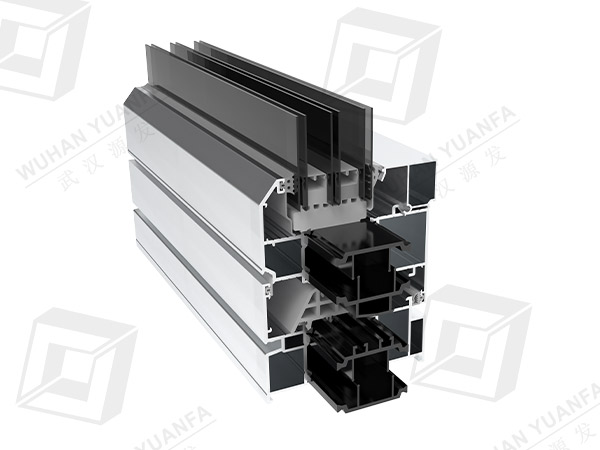
Where do fabricators actually use these robust profiles? They appear consistently in high-stakes architectural projects. First, they define high-performance aluminum casement windows and doors. Engineers integrate them deeply into window sashes and master frames. This design ensures extreme weather resistance against freezing winds, heavy rain, and scorching solar heat. Wide thermal strips keep the indoor surface temperature completely independent of outdoor extremes.
Second, consider commercial curtain walls and facades. Modern skyscrapers use massive expanses of heavy triple-glazed glass. These facades impose massive structural dead loads on the framing system. A wide 35.3mm profile handles these sheer loads securely without buckling. It simultaneously manages the intense thermal requirements of large glass surface areas. Standard plastic strips simply collapse or shear under the weight of high-rise curtain wall glass.
Third, they act as crucial components for Passive House and Net-Zero building projects. Fabricators must meet strict regional and international energy certifications. Standards like the Passive House Institute require U-values below 0.8 W/(m²K). Basic aluminum systems cannot reach these numbers. This specific hollow profile drastically lowers the thermal transmittance of the frame (Uf). It allows builders to achieve those coveted ultra-low numbers effortlessly. You simply cannot certify a Net-Zero aluminum frame without separating the metal drastically using advanced multi-cavity geometries.
Extreme Weather Casements: Used in coastal or alpine environments requiring maximum separation from harsh outdoor elements.
Skyscraper Curtain Walls: Deployed in high-rise facades to bear heavy triple-pane glass loads while stopping thermal transfer.
Net-Zero Residential Frames: Essential for bespoke residential doors aiming for strict Passive House certification.
Urban Soundproof Windows: Utilized in noisy city centers to break acoustic transmission lines entering apartments.
Upgrading your aluminum systems delivers measurable results. What do fabricators and end-users actually gain? We look at three major performance outcomes. First, thermal insulation improves dramatically. Heat loss mitigation is quantifiable when moving to a 35.3mm multi-cavity barrier. The wider distance forces heat to travel further. The trapped air physically blocks convective loops from transferring energy across the gap.
Profile Geometry Type | Standard Width | Convection Control | Typical Uf Reduction Impact |
|---|---|---|---|
Solid I-Shape | 14.8mm | Low | Baseline |
Solid C-Shape | 24.0mm | Moderate | Medium |
Hollow Multi-Cavity | 35.3mm | High | Exceptional |
Acoustic dampening also sees huge gains. Urban architectural projects demand quiet interiors. The PA66 GF25 insulation profile excels here. Its hollow structure physically breaks sound wave transmission. Sound energy struggles to pass through alternating layers of dense plastic and trapped air. Each chamber wall acts as a barrier, dissipating acoustic vibrations before they reach the interior aluminum shell.
Finally, consider condensation resistance. Wide thermal barriers keep internal frame temperatures high. They stay safely above the indoor dew point. This stops airborne moisture from forming water droplets on the interior aluminum. Preventing condensation stops dangerous mold growth. It also prevents structural degradation of surrounding drywall and wooden sills over time. High-end users expect completely dry frames during deep winter, and this profile delivers exactly that.
Fabrication requires serious expertise. You cannot treat a wide hollow strip like a basic solid one. We must address several implementation risks on the factory floor. Moisture conditioning realities come first. Polyamide is inherently hygroscopic. It absorbs and releases moisture based on the surrounding environment. Improper storage severely affects the material.
If the storage area is too dry, moisture levels drop below 2%. Inadequate moisture conditioning drastically increases brittleness. This ruins the dimensional stability of the strip. Brittle strips will shatter or crack before rolling. Conversely, if moisture exceeds 4%, the strips may blister during high-temperature powder coating baking cycles. You must store them in climate-controlled spaces and follow precise conditioning protocols.
Next, knurling and crimping present unique mechanical challenges. Processing a wide 35.3mm hollow profile demands extreme care. You need precise machine calibration. Operators must adjust rolling wheel pressure perfectly. Too much pressure easily crushes or cracks the delicate hollow chambers. Too little pressure fails shear tests later, causing the aluminum frame to slide against the plastic block under wind loads.
Shear strength testing ensures ultimate safety. Routine quality control remains an absolute necessity. You must perform strict post-assembly push-out and shear testing. This ensures the mechanical bond between the knurled aluminum and the PA66 GF25 strip remains completely secure over decades of use.
Calibrate knurling wheels daily to ensure proper teeth depth on the aluminum cavity.
Measure the hollow cavity dimensions visually and physically after the crimping stage.
Conduct mechanical push-out tests on random batch samples using dedicated shear testing equipment.
Verify ambient moisture content levels before feeding strips into rolling machines.
Inspect the final composite profile for any bowing, twisting, or linear distortion.
Choosing the right manufacturing partner mitigates severe fabrication risks. Evaluating a supplier requires strict assessment criteria. Start with precision in dimensional tolerances. A variance of even 0.1mm causes major headaches. It forces the strip to jam inside the aluminum extrusion cavity during insertion. Conversely, it can result in dangerously loose assemblies that fail shear tests. High-quality suppliers guarantee strict tolerances using laser measurement tools during extrusion.
Examine the glass fiber distribution quality carefully. Look closely at the physical extrusion sample. Poor-quality extrusions show distinct surface roughness or visible clumping. These visual cues indicate hidden structural weak points inside the plastic. Clumped glass fibers create brittle zones. These points will likely snap during the intense rolling and crimping process. You want a smooth, uniform matte finish across the entire profile.
Always demand proper certifications and compliance data. Create a strict checklist for buyers. You must look for ISO 9001 factory standard compliance. Request independent SGS testing reports proving tensile strength and thermal conductivity. Crucially, verify full compliance with European standards like DIN EN 14024. This standard dictates strict aging tests and 1000-hour thermal cycling protocols for metal-plastic composite profiles.
Finally, assess their production capacity and customization capabilities. Can the manufacturer produce highly specific hollow geometries tailored to your proprietary aluminum dies? You must know if they handle large-scale minimum order quantities (MOQ) efficiently. Reliable partners scale with your production demands. They provide rapid prototyping and stable lead times regardless of seasonal market shifts.
Specifying a 35.3mm PA66 GF25 hollow thermal strip represents a highly calculated structural and thermal decision. High-demand architectural systems require this exact level of engineering to succeed. Wide, multi-cavity designs trap air, match aluminum expansion rates perfectly, and handle massive glass loads easily. By controlling moisture conditioning and fine-tuning your crimping machines, you eliminate major fabrication bottlenecks.
We highly recommend taking proactive next steps right now. Procurement managers and fenestration engineers should immediately request detailed technical data sheets from shortlisted suppliers. Ask them for precise cross-sectional CAD files to check compatibility with your existing extrusions. Order physical material samples and conduct your own in-house shear testing. Verifying performance firsthand protects your project timeline, structural integrity, and brand reputation before committing to any bulk order.
A: PA66 GF25 offers far superior structural integrity and temperature resistance compared to PVC. PVC degrades rapidly under environmental stress and UV exposure. Crucially, PVC does not match the linear thermal expansion coefficient of aluminum. This thermal mismatch causes PVC-based systems to warp, leak, or break during extreme seasonal temperature shifts. Polyamide stays completely stable.
A: Yes, they integrate perfectly into standard finishing workflows. PA66 GF25 withstands standard powder coating baking temperatures. It survives around 200°C for short durations without melting, blistering, or losing its structural integrity. You must ensure the strips have proper moisture content prior to baking. Other basic plastic alternatives easily deform under these intense oven temperatures.
A: No, it actually maintains massive operational strength. While the profile contains hollow air chambers, engineers design it with robust internal plastic bracing. Combined with the rigid 25% glass fiber reinforcement, the matrix stays exceptionally strong. This structural geometry ensures it fully meets all load-bearing requirements for heavy commercial windows, doors, and curtain walls.


