

close
Choose Your Site
Global
Social Media

Author: Site Editor Publish Time: 2026-06-29 Origin: Site
Engineering and procurement teams at fenestration manufacturers face a tough balancing act today. You must meet increasingly stringent thermal efficiency mandates while maintaining the mechanical rigidity needed for modern multi-point locking systems. As heavy sash weights become the norm in commercial and high-end residential projects, hardware tracks undergo immense stress. Traditional metal components often act as thermal bridges, which severely compromises the entire window's energy rating.
Directly replacing metal with standard plastics introduces serious adoption risks. We frequently see issues concerning deflection, creep, and premature hardware failure under load. This guide provides an evidence-based framework for evaluating, integrating, and sourcing high-precision polymer alternatives. We will explore critical material properties, review standard compliance metrics, and break down crucial assembly realities. By following these principles, you can confidently upgrade your systems and minimize operational risks in the field.
Material criticalities: Transitioning to polyamide operating rods requires specific glass-fiber reinforcement ratios (typically 25%+) to prevent flex under load.
Standard compliance: Component design must align with FGIA/AAMA thresholds for maximum operating force and thermal cycling.
Assembly realities: Selecting the right structural bonding or mechanical fastening method is crucial to preventing long-term operational failure.
Vendor evaluation: Shortlisting depends on verifiable extrusion tolerances, tooling precision, and documented quality control for high-stress components.
The window and door industry continuously pushes for better energy performance. To meet these demands, engineering teams must evaluate the fundamental shift from aluminum to polymer components. Aluminum offers excellent metallic rigidity. It handles dynamic wind loads and heavy sash weights flawlessly. However, aluminum is a highly conductive metal. It transfers heat rapidly across the window profile, defeating the purpose of insulated glazing units.
Replacing these metal components with polymer alternatives eliminates the thermal bridge. Polyamide operating rods have become the industry standard for bridging this gap. They offer a unique blend of structural stiffness and thermal resistance. However, this transition requires careful engineering. Polymers naturally flex more than metals. You must balance the thermal benefits against the mechanical realities of the hardware track.
Defining success during your Bottom-of-Funnel (BoFu) evaluation requires clear metrics. First, you must achieve your target U-factors without compromising structural integrity. The hardware track must remain rigid enough to actuate multi-point locks smoothly. If the rod flexes, the locks will bind. Second, you must maintain consistent performance in heavy glass door and oversized window applications. Dynamic wind loads exert significant force on these structures. The operating rod must withstand these intermittent forces without permanently deforming.
Performance Metric | Standard Aluminum Rods | Reinforced Polyamide Rods |
|---|---|---|
Thermal Conductivity | High (Creates thermal bridges) | Extremely Low (Improves U-factor) |
Base Rigidity | Excellent | Moderate to High (Depends on GF %) |
Corrosion Resistance | Susceptible to oxidation | Immune to rust and oxidation |
Weight | Heavier | Lightweight (Reduces sash drag) |
Engineers cannot specify raw, unreinforced plastics for fenestration hardware. Base polyamide (often PA66) flexes too easily under tension. To achieve optimal tensile strength, extrusion partners add Glass Fiber (GF) reinforcement. Window hardware operating rods typically require a 25% glass fiber formulation, commonly designated as PA66 GF25. The glass fibers interlock within the polymer matrix. This drastically increases rigidity and load-bearing capacity.
You must also manage moisture absorption. Polyamide inherently absorbs moisture from the surrounding environment. This absorption causes dimensional swelling, which can lead to binding within tight hardware channels. To mitigate this risk, evaluate these specific factors:
Specify exact moisture conditioning protocols before hardware assembly.
Design channel clearances to accommodate the maximum predicted dimensional swell.
Verify your vendor uses high-quality raw materials formulated to resist excessive water uptake.
Hardware channels demand strict micro-tolerances. When users turn a window handle, the rod slides through a confined aluminum groove. If the rod exceeds maximum dimensional limits, friction spikes. Users will struggle to operate the window, leading to immediate warranty calls. Micro-tolerances reduce this friction and ensure smooth actuation.
You must rigorously assess your vendor's extrusion capabilities. Complex, multi-cavity profiles are difficult to manufacture consistently. Sub-par extrusion processes often result in wall thinning or warping along the length of the rod. Even a slight bow in a two-meter rod will cause severe binding. Request statistical process control data from your suppliers to prove they can hold tight tolerances over long production runs.
North American fenestration markets rely on stringent AAMA and FGIA standards. These guidelines dictate the maximum allowable force a user should exert to open, close, and lock a window. Integrating polymer rods directly impacts this operating force. You must calculate friction coefficients between the polyamide rod and the aluminum channel.
Surface finish plays a vital role here. A rough extrusion increases the friction coefficient, pushing operating forces beyond acceptable limits. To ensure continuous compliance, follow this sequence during the engineering phase:
Measure the baseline friction coefficient of your current metal-on-metal systems.
Test the new polyamide profiles inside standard aluminum tracks under various torque loads.
Calculate the necessary dimensional offset required to maintain smooth gliding.
Conduct cyclic testing (e.g., AAMA 910) to ensure the rod's dimensional stability keeps operating forces below specified maximums over time.
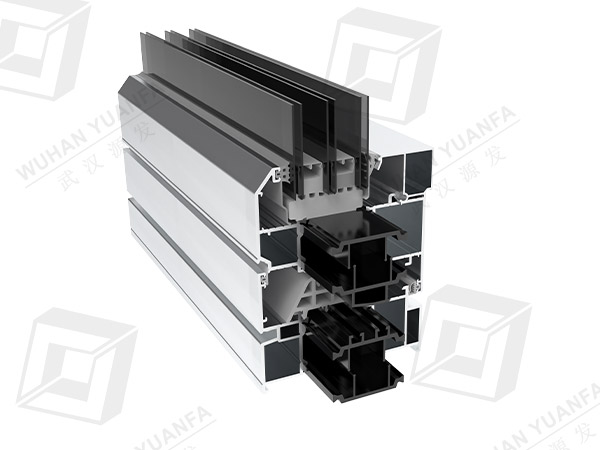
Successful transition requires seamless integration. You must connect polyamide insulating components to existing multi-point locks, corner drives, and handles. Hardware tracks usually feature standardized Euro-groove dimensions. Your polymer rod must match these precise geometries to actuate the locking cams correctly.
Consider the varying clearance requirements across product lines. Heavy-duty commercial hardware operates under much higher torque than standard residential hardware. Commercial applications often require thicker rod walls and deeper engagement points. Residential systems might prioritize slimmer profiles to maximize the visible glass area. Engineering teams must adapt the rod profile to fit the specific hardware family they intend to use.
Implementation reality often dictates how you attach polymer components to aluminum profiles. Polyamide has a relatively low surface energy. This makes traditional adhesives highly ineffective. Standard glues will simply peel off under stress. If you choose structural bonding, you must analyze adhesive compatibility thoroughly. Reference standard structural bonding guidelines for low-surface-energy plastics. You will likely need specialized primers or two-part methacrylate adhesives to achieve a durable bond.
Mechanical fastening presents a different set of challenges. When crimping or fastening polyamide to aluminum, you must calculate the exact shear strength of the joint. Over-crimping will crush the glass fibers and crack the rod. Under-crimping allows the rod to slip during operation. Engineers must define precise torque settings for screws and specific pressure metrics for knurling and crimping machines.
One major risk factor dominates polymer integration: thermal expansion. Polyamide expands and contracts at a substantially different rate than aluminum and glass. While adding 25% glass fiber brings the Coefficient of Linear Thermal Expansion (CLTE) closer to aluminum, a gap still exists. During extreme thermal cycling, such as severe freeze/thaw events, this mismatch generates massive internal stress.
If you rigidly lock the polymer rod to the aluminum frame across its entire length, the system will eventually fail. The weaker material will warp, buckle, or shear its fasteners. To accommodate this differential movement, engineers must design slip joints. Alternatively, you can use specialized flexible adhesives. These adhesives absorb the shear stress caused by thermal expansion, allowing the materials to move independently without breaking the bond.
Plastics behave differently under load than metals. When subjected to continuous static loads, such as the resting weight of heavy triple-glazing, polymers experience "creep." Creep is the slow, permanent deformation of a material over time. You must evaluate the rod's performance under both continuous static loads and intermittent dynamic loads (like opening and closing the sash).
Do not rely on baseline tensile strength alone. Review your vendor's accelerated weathering and cycle-testing data. They should provide evidence showing how the profile holds up after thousands of cycles under simulated wind loads and extreme temperatures.
Load Type | Primary Source | Testing Method | Design Mitigation |
|---|---|---|---|
Static Load | Weight of glazing and sash components | Long-term creep tests at elevated temperatures | Increase glass fiber percentage; optimize wall thickness |
Dynamic Load | User operation and severe wind gusts | Cyclic durability testing (e.g., AAMA 910) | Ensure precise hardware engagement and tight tolerances |
Thermal Stress | Extreme freeze/thaw cycles | Environmental chamber testing | Incorporate slip joints; use elastomeric adhesives |
Choosing the right extrusion partner determines the success of your thermal upgrade. Start by assessing tooling ownership and customization capabilities. Off-the-shelf profiles rarely fit proprietary hardware tracks perfectly. You will likely need custom dies. Ask potential vendors about their lead times and upfront costs for custom die creation. Retaining ownership of the custom tooling ensures you control your supply chain long-term.
Next, demand verifiable quality assurance. Do not accept generic material data sheets. Request batch-level documentation for your specific orders. You need to see material yield strength tests and strict dimensional checks. Crucially, ask for data on fiberglass distribution uniformity. If the glass fibers clump together during extrusion, the rod will develop weak spots. Uniform distribution guarantees consistent strength from end to end.
Finally, evaluate their prototyping and testing support. Theoretical models only go so far. Does the vendor supply rapid physical samples? You need these early in the BoFu stage for physical hardware integration testing. Mocking up the corner drives and locking points is essential. The vendor should provide enough sample material to allow your team to conduct full AAMA mockup validation before committing to mass production.
Polyamide operating rods solve complex thermal bridging issues, allowing modern fenestration systems to meet strict energy codes. However, this transition demands rigorous mechanical and dimensional vetting. You cannot simply swap metal for plastic without engineering oversight.
Always specify a glass-fiber reinforced formulation (like PA66 GF25) to prevent long-term creep and deflection under load.
Design your assemblies to accommodate thermal expansion mismatches and moisture swelling.
Ensure your chosen vendor can hold micro-tolerances over long production runs to keep operating forces within AAMA limits.
Recommend your engineering teams request specific profile samples, material data sheets (MDS), and standard tolerance charts from shortlisted extrusion partners to begin physical integration tests immediately.
A: The industry standard ranges between 25% and 30% glass-fiber reinforcement. Formulations like PA66 GF25 provide the optimal balance of tensile strength, stiffness, and thermal resistance. Falling below 25% drastically increases the risk of the rod flexing under the load of heavy hardware.
A: Polyamide rods can increase operating force if extruded poorly. Friction between the polymer rod and the aluminum channel is the primary factor. High extrusion precision, smooth surface finishes, and correct dimensional alignments are required to keep operating forces below standard AAMA thresholds.
A: Generally, no. Standard polyamide components usually withstand temperatures up to 200°C for short durations, but standard aluminum powder-coating ovens often exceed this limit. We recommend inserting the polymer operating rods post-painting to avoid warping, melting, or dimensional distortion during the curing process.
A: The most common failure points include incorrect bonding due to low surface energy, ignoring the distinct thermal expansion rates between materials, and specifying sub-par extrusion tolerances. These mistakes lead to bowed rods, sheared fasteners, and binding hardware.


