

close
Choose Your Site
Global
Social Media

Author: Site Editor Publish Time: 2026-07-16 Origin: Site
Aluminum window systems face a dual challenge today. You must maintain structural integrity for complex hardware while actively preventing thermal bridging. Modern architectural standards leave zero room for error in these advanced assemblies. Selecting the wrong operating rod material immediately compromises both energy efficiency (U-values) and hardware operation over time. Standard PVC or generic plastics simply fail under continuous mechanical stress and severe temperature fluctuations. When inferior components warp or snap, window units fail field inspections and require invasive maintenance. Engineered polyamide has rapidly become the reliable industry standard to resolve these exact failures. This guide provides a detailed framework for fenestration engineers and procurement managers. You will learn how to evaluate and specify the correct components based on thermal performance, mechanical tolerances, and long-term reliability.
Material composition matters: Standardize on PA66 GF25 (Polyamide 66 reinforced with 25% glass fiber) for the optimal balance of tensile strength and thermal insulation.
Dimensional precision is non-negotiable: Substandard extrusion leads to friction issues in the Euro-groove or locking point failures. Demand tolerances of ±0.1mm.
Moisture conditioning impacts installation: Polyamide is hygroscopic; understanding a supplier's conditioning process prevents post-installation warping or brittleness.
Certifications mitigate risk: Shortlist manufacturers whose thermal break operating rods comply with international standards like EN 14024.
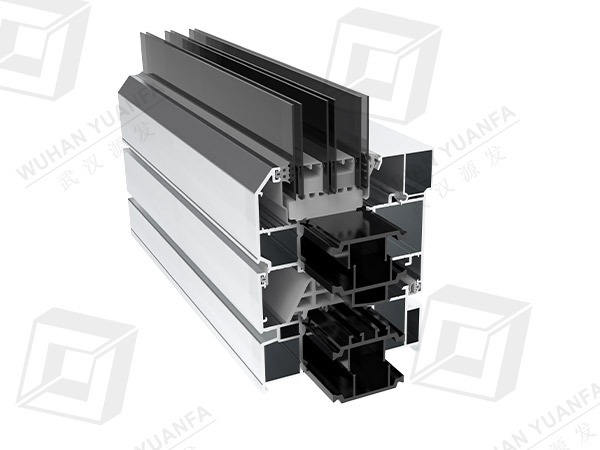
Aluminum is a highly conductive metal. While it provides excellent structural rigidity, it transfers heat rapidly between interior and exterior environments. You need a dedicated thermal barrier to stop this energy transfer. Polyamide effectively interrupts the thermal bridge inside the aluminum extrusion. It significantly lowers the Uf-value (frame thermal transmittance) without sacrificing load-bearing capacity. Engineers rely on it heavily to meet strict global energy codes.
Beyond insulation, the material plays a critical mechanical role. Hardware actuation depends heavily on the integrity of the rod. The component transfers mechanical movement directly from the window handle to the multipoint locking system. It acts as the physical spine of the locking mechanism. When you turn a heavy commercial window handle, the rod pushes shoot bolts firmly into their respective keeps. Selecting high-quality polyamide operating rods ensures optimal transmission of force without bending.
Why do engineers choose polyamide over PVC or polyurethane? The answer lies in thermodynamics. We must look at the linear thermal expansion coefficient. Standard plastics expand significantly faster than aluminum when exposed to heat. This physical mismatch causes severe bowing inside the frame. Conversely, PA66 GF25 expands and contracts at a rate nearly identical to aluminum. They move together synchronously during extreme weather cycles. This synchronization prevents shear stress, ensures smooth hardware operation, and completely eliminates structural warping.
We must evaluate these components using strict technical criteria. You cannot rely on visual inspection alone. Fenestration experts use five distinct parameters to qualify polyamide rods for windows before integrating them into structural designs.
Glass Fiber Content and Distribution: You must verify the exact 25% glass fiber reinforcement ratio. Manufacturers inject microscopic glass fibers into the polymer base to increase stiffness. You should also assess longitudinal fiber alignment. Proper alignment during the extrusion process impacts structural rigidity directly. It prevents the rod from snapping under extreme torque.
Dimensional Stability and Extrusion Tolerances: Establish a strict baseline requirement for exact profile dimensions. Extruders must maintain a tolerance of ±0.1mm. Inconsistent widths or fluctuating thicknesses lead directly to hardware jamming. Loose locking mechanisms also occur when dimensions run too small.
Thermal Conductivity (Lambda Value): Look for documented lambda values. High-grade PA66 GF25 typically hovers around 0.30 W/mK. You need precise thermal metrics to ensure accurate thermal modeling. Building simulators rely on these inputs for overall window energy ratings.
Friction Coefficient: Evaluate the surface finish carefully. Extrusion dies can leave micro-ridges if poorly maintained. A lower friction coefficient ensures smooth operation of the window handle. It simultaneously reduces friction wear on all connected transmission hardware.
Tensile and Shear Strength: Demand empirical test data for mechanical load capacity. Modern architecture favors heavy triple-glazed commercial window applications. The rod must handle aggressive push-and-pull forces without yielding or deforming.
Material Type | Thermal Conductivity (W/mK) | Thermal Expansion Coefficient | Structural Rigidity |
|---|---|---|---|
PA66 GF25 | ~0.30 | Matches Aluminum closely | Excellent load capacity |
Standard PVC | ~0.17 | High (Severe mismatch) | Poor under stress |
Polyurethane (PU) | ~0.12 | Moderate | Low mechanical strength |
Proper integration separates average assemblies from high-performance window units. You must harmonize the rod geometry precisely against the specific aluminum extrusion profile. Tolerances dictate operational success.
First, consider Euro-groove compatibility. Most European-style aluminum windows utilize a standard 16mm groove. You must select thermal break operating rods engineered to fit this cavity flawlessly. Custom fenestration systems might require bespoke rod dimensions. If the fit is too tight, handle operation becomes unacceptably stiff. If the fit is too loose, the entire mechanism rattles and loses critical sealing compression.
Next, review all hardware connectivity points. Analyze how the rod interfaces with standard corner drives, robust shoot bolts, and locking keeps. Assembly teams must cut and punch these components rapidly on the factory floor. The material must shear cleanly without splintering or fracturing around the punched holes. Clean cuts ensure the metal hardware grips the polymer securely.
Finally, address surface treatment survivability. Window manufacturers often ask whether they should insert the operating rods before or after aluminum surface finishing. If your production line inserts them prior to powder coating, the material faces immense thermal stress. The curing ovens easily reach temperatures up to 200°C. High-quality PA66 GF25 withstands this baking process perfectly. It emerges without deformation, blistering, or any loss of mechanical properties. Lower-grade plastics will melt or warp instantly inside the oven.
Even the best architectural designs fail if manufacturers ignore fundamental material science. PA66 possesses specific chemical traits you must respect during handling and assembly. Ignoring these rules guarantees production failures.
The most critical variable is moisture absorption, known scientifically as hygroscopy. PA66 naturally absorbs moisture from its surrounding environment. Raw, newly extruded polyamide is exceptionally dry. In this unconditioned state, it remains rigid but highly brittle. Reputable suppliers understand this chemistry deeply. They utilize controlled moisture conditioning processes before shipping. They expose the material to specific humidity levels, allowing it to absorb about 2% to 3% water by weight. This moisture acts as a plasticizer. It transforms the brittle profile into an incredibly tough, impact-resistant component. If you install unconditioned profiles, they often shatter during pneumatic punching.
Another severe risk involves recycled material dilution. Some extruders mix high percentages of regrind or recycled plastics into their hoppers. They do this to lower material consumption. Unfortunately, excessive regrind destroys structural integrity. The glass fibers break down during re-melting, and the polymer chains shorten. You lose all predictability in mechanical performance. Always demand virgin material. If utilizing recycled blends for sustainability targets, mandate strictly controlled and certified ratios.
Lastly, storage and handling flaws ruin perfectly good materials. Window manufacturers must store these products in climate-controlled environments. They must lay the profiles flat on continuous shelving. Leaning them against a wall causes permanent bowing. Prolonged exposure to sub-zero, bone-dry winter air can draw the required moisture back out of the plastic, making it brittle right before installation.
Best Practice: Always store polyamide extrusions horizontally in environments maintaining at least 50% relative humidity.
Common Mistake: Punching hardware slots in freezing conditions without pre-warming the rods, leading to micro-fractures.
Best Practice: Request continuous documentation proving the specific moisture content of the profiles prior to dispatch.
Common Mistake: Assuming all black plastic profiles offer the same thermal expansion properties as PA66 GF25.
Choosing a supply partner dictates the ultimate reliability of your fenestration systems. You must implement a strict vetting protocol focused purely on engineering excellence and consistent quality controls. Skip superficial evaluations and dig into their laboratory procedures.
Begin by auditing their in-house testing capabilities. Leading extruders do not guess about quality. They conduct aggressive batch testing directly on the factory floor. They pull samples from every production run to test tensile strength and impact resistance. They use precise laser calipers to verify dimensional accuracy down to the micrometer. If a supplier outsources all testing, they cannot catch extrusion deviations in real time. Fast internal feedback loops guarantee superior product consistency.
You must also demand comprehensive compliance and certifications. The fenestration industry relies heavily on EN 14024. This international standard specifically governs metal profiles equipped with thermal barriers. It dictates grueling thermal cycling tests and mechanical shear tests. Suppliers should also maintain ISO 9001 certification to prove they utilize standardized manufacturing procedures.
Quality assurance requires total transparency. Ask your partners to provide detailed lot traceability. If a locking mechanism fails in the field five years after installation, you need the ability to trace that specific rod back to its exact polymer batch. Rigorous supplier assessment ensures your assemblies survive decades of daily actuation and severe seasonal weathering.
Choosing the correct polymer components for aluminum window internals remains a strict engineering decision. It is never a simple commodity purchase. Proper material evaluation prevents structural failures, eliminates thermal bridges, and guarantees smooth multipoint locking operations for the end user. You must prioritize precise dimensional tolerances, verified glass fiber content, and proper moisture conditioning protocols above all else.
Take the following action steps to secure your production line:
Request physical samples and test them immediately in your actual Euro-groove extrusions to verify friction levels.
Demand comprehensive Material Data Sheets (MDS) detailing precise lambda values and tensile limits.
Review their in-house batch testing reports specifically checking for mechanical shear strength consistency.
Execute a limited pilot run to test pneumatic punching behavior and powder coating oven survivability before committing to full production.
A: PA66 reinforced with glass fiber (PA66 GF25) offers superior mechanical strength, high-temperature resistance, and a thermal expansion rate perfectly matched to aluminum. Standard plastics will warp under heat, melt during powder coating, or snap under mechanical pressure.
A: Yes, high-quality PA66 GF25 rods can easily withstand the 200°C temperatures of powder coating ovens. However, specific mechanical tests must be passed post-baking to ensure the polymer has not become brittle.
A: Request the Material Data Sheet (MDS), check for EN 14024 certification, and inspect cross-sections under magnification for uniform glass fiber distribution and strict dimensional tolerances.
A: Polyamide relies on a specific internal moisture content for its flexibility and impact resistance. If stored in completely dry, freezing conditions without proper pre-conditioning by the manufacturer, it temporarily loses its elasticity.


