

close
Choose Your Site
Global
Social Media

Author: Site Editor Publish Time: 2026-08-28 Origin: Site
Discovering a flawed thermal break after the aluminum extrusion and crimping process causes massive headaches. It leads to catastrophic scrap rates. You will face severe project delays. Facade and window manufacturing carry extremely high stakes. Pre-assembly quality control represents more than a basic compliance step. It serves as a critical risk mitigation strategy for OEMs. Overseas buyers rely on this step heavily. Finding a defect before assembly saves enormous factory resources. We need to catch material issues early. This proactive approach protects your profit margins. You need a standardized, evidence-based inspection framework. You must evaluate every single Polyamide Profile thoroughly. Do this before it ever touches your production line. This guide reveals exactly what you should check. We will explore visual guidelines and mechanical testing requirements. We also cover critical global compliance standards. Following these precise steps ensures your thermal break performs reliably. It guarantees success in demanding architectural environments.
Visual inspections are necessary but insufficient; physical and mechanical testing is required to verify structural integrity.
Dimensional accuracy (tolerances) dictates the success of the knurling and rolling assembly process.
Authentic PA66 GF25 (25% glass fiber reinforced polyamide) must be validated for proper glass fiber distribution to ensure thermal and mechanical performance.
Evaluating a supplier requires reviewing their internal QA documentation and batch-testing consistency, not just the golden sample.
Manufacturers often face tremendous pressure on the factory floor. They rush the inspection phase to meet production quotas. You cannot afford to skip incoming quality checks. Compounding costs quickly pile up when manufacturing failures happen. Shearing during the rolling process destroys expensive aluminum extrusions. Poor thermal insulation leads to entirely rejected product batches. Over time, faulty profiles cause severe exterior facade degradation. These mistakes harm your brand reputation permanently.
Many buyers fall into a very dangerous mental trap. They assume a smooth exterior finish means high quality. We must emphasize the "don't judge by appearance alone" principle. A profile might look perfectly flawless to your inspectors. However, it could hide dangerous internal voids inside. It might contain incorrect internal moisture content. This hidden flaw causes sudden brittleness. It shatters instantly when pressure hits during crimping. You lose the entire aluminum frame when this happens.
What does a successful incoming inspection actually look like? We define success through strict, highly actionable criteria. You must formalize these standards across your entire organization.
Implementation of a highly repeatable testing process.
Establishment of documented threshold limits for all metrics.
Immediate quarantine of any non-compliant material batches.
Clear communication protocols for notifying the supplier quickly.
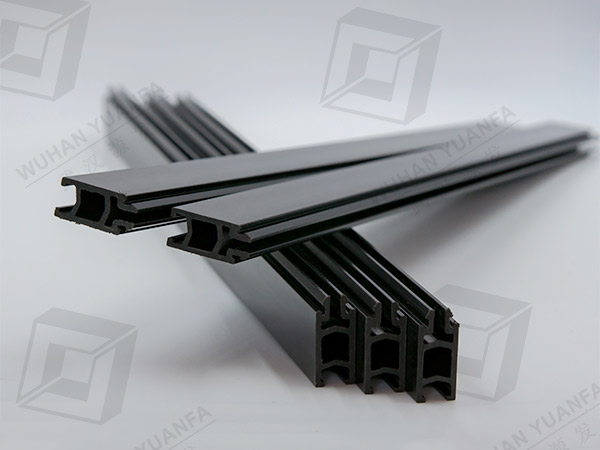
Your first line of defense happens right on the receiving dock. Visual and dimensional checks identify gross defects quickly. They require minimal equipment. You can train your floor staff easily on these basics.
Examine the profile under bright, even lighting conditions. Look closely for blistering or pitting on the plastic. Fiberglass exposure on the surface indicates a major problem. It reveals poor extrusion temperature control by the manufacturer. The extrusion die might have been far too cold. Check for warping across the entire material length. You can do this on a flat inspection table. Bowing signals uneven cooling during the extrusion phase. A twisted profile will jam your assembly equipment constantly. Reject these pieces immediately to prevent assembly downtime.
Dimensional accuracy dictates your ultimate assembly success entirely. You must check the overall width carefully. Wall thickness needs precise measurement using calibrated digital calipers. Specifically evaluate the insertion foot geometry. This part slides directly into the aluminum cavity. If it fails to fit, the entire system fails. The knurling teeth cannot bite into the material properly.
Tight tolerances are absolutely non-negotiable in this industry. They often fall strictly within ±0.05mm to ±0.1mm. This strict range prevents loose crimping entirely. It stops cracking during the thermal break assembly. When tolerances drift, the aluminum grips the plastic unevenly. You lose structural integrity instantly under wind pressure.
Acceptable Dimensional Tolerances
Measurement Zone | Standard Target | Tolerance Limit | Impact of Failure |
|---|---|---|---|
Overall Width | Per technical drawing | ±0.10 mm | Misaligned thermal barrier |
Wall Thickness | 1.80 mm - 2.00 mm | ±0.05 mm | Reduced structural load capacity |
Insertion Foot | Application specific | ±0.05 mm | Jams in aluminum cavity or loose fit |
Visual checks only tell half the quality story. You must prove the material works under heavy stress. An authentic Facade Polyamide Profile requires rigorous physical validation. You cannot cut corners here.
Transverse tensile strength testing remains absolutely essential. We use dedicated pull tests to measure this capacity. The profile must withstand immense external wind loads. It also accommodates daily thermal expansion effectively. The inner and outer aluminum frames expand at different rates. The thermal break absorbs this shearing stress constantly. If the shear capacity is too low, the frame composite fails. The window essentially falls apart under environmental pressure. You must demand shear test reports for every batch.
Verify the standard 25% glass fiber content closely. The industry knows this standard commonly as PA66 GF25. Never trust a shipping label blindly. Request a formal ash test from the supplier. You burn away the plastic to weigh the remaining glass. Cross-sectional microscopic analysis works perfectly here as well. You must ensure fibers distribute evenly throughout the profile. They should align correctly along the main extrusion axis. Clumped fibers create dangerous weak spots. Proper alignment gives the profile its incredible tensile strength.
Polyamide acts as a naturally hygroscopic material. It absorbs and releases moisture based on the environment. Profiles get too dry in standard factory storage. They become extremely brittle over just a few weeks. They shatter instantly during the mechanical crimping process. Conversely, too much moisture ruins the material differently. It severely compromises overall dimensional stability. The profile swells and warps unpredictably. You must measure this moisture status carefully. Ensure it sits right in the optimal sweet spot before assembly begins.
You build commercial facades to last for decades. The thermal break must survive extreme weather conditions. Compliance testing guarantees this vital long-term performance. It protects your business from future liability claims.
You need highly reliable global compliance benchmarks. EN 14024 serves as the ultimate international gold standard. It dictates strict requirements for metal profiles using thermal barriers. Always verify your supplier meets this specific regulatory standard. Ask for the official, unabridged laboratory test reports. Do not accept summarized versions of these documents. True compliance removes massive legal liability from your shoulders. It reassures your end clients about the building's safety.
Windows go through brutal manufacturing steps routinely. You must test for dimensional stability under severe heat. Shrinkage tests verify this capability effectively. The profile cannot deform during industrial powder coating. Baking processes often exceed 200°C for extended periods. If the polyamide shrinks, the entire aluminum frame warps. Perform a simple oven test in your facility. Measure the exact length before and after a heat cycle. Reject anything showing shrinkage beyond the specified safety limit.
Suppliers sometimes try to cut costs secretly. They blend unauthorized recycled plastics into the extrusion mix. This practice creates massive risks for unsuspecting buyers. You should watch out for inconsistent melt flow characteristics. Unpredictable mechanical failures occur frequently with these recycled blends. The material degrades much faster under UV exposure.
How do you detect this deception early? Look closely for strange surface color variations. Check the mechanical test consistency across multiple deliveries. Recycled materials show wild swings in tensile strength from batch to batch. Virgin materials behave predictably every single time. Demand strict guarantees of virgin material usage in your procurement contracts.
You cannot test every single piece manually. You must rely heavily on the supplier's internal systems. Shortlisting requires a strict document review process. You need to verify their internal maturity.
Demand comprehensive batch testing reports immediately. You need a verified Certificate of Analysis (COA). A Technical Data Sheet (TDS) provides the engineering baseline. Generic marketing sheets offer absolutely zero value. They only show best-case scenarios for perfect conditions. Insist on real data from recent production runs. Do this before placing any large bulk orders. A reliable supplier shares these documents willingly.
Evaluate your vendor’s manufacturing maturity carefully. Ask specific questions about their daily floor operations. Do they use automated laser micrometers during extrusion? This technology ensures continuous, real-time tolerance checks. Manual micrometer checks miss far too many critical defects. Do they track lot numbers diligently? Full material traceability matters deeply. It saves you from massive, untraceable product recalls later. It allows you to isolate a bad batch easily.
QA Documentation Comparison Chart
Document Type | Provided By | Verification Purpose |
|---|---|---|
Technical Data Sheet (TDS) | Vendor | Establishes baseline engineering specifications |
Certificate of Analysis (COA) | Vendor | Confirms specific batch meets physical requirements |
Ash Test Report | Third-Party Lab | Validates 25% glass fiber content |
EN 14024 Certification | Accredited Agency | Proves compliance with international thermal barrier standards |
Never trust a new supplier completely unconditionally. Always validate their initial marketing claims. Independent testing labs provide the unbiased truth. Use trusted organizations like Madison Group or SGS. They test new overseas suppliers highly accurately. Send them a random sample from your very first shipment. Compare their lab results against the supplier's official COA. This builds real trust based on concrete evidence. It prevents costly surprises during your final assembly phase.
Your assembly line demands flawless raw materials. Rigorous pre-assembly checks act as a vital insurance policy. They prevent catastrophic manufacturing failures entirely. They protect your profit margins from unnecessary scrap rates. You must prioritize physical testing over visual checks alone.
Take immediate action on these insights today. Formalize these specific quality checks now. Turn them into a binding Service Level Agreement (SLA). Incorporate every threshold into your purchase order specifications. Do not leave quality to mere chance. Document exactly what you expect from your partners. Hold your suppliers fully accountable to these elevated standards.
A: You use specialized moisture analyzers for this exact task. Weight-loss-on-drying (LOD) methods remain the reliable industry standard. You heat the material sample and measure the exact weight change. You should aim for an optimal moisture range. This typically falls precisely between 1.5% and 2.5% right before assembly.
A: The composite aluminum-polyamide window frame loses its structural rigidity completely. It becomes dangerously weak under load. The inner and outer aluminum frames may begin sliding against each other. This happens frequently under heavy wind loads. The window will ultimately fail in the field.
A: This typically happens due to unacceptably low moisture content. Dry profiles become extremely brittle over time. It might also stem from strictly incorrect dimensional tolerances. If the insertion foot is too thick, it cracks under rolling pressure. Poor glass fiber dispersion also creates hidden weak points.


