

close
Choose Your Site
Global
Social Media

Author: Site Editor Publish Time: 2026-08-28 Origin: Site
Exterior facades face brutal engineering realities every single day. They endure extreme cyclical stress from harsh UV radiation, relentless moisture, and violent temperature fluctuations. These environmental forces aggressively test the limits of every building component. Specifying a generic thermal break poses massive structural and financial risks. If the barrier fails, thermal bridging and moisture infiltration quickly destroy building efficiency. Evaluating a high-performance polymer demands rigorous, verifiable weather-resistance data rather than vague promises. We designed this guide to help you navigate these complex material requirements safely. It provides architects and procurement teams a highly objective evaluation framework. You will learn how to verify the long-term weatherability and compliance of thermal breaks before final specification.
A specification-grade polyamide profile must demonstrate dimensional stability across severe temperature extremes (-40°C to +80°C) without compromising structural sheer strength.
Moisture absorption is an inherent trait of polyamide; evaluating suppliers based on their glass-fiber reinforcement (e.g., PA66 GF25) and conditioning processes is mandatory to mitigate hydrolysis.
Integrating a soundproof Polyamide 66 profile requires validating its weathering resistance, as acoustic performance degrades immediately if environmental stressors cause micro-warping or seal failures.
Shortlisting should rely strictly on standardized aging tests (e.g., EN 14024 or ASTM equivalents) rather than marketing claims.
Poor material choices cascade into highly expensive building failures over time. When you specify sub-optimal components, the downstream financial consequences multiply rapidly. If a basic thermal barrier degrades under environmental stress, thermal bridging occurs immediately. You then face massive HVAC energy penalties as heating and cooling escape the envelope. Internal condensation also forms rapidly inside the aluminum framing cavities. This trapped moisture breeds mold and damages expensive interior wall finishes.
UV degradation and severe thermal fatigue weaken sheer strength continuously. The aluminum assembly relies entirely on this structural bond for stability. High wind loads on skyscrapers can literally sheer a weakened connection apart. A premium Polyamide Profile protects developers from these hazardous structural failures.
Developers carry significant liability risks when facades age prematurely. Modern building codes hold project owners accountable for structural integrity and energy performance. Premature aging often forces complete and highly disruptive facade remediation. These complex repair costs heavily burden the project balance sheet. Evaluating environmental resilience upfront shields stakeholders from downstream litigation and massive repair bills.
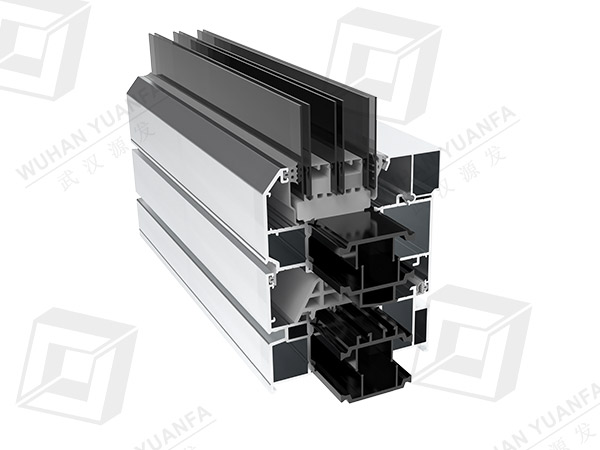
Temperature swings heavily impact dimensional stability across the facade. The polymer must maintain an acceptable coefficient of linear thermal expansion (CLTE). A quality profile matches the expansion rate of the surrounding aluminum frame. They must move together during extreme environmental shifts. If they expand at different rates, the mechanical crimp fails during freeze-thaw cycles. This exact matching prevents internal stress fractures within the framing system.
Moisture resistance presents another critical technical reality for engineers. All polyamides naturally absorb moisture from their surrounding environment. Water molecules act as a temporary plasticizer inside the polymer matrix. You must meticulously evaluate the moisture conditioning process at the manufacturing level. Proper conditioning ensures the material reaches a stable equilibrium state before site installation. Without proper factory conditioning, the material continues shifting post-assembly.
Prolonged solar exposure threatens the raw polymer aggressively during the construction phase. Building facades often sit unsealed for months while awaiting final glass installation. Direct sunlight breaks down unprotected polymer chains very quickly. Manufacturers must include robust UV stabilizers and anti-oxidants in their raw polymer mix. These specific chemical additives prevent surface chalking and deep structural micro-cracking.
Critical Baseline Performance Parameters
Metric | Acceptable Standard | Failure Consequence |
|---|---|---|
Thermal Expansion Match | Comparable to Aluminum | Crimp failure during freeze-thaw |
Moisture Equilibrium | Factory Pre-conditioned | Post-installation warping |
UV Stability | Anti-oxidant Additives Present | Surface chalking and cracking |
Modern urban projects demand superior noise reduction from exterior envelopes. A high-grade Soundproof Polyamide 66 Profile only functions properly if its structural geometry stays intact. Weather duress constantly threatens this highly delicate acoustic geometry. Soundwaves easily exploit tiny structural weaknesses. If the barrier distorts, urban noise freely enters the interior workspace.
Millimeter-level thermal distortion ruins the facade's delicate acoustic seal. Moisture expansion creates microscopic gaps between the glass and framing. These gaps allow severe noise leakage, rendering expensive noise-canceling glass assemblies entirely ineffective. Traffic noise and sirens pass straight through compromised weather seals. Even slight weathering damage causes an immediate drop in decibel reduction ratings.
Acoustic components face extreme dynamic loads during intense weather events. High-grade PA66 parts maintain crucial acoustic dampening properties during heavy storms. They actively absorb vibrations from driving rain and heavy wind pressure. Standard polymers become brittle and transmit these harsh vibrations indoors. We strongly recommend strictly auditing acoustic profiles for long-term structural resilience.
Generic marketing claims like "weatherproof" carry absolutely zero engineering weight. You must demand specific testing frameworks for objective material verification. Standardized aging tests separate prime materials from cheap, high-risk substitutes. Subjective promises cannot protect a building from decades of environmental stress. Rigorous data provides the only true safety net for architects.
Look for strict supplier compliance with the EN 14024 standard. This standard dictates precise performance requirements for thermal barrier profiles. Require empirical data on 1,000-hour accelerated weathering tests from independent laboratories. These intense tests simulate decades of wear in just weeks.
Salt spray testing validates resistance to coastal air corrosion.
Intense UV exposure testing verifies the strength of polymer anti-oxidants.
High humidity cycles test the stability of the glass-fiber reinforcement.
Material traceability remains equally vital during the validation process. Verify the exact raw material source with your selected extrusion partner. Prime PA66 vastly outperforms recycled variants in long-term weatherability. Recycled polymers often contain hidden impurities causing unpredictable expansion rates. Check the specific percentage and orientation of the glass fiber reinforcement. Facade applications require a precise 25% glass fiber mix for maximum stability.
Improper on-site storage destroys otherwise perfectly engineered materials before assembly. Leaving profiles exposed directly to unshaded UV degrades the polymer chain. Excess ground moisture absorption alters the material's precise dimensions. Contractors must elevate materials off damp ground and use opaque protective covers. Small handling errors easily undo robust factory engineering.
Assembly compatibility represents another major hurdle for fabrication teams. The weather-resistant strip must maintain its properties during intense mechanical crimping. It must also survive the high-temperature powder-coating baking process perfectly. Baking ovens often reach 200°C for extended periods. Inferior polymers warp or melt slightly, ruining the structural geometry forever.
Implement these next-step actions for your procurement teams immediately:
Request detailed Technical Data Sheets proving post-aging sheer strength.
Ask for project references in similar, extreme climate zones.
Require transparent documentation outlining the supplier’s factory moisture conditioning processes.
Demand third-party laboratory verification for all submitted environmental testing data.
Weather resistance in facade thermal breaks is a measurable, engineered outcome. It is never a subjective or optional feature. Evaluating a component against strict environmental tolerances protects the entire building envelope's lifespan. We highly encourage you to audit your prospective supplier’s testing documentation immediately.
Always verify EN 14024 compliance data before placing bulk material orders.
Confirm all exterior facade materials use pristine 25% glass fiber reinforcement.
Mandate proper on-site storage protocols to prevent pre-assembly moisture damage.
Align procurement choices with long-term facade stability over short-term savings.
A: A premium PA66 GF25 profile should easily match the lifespan of the aluminum facade itself, typically exceeding 40 years. This longevity requires proper glass-fiber reinforcement, specialized UV stabilizers, and correct moisture conditioning. Always request empirical lifespan data and protective facade design integration guidelines from the manufacturer.
A: Water acts as a temporary plasticizer inside the PA66 matrix. This temporarily increases flexibility but slightly reduces sheer strength. Adding exactly 25% glass fiber reinforcement physically stabilizes the polymer structure. This precise reinforcement ensures the material safely handles designed sheer loads even at maximum moisture equilibrium.
A: Yes. While the base material remains similar, the acoustic performance threshold is significantly stricter. Acoustic dampening relies entirely on perfect geometry. Even a one-millimeter warp from thermal degradation breaks the tight acoustic seal. Sound easily travels through these newly formed micro-gaps, ruining the noise reduction rating.


