

close
Choose Your Site
Global
Social Media

Author: Site Editor Publish Time: 2026-06-30 Origin: Site
Stricter global energy codes like ASHRAE 90.1 and LEED v4 challenge facade engineers today. They force us to maximize the thermal performance of aluminum framing without sacrificing essential structural integrity. Selecting the wrong thermal break creates serious project risks. It easily leads to elevated U-factors and highly damaging interior condensation issues. Condensation destroys interior finishes and promotes mold growth. Worse, improper selection might cause catastrophic shear failure under dynamic wind loads, endangering public safety. You need a dependable, heavily tested solution to prevent these expensive failures. This guide provides a detailed technical and commercial evaluation framework. It helps you specify the most reliable high-performance polyamide profiles tailored specifically for complex curtain wall fabrications. We cover critical material standards, advanced geometric designs, and key fabricator readiness metrics. You will discover exactly how proper testing and verification safeguard your facade against premature structural failure and ensure compliance with modern green building standards.
Material Standard: High-grade PA66 GF25 insulating profiles are the industry baseline due to their structural load-bearing capacity and a coefficient of linear thermal expansion (CLTE) that matches aluminum.
Geometry Dictates Performance: The shift from standard flat profiles to multi-cavity and complex geometries is required for high-end curtain wall systems to achieve passive house-level U-values.
Fabricator Readiness Matters: Evaluating a profile isn't just about thermal data; it requires assessing dimensional tolerances, moisture conditioning reliability, and compatibility with existing crimping/rolling machinery.
Verification is Mandatory: Procurement shortlists should strictly mandate third-party testing data for shear strength, transverse tensile strength, and aging resistance (e.g., EN 14024 or AAMA standards).
Standard aluminum framing easily acts as a massive thermal bridge. Metals conduct heat rapidly. Without a structurally sound aluminum facade thermal barrier, modern curtain walls fail entirely. They miss stringent commercial building energy standards. They also risk severe interior condensation during winter months. Condensation damages interior drywall, ruins expensive finishes, and heavily degrades indoor air quality. We must break this thermal bridge effectively.
Unlike simple residential windows, commercial curtain walls face extreme, unpredictable dynamic wind loads. They support massive dead loads from heavy, triple-pane insulated glass units. The thermal break sits directly at the structural heart of this complex assembly. It must transfer these intense loads seamlessly between the inner and outer aluminum extrusions. If the thermal break flexes too much or fails, the entire facade loses structural integrity. The inner and outer frames will act independently, causing massive deflections and glass breakage.
Many older architectural systems relied on polyurethane pour-and-debridge methods. Today, polyamide completely dominates high-performance building systems for several distinct reasons. Polyamide allows manufacturers to paint inner and outer aluminum profiles completely different colors before final assembly. This dual-color capability offers a major aesthetic advantage for architects. Additionally, high-quality polyamide withstands extreme powder-coating baking temperatures. They easily endure up to 200°C in curing ovens without melting or losing structural shape. Most importantly, polyamide provides superior structural shear performance. This unmatched shear strength remains absolutely essential for towering, multi-story facades facing high-altitude wind pressures.
Facade engineers must carefully specify the exact chemical blend of the barrier. The non-negotiable standard across the industry is Polyamide 66 reinforced with 25% glass fiber. You will often see this abbreviated in technical catalogs. PA66 GF25 insulating profiles deliver the perfect balance of rigid tensile strength and exceptional thermal resistance. The nylon base provides toughness, while the glass fibers add necessary stiffness.
Glass-fiber orientation dictates the success of this material. The advanced extrusion manufacturing process aligns the glass fibers precisely along the longitudinal axis. This specific alignment ensures the polyamide expands and contracts at the exact same rate as the surrounding aluminum extrusions. When dissimilar materials share the same coefficient of linear thermal expansion (CLTE), you prevent dangerous internal shear stress. You avoid unexpected bowing, buckling, or structural delamination over decades of harsh seasonal temperature cycling. The facade remains perfectly stable, whether in freezing winters or scorching summers.
Always maintain healthy skepticism during the procurement phase. Some suppliers eagerly offer low-cost alternative thermal breaks to win bids. They might use unverified glass fiber distribution methods. Some even use recycled polyamide blends to cut manufacturing costs. These dangerous shortcuts heavily compromise the long-term tensile strength of the profile. When glass fibers clump unevenly, or the base resin degrades due to recycling, the profile becomes fatally brittle. A compromised profile might crack instantly during the mechanical rolling process. It could also fail catastrophically under extreme weather events. Stick exclusively to certified virgin PA66 GF25 materials to ensure predictable, lasting structural performance.
Material Property | Standard PA66 GF25 | Low-Cost Recycled PA Blends | Polyurethane (Pour & Debridge) |
|---|---|---|---|
Thermal Expansion | Matches Aluminum perfectly | Inconsistent, high risk of bowing | Mismatched, requires careful design |
Heat Resistance | Up to 200°C (Bakeable) | Variable, often melts or warps | Low (Maximum ~80°C limit) |
Shear Strength | Excellent structural load transfer | Weak, prone to brittle failure | Moderate, less suitable for high winds |
Longevity & Aging | High resistance to thermal fatigue | Rapid degradation under UV/heat | Susceptible to dry shrinkage over time |
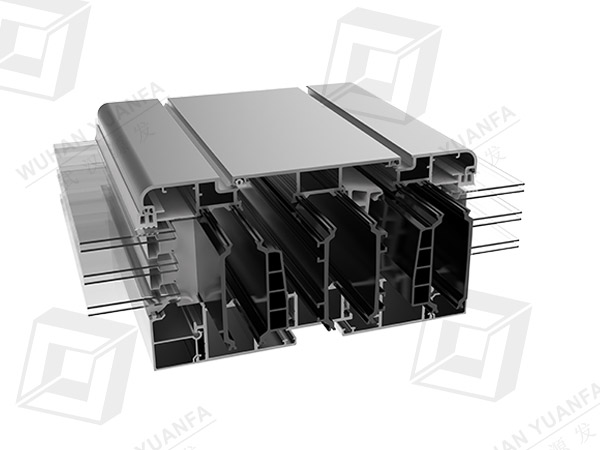
Thermal breaks come in many different shapes and sizes. System performance relies entirely on choosing the exact right geometric design for your specific climate. Standard flat and simple C-shaped profiles serve basic structural needs well. They are best suited for baseline commercial projects in mild climates. They prioritize budget cost-efficiency and offer very straightforward shop assembly. However, they only provide moderate thermal resistance and cannot meet strict passive building codes.
High-performance facades require a dramatically different technical approach. You must specify complex multi-cavity and hollow profiles. Air cavities trapped within the polyamide extrusion drastically reduce convective heat transfer across the frame. This complex internal geometry helps heavy curtain wall systems achieve rigorous, passive house-level U-values. The still air acts as an additional insulating layer without adding weight.
Advanced geometries also incorporate specific connection points for secondary materials. Look closely for polyamide profiles that include flags, tails, or fins. These thin extensions support co-extruded foam inserts directly inside the aluminum cavity. When you combine internal fins and foam, you create a continuous, unbroken insulation line directly at the glazing edge. This blocks critical thermal bridging near the sensitive glass spacer.
Always verify strict system compatibility before ordering bulk materials.
Check if the overall profile geometry matches your specific pressure plate design perfectly.
Ensure the physical dimensions align identically with your mullion and transom extrusion depths.
Confirm the profile legs lock cleanly into the aluminum knurling cavities without excess play.
Validate that the screw bosses align properly with your fastening hardware.
A poorly matched profile inevitably causes massive assembly headaches on the shop floor and weakens the entire facade structure.
Selecting the right polyamide profiles for aluminum facade systems requires strict, uncompromising procurement guidelines. Start by analyzing dimensional tolerance. Suppliers must strictly adhere to tight dimensional tolerances, often mandated within ±0.05mm. Inconsistent profiles cause massive downstream issues. They lead to frequent jamming in your automated rolling machines. They also create incredibly weak knurling or crimping connections, deeply compromising structural safety.
Next, critically evaluate moisture conditioning practices. Polyamide is a naturally hygroscopic material, meaning it inherently absorbs moisture from the ambient air. Profiles must be properly moisture-conditioned by the manufacturer in specialized chambers before shipping. Conditioning ensures they possess the correct impact resistance upon arrival. Bone-dry profiles become extremely brittle. They will likely crack, splinter, or shatter during the aggressive mechanical assembly process.
Testing and compliance remain absolutely non-negotiable for commercial builds. Document the strict necessity for suppliers to provide validated, recent third-party test reports. You must evaluate specific mechanical metrics:
Characteristic shear strength ($T_c$): This metric must be tested both pre- and post-thermal cycling. It guarantees long-term stability under severe sheer stress caused by wind loads.
Transverse tensile strength ($Q_c$): This ensures the profile can aggressively resist pulling forces from negative wind suction and heavy glazing weights.
Regional Mandates: Always demand strict, documented compliance with prevailing standards like AAMA TIR-A8 in the US or EN 14024 in European markets.
You should never skip these vital compliance checks. They represent the only objective way to prove a thermal break will perform safely over decades of exposure.
Even the absolute best insulating materials fail quickly if installed improperly. Machinery calibration represents a major implementation risk for any shop. Fabricators face the constant danger of inadequate knurling or aggressive over-crimping. The aluminum extrusion cavity must be knurled perfectly to create teeth that grip the polyamide legs. If the fabricator's rolling machine does not apply the correct, uniform pressure, the joint will simply shear apart under load. The highest quality PA66 GF25 profile cannot possibly compensate for bad machine calibration or dull knurling wheels.
Supply chain reliability and material lead times also demand your focused attention. Evaluate the manufacturer's total extrusion capacity closely. Custom curtain wall profiles frequently require complex, proprietary steel dies. Assess their upfront tooling costs and prototyping speed before committing. A slow die-creation and sampling process will severely delay your entire construction schedule, leading to massive financial penalties.
Finally, address the strict operational reality of physical storage requirements. You cannot just leave thermal breaks sitting outside in the yard.
They must be kept perfectly flat on dedicated racks to prevent permanent bowing or twisting.
Keep them entirely away from direct UV exposure before assembly to prevent premature material degradation.
Store them in controlled humidity environments to maintain optimal moisture content.
Avoid storing them near high-heat sources that could warp the thin geometric fins.
Controlled storage prevents critical moisture loss or dimensional warping. Proper handling guarantees the profiles remain flexible, durable, and fully ready for secure mechanical crimping.
Finalizing your supplier shortlist requires a careful, highly analytical decision matrix. You must meticulously balance certified structural performance against your project's strict U-value targets. Verify PA66 GF25 material integrity for absolute safety, and optimize internal profile geometry for maximum thermal efficiency. Do not ignore fabricator compatibility during this process. Ensure tight dimensional tolerances and proper moisture conditioning accurately match your shop's machinery capabilities.
Take immediate action to secure the exact right materials for your facade project. Request accurate CAD and BIM models of the proposed profiles to run preliminary thermal simulations. Order physical samples to conduct extensive in-house crimping and knurling tests before signing a contract. Audit the manufacturer's ISO and quality control certifications directly to verify their production consistency. Finally, always demand current third-party testing reports confirming complete EN 14024 or AAMA TIR-A8 compliance. Following these rigorous steps ensures your curtain wall project remains structurally sound, highly energy-efficient, and fully protected against future liabilities.
A: Generally, a wider profile creates a larger thermal break, which effectively lowers the overall U-value. This larger separation drastically reduces conductive heat transfer between the interior and exterior aluminum frames. However, wider profiles naturally face higher mechanical stress. They must be carefully engineered with optimal geometry to maintain essential shear strength across the larger gap.
A: Yes. High-quality PA66 GF25 insulating profiles are engineered to withstand industrial oven temperatures of roughly 200°C for short durations. This exceptional heat resistance allows fabricators to securely assemble the profiles into the aluminum extrusions first, and then powder coat the entire integrated assembly at once.
A: PVC completely lacks the rigid structural strength, thermal stability, and exact coefficient of thermal expansion required for heavy structural aluminum facades. PVC easily becomes brittle in extreme cold or melts in high heat. PA66 GF25 is strictly engineered for demanding load-bearing and highly temperature-resistant commercial applications.


