

close
Choose Your Site
Global
Social Media

Author: Site Editor Publish Time: 2026-08-23 Origin: Site
Modern architectural designs rely heavily on aluminum frameworks to deliver sleek, durable facades and windows. However, aluminum acts as a highly efficient thermal conductor. This inherent conductivity creates a major engineering challenge for builders. Designers must integrate an insulating barrier to prevent severe energy loss and stop condensation from forming on interior surfaces. Without an effective thermal barrier, modern fenestration systems simply fail to meet baseline energy codes. They also risk long-term structural degradation from moisture.
This brings us to PA66 GF25, which is Polyamide 66 extruded with 25% glass fiber. It stands today as the globally recognized standard for creating a highly durable polyamide thermal break. We will rigorously evaluate why system designers consistently choose this specific composite. You will discover how it masterfully balances thermal resistance, structural integrity, and manufacturing reliability in high-performance building envelopes.
Synchronized Expansion: PA66 GF25 has a Coefficient of Linear Thermal Expansion (CLTE) nearly identical to aluminum, preventing shearing or warping under temperature extremes.
Structural Integrity: The 25% glass fiber reinforcement ensures the thermal break can bear significant wind and structural loads without compromising the fenestration system.
Manufacturing Compatibility: Tolerates standard powder coating baking temperatures (up to 200°C+) without degrading, allowing for simplified post-assembly finishing.
Compliance Ready: Supported by Environmental Product Declarations (EPDs), aiding in green building certifications (LEED, BREEAM).
Aluminum expands and contracts rapidly when exposed to temperature fluctuations. This movement creates a primary failure risk in any composite window system. If the internal insulating strip expands at a different rate, it introduces massive internal stress. Over time, differential expansion ruins structural integrity. The entire frame might warp, shear, or lose airtightness.
We measure this specific movement using the Coefficient of Linear Thermal Expansion (CLTE). PA66 GF25 features a CLTE nearly identical to standard architectural aluminum alloys. This precise empirical match prevents catastrophic system failures. Let us examine the actual metrics. Aluminum alloys generally exhibit a CLTE around 23 to 24 x 10-6 /K. A high-quality thermal break made of PA66 GF25 falls roughly between 20 and 30 x 10-6 /K. The two materials behave as one unified entity.
Material Type | CLTE Range (10-6 /K) | Compatibility with Aluminum |
|---|---|---|
Aluminum Alloys (Standard) | 23 - 24 | Baseline |
PA66 GF25 (Polyamide) | 20 - 30 | Excellent Match |
Standard PVC | 70 - 80 | High Risk of Mismatch |
Polyurethane (PU) | 60 - 70 | Moderate Risk of Mismatch |
Synchronized expansion guarantees long-term stability. When summer heat bakes a south-facing facade, both materials expand uniformly. When severe winter freezes occur, simultaneous contraction happens safely. This synchronized behavior prevents stress fractures deep inside the frame. It also stops the gradual loss of airtightness over decades. You ensure the facade system survives harsh climates and extreme seasonal shifts.
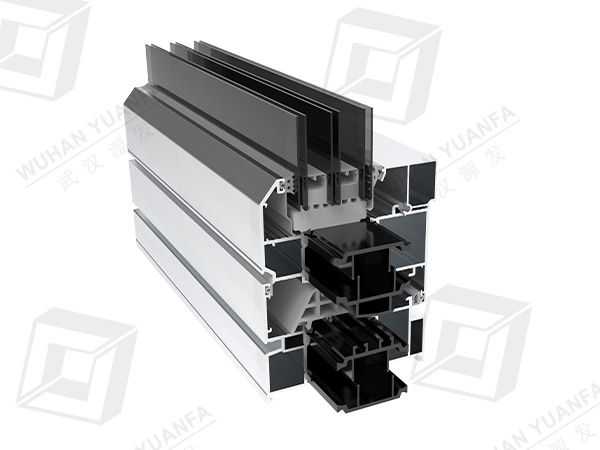
A successful window system must block heat flow and support heavy glass simultaneously. PA66 GF25 achieves both goals effortlessly. We first assess its impact on reducing the overall U-value. This metric defines the thermal transmittance of the facade system. PA66 GF25 boasts remarkably low thermal conductivity. It normally rates around 0.30 W/(m·K). Conversely, aluminum rates around 160 W/(m·K). Inserting this specific barrier drastically reduces heat transfer. You easily meet strict regional energy standards.
Modern building designs increasingly use heavy triple-glazed units. Consequently, the frame must carry massive structural loads. The 25% glass fiber matrix creates immense strength to handle these weights. The fibers align precisely during the extrusion process. They provide exceptional transverse tensile strength. They also deliver high shear strength required for tall curtain walls. Unreinforced plastics simply buckle under such extreme mechanical pressure.
We must also address dry impact resistance and long-term moisture exposure. Unreinforced polyamide can be somewhat brittle in dry conditions. Adding exact amounts of glass fiber prevents catastrophic shattering upon impact. Furthermore, we objectively acknowledge moisture absorption. Polyamides do absorb ambient moisture through a process called hydrolysis. However, engineered PA66 GF25 fully accounts for this dimensional change. The dense glass fiber matrix locks the profile shape in place. It retains excellent long-term performance under prolonged damp conditions.
Industry standards evolved rapidly over recent decades. Older materials simply cannot match modern performance demands. Manufacturers previously used PVC for insulation cavities. We see a massive shift away from PVC today. PVC has vastly inferior structural strength. It softens dangerously at higher temperatures. Furthermore, PVC has a much higher CLTE than aluminum. This guarantees a severe thermal expansion mismatch. Facades warp and fail predictably over time.
Cast-in-place polyurethane (PU) offers another historical alternative. Workers pour liquid PU into an aluminum channel. Later, they cut the aluminum bottom away to stop heat transfer. We call this the pour-and-debridge method. By contrast, PA66 GF25 uses a mechanical roll-in assembly method. The roll-in polyamide approach provides far superior structural rigidity. It also guarantees exact dimensional accuracy across long spans.
We can clearly define the structural benefits of the roll-in method:
It creates a reliable composite profile ready for immediate structural loading.
It ensures clear, definitive separation of metal and plastic materials.
It guarantees precise cavity dimensions for accurate glazing installations.
It allows designers to easily implement dual-color interior and exterior finishing.
It separates easily at the end of its lifecycle for genuine recycling.
Mixed PU and aluminum systems prove notoriously difficult to recycle. Thermoset PU cannot simply melt down. Polyamide offers a much cleaner ecological footprint.
Assembly requires extreme mechanical precision. Manufacturers follow a strict mechanical process to join the metal and plastic. First, they knurl the aluminum cavity. Special wheels cut small teeth into the metal track. Next, automated machines slide the PA66 GF25 strips into these cavities. Finally, heavy rolling discs crimp the metal tightly over the plastic. This creates a secure, composite profile.
Strict extrusion tolerances remain highly critical during this phase. If the polyamide strip varies by fractions of a millimeter, serious problems arise. Loose strips lead to poor shear strength after the final crimping stage. High-quality extrusions maintain tight dimensional stability. This ensures consistent, repeatable assembly across thousands of profiles. Engineers demand exact geometric consistency.
Post-assembly treatment represents a major operational advantage. Many manufacturers assemble the composite profile first. Then they apply standard powder coating. Powder coating requires industrial baking ovens. Temperatures inside often exceed 200°C for short durations. PA66 GF25 easily withstands these extreme curing environments. It will not melt or deform. It retains full structural integrity after cooling. This unique trait simplifies post-assembly finishing immensely. Manufacturers save time and reduce complicated logistics.
Green building certifications demand strict environmental accountability. Material selection heavily influences these outcomes. Evaluating suppliers requires transparent, verified data. You should demand Life Cycle Assessments (LCA) from your partners. You also need Environmental Product Declarations (EPDs). These certified documents quantify the exact carbon footprint of the thermal break. They directly aid in achieving LEED and BREEAM certifications.
End-of-life circularity matters deeply to modern architects. PA66 GF25 is a pure thermoplastic material. You can grind, melt, and reshape it indefinitely. Thermoset plastics like standard PU simply burn or go straight to landfills. Polyamide offers true recyclability. It actively supports global circular economy initiatives in construction.
Building energy codes grow stricter every single year. Passive House standards require exceptional frame insulation. Selecting a high-quality thermal barrier becomes a critical step. It is no longer an optional upgrade. It dictates whether a facade meets global energy regulations. Proper specification prevents costly retrofits down the line.
Specifying PA66 GF25 acts as a powerful risk-mitigation strategy. It ensures long-term facade longevity while maximizing overall energy efficiency. You protect structural integrity against extreme thermal cycles. You also simplify manufacturing workflows through its high-heat tolerance.
Consider this practical shortlisting framework for future procurement:
Verify the exact glass fiber content sits uniformly at 25 percent.
Request comprehensive extrusion tolerance data before starting mass production.
Demand valid EPDs to support your green building certification efforts.
Ensure the composite matches the specific CLTE of your chosen aluminum grade.
We strongly encourage active consultation with a specialized thermal break strip manufacturer. They will help you review complex profile geometries. They can also calculate exact structural load requirements for your specific building project.
A: The 25% ratio perfectly balances mechanical strength and thermal expansion. It matches the Coefficient of Linear Thermal Expansion (CLTE) of aluminum. Less fiber reduces structural rigidity. More fiber makes the strip too brittle for the mechanical rolling and crimping process.
A: Yes. PA66 GF25 demonstrates excellent high-temperature resilience. It safely withstands standard curing oven temperatures up to 200°C for short durations. Unlike standard PVC or ABS, it will not melt or lose structural integrity during post-assembly baking.
A: You should request certified material data sheets from the manufacturer. Evaluate their dimensional extrusion tolerances carefully. Review independent transverse tensile strength test results. Finally, check for Environmental Product Declarations (EPDs) to verify their environmental claims.
A: Polyamides do absorb ambient moisture naturally. However, standard engineering practices account for this behavior. The 25% glass fiber reinforcement restricts excessive dimensional changes. This ensures the window system maintains internal stability and structural safety over its lifespan.


