

close
Choose Your Site
Global
Social Media

Author: Site Editor Publish Time: 2026-08-20 Origin: Site
Fenestration and aluminum extrusion manufacturing involve extremely high stakes. A single structural failure in a composite profile often triggers catastrophic field failures. These incidents quickly lead to massive, costly warranty claims. Relying on basic quality checks simply does not cut it anymore for high-volume manufacturers. Audits, strict compliance standards, and liability protection demand fully verifiable data. Transitioning from basic visual inspections to full production traceability is essential rather than optional. You need a robust traceability system to effectively protect your margins and easily pass strict audits. Your system must capture specific machine, material, and testing parameters during the thermal breaking process. Furthermore, it must log this critical data in real-time. It must achieve this data capture without slowing down the active production line.
Establishing traceability for thermal breaking requires logging three core data categories: machine calibration, material batch inputs, and destructive test results.
Capturing knurling depth and rolling disc pressure in real-time is critical for defending against shear strength warranty claims.
Transitioning from manual logbooks to integrated Manufacturing Execution Systems (MES) or ERPs reduces operator error and prevents data siloing.
Successful implementation requires balancing stringent data collection with operator workflow—phased rollouts minimize production disruptions.
Blind production carries massive hidden costs for any manufacturing operation. Imagine a finished composite profile failing out in the field. Lacking batch-level data turns a minor problem into a true nightmare. You might recall weeks of production output. You do this instead of isolating a single shift's defective run. Traceability solves this exact problem immediately. It acts as an ironclad insurance policy against catastrophic financial losses.
Next, consider strict compliance and audit readiness. Standardized parameter logging aligns perfectly alongside ISO 9001 frameworks. Many construction material certifications demand strict audit readiness all year long. You must prove compliance immediately upon an inspector's request. Generating instant digital reports proves your manufacturing competence. Missing records often trigger immediate audit failures.
Historical traceability data also drives massive continuous improvement initiatives. You can easily identify subtle machine wear early. For example, dulling knurling wheels leave distinct data trails over time. Spotting these trends prevents out-of-spec products entirely. You can replace tooling before failure happens.
Common Mistake: Many facilities store quality records in isolated filing cabinets. Paper records delay investigations. They prevent rapid root-cause analysis during high-stress customer complaints.
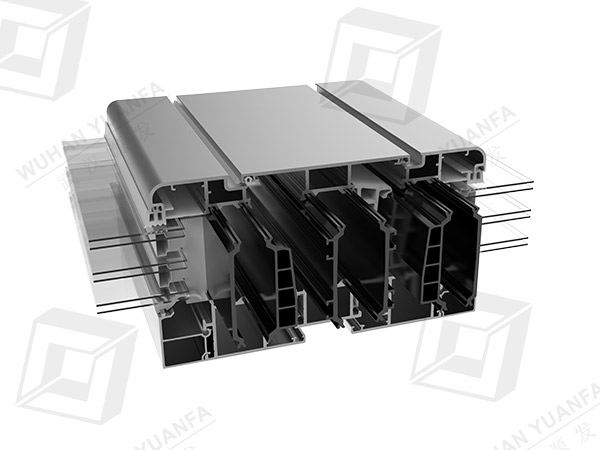
Knurling metrics form the absolute foundation of composite shear strength. Teeth formation requires highly precise mechanical control. You need to log knurling wheel pressure and spindle speed constantly. You must also measure the depth of the knurl inside the aluminum cavity. If this depth fluctuates, structural integrity drops rapidly. A shallow knurl cannot grip the plastic securely.
Next, you must record continuous rolling and crimping data. This step ensures permanent mechanical locking along the profile. The aluminum locks tightly onto the thermal break. We must achieve this compression without cracking the rigid plastic. Important parameters include vertical and horizontal pressure from the rolling discs. You also need to track the profile feed rate accurately. Capturing precise alignment tolerances prevents bowing issues later.
Environmental conditions matter immensely during extrusion assembly. Ambient temperature heavily affects raw material behavior. Humidity levels impact the physical flexibility of plastic materials. Shop floor conditions change the moisture content of the strips before insertion. Dry winter air makes plastic components significantly more brittle.
Process Step | Critical Parameters to Log | Why It Matters for Production |
|---|---|---|
Knurling (Teeth Formation) | Wheel pressure, spindle speed, knurl depth | Dictates the mechanical foundation of final shear strength. |
Rolling / Crimping | Vertical/horizontal disc pressure, feed rate | Secures the mechanical lock without fracturing the strip. |
Environmental Monitoring | Ambient temperature, relative humidity | Explains seasonal material brittleness and insertion anomalies. |
Every quality system needs rigorous raw material tracking. First, examine the polyamide thermal break inventory. You must log specific supplier lot numbers carefully. Always record exact material receipt dates into your system. Note the specific material grades used during each production run. Common structural grades include PA66 GF25. Tracking these details isolates defective supplier batches quickly.
Second, track your incoming aluminum extrusion lots meticulously. You need to tie specific metal batches directly to the final assembled profile. Log the specific alloy type and temper rating. Always record the distinct coating or anodizing lot number. Paint thickness variations often interfere with the knurling teeth engagement.
Finally, establish a strong parent-child relationship within your database. This vital data link marries the aluminum lot to the plastic batch. It also binds the specific shift and operator details together. You combine all this information into a single serialized barcode. Scanning this master batch code reveals the entire material genealogy instantly.
Best Practice: Reject any raw materials missing clear supplier batch codes. If you cannot scan it upon receipt, do not put it into production.
Quality assurance depends heavily on solid destructive testing protocols. Shear strength testing remains a primary safety metric globally. Also known as push-pull testing, it verifies structural integrity completely. Establish a strict testing frequency for your active lines. Test the very first piece off the machine. Test another piece at the end of the shift. Always test immediately after a new coil change.
Record highly specific data points during these destructive tests. Capture the peak mechanical load before profile failure occurs. Note the exact failure mode visually. Did the aluminum teeth shear off? Did the internal plastic strut break entirely? Document the specific testing machine used for the procedure. Calibrate these testing machines quarterly.
Dimensional verification provides another vital layer of production safety. Measure the overall profile width post-rolling. Check straightness parameters carefully using precision gauges. Look for any unacceptable bow or twist. High rolling pressure often distorts thin-walled aluminum geometries.
Data association makes all this collected information truly useful. Ensure QA test results digitally bind to the exact production batch. Never store them in a separate, disconnected quality database. Unified data allows engineers to correlate machine pressure against final shear strength.
Manufacturers must deliberately choose how to collect this essential data. Manual logs present severe operational limitations. They carry an incredibly high risk of pencil-whipping. Operators might falsify data entries to save time. Delayed error detection costs businesses money. Forensic analysis becomes nearly impossible during a sudden product recall.
Direct PLC integration represents the absolute gold standard today. These automated systems work perfectly alongside modern operators. They pull pressure and speed data directly from the machinery. The Programmable Logic Controller (PLC) handles this rapid data collection without human intervention. This eliminates transcription errors entirely.
Scalability matters immensely for long-term business growth. Choose a traceability system exporting raw production parameters effortlessly. It should integrate seamlessly into your existing enterprise software. This MES or ERP compatibility ensures secure long-term archiving. It simplifies mandatory compliance reporting during external audits.
Security and data integrity actively protect your business reputation. Ensure all recorded parameters remain strictly immutable. Operators must never alter historical data points. This prevents post-production tampering prior to facility audits.
System Type | Data Accuracy | Operator Burden | Recall Forensic Capability |
|---|---|---|---|
Manual Paper Logs | Low (High risk of falsification) | High (Requires constant writing) | Poor (Requires hours of manual searching) |
Tablet-Based Entry | Medium (Standardized inputs) | Medium (Digital typing required) | Good (Searchable database) |
Direct PLC Integration | Very High (Machine-level facts) | None (Fully automated background logging) | Excellent (Instant batch isolation) |
Upgrading traceability systems naturally introduces specific implementation risks. Operator friction causes the biggest adoption hurdle initially. Complex manual data entry risks slowing down the active assembly line. Production managers often reject systems hampering daily output quotas.
Mitigate this friction aggressively through smart technology choices. Utilize rugged barcode scanners for all raw material intake. Deploy automated PLC logging for dynamic machine parameters. This removes the administrative burden from your busy operators entirely. They can focus solely on running the machine.
Avoid data overload entirely. Do not record unstructured or useless data. Focus strictly on actionable insights. Track variables impacting the mechanical or thermal performance of the profile. Storing gigabytes of irrelevant sensor noise helps nobody.
Follow a structured phased adoption strategy. We strongly recommend these specific implementation steps for high-volume facilities:
Digitize your destructive QA test logs first using tablets.
Begin scanning raw material supplier batches digitally upon warehouse receipt.
Upgrade machine PLCs to capture static calibration data daily.
Move toward real-time dynamic machine parameter integration across all lines.
Phased rollouts minimize production disruptions perfectly. They allow your workforce to adapt gradually.
Reliable traceability bridges a truly critical manufacturing gap. It connects raw material intake directly to final structural integrity. It acts as an absolute insurance policy against catastrophic field failures. Implementing rigorous data capture protects your margins effectively.
Manufacturers evaluating upgrades should audit their current production lines immediately. You need to see which parameters remain orphaned in dusty paper logs. Look closely at knurling depth, rolling pressure, and daily shear testing data. Moving these metrics into a centralized digital system prevents costly blind spots.
Schedule a professional capability assessment soon. Request a thorough demo of automated traceability software tailored specifically to fenestration manufacturing. Protect your production output and your business reputation today.
A: Knurling depth and rolling pressure remain the most critical parameters. These specific metrics directly dictate the final shear strength of the composite profile. If either parameter drifts out of specification, the finished assembly will fail structural testing.
A: Yes, though retrofitting older equipment requires specialized work. It may require adding external pressure sensors. You might need to upgrade the PLC to output data to an MES. Otherwise, manual tablet-based entry alongside batch scanning serves as a highly viable stopgap.
A: Typically, manufacturers retain these records for 10 to 15 years. This duration depends heavily on your region's construction liability laws. It also aligns directly with the specific warranty period offered to the final end-user.
A: Yes. Polyamide naturally absorbs ambient moisture over time. This moisture absorption directly affects its structural brittleness. Tracking floor humidity and temperature actively helps explain mysterious anomalies in shear test failures, especially during very dry winter months.


