

close
Choose Your Site
Global
Social Media

Author: Site Editor Publish Time: 2026-08-28 Origin: Site
Sourcing thermal breaks involves much more than selecting a material type. It demands strict dimensional predictability at an industrial scale. Facade engineering requires exact precision to ensure long-term structural integrity. Sub-millimeter deviations in a thermal break frequently compromise the critical aluminum-to-polyamide interface. You will quickly face assembly line delays, structural shear weakness, or failed thermal performance. We must acknowledge this procurement reality upfront. Glazing contractors need reliable parts mating perfectly every single time. Here, we provide facade engineers, glazing contractors, and procurement managers a concrete evaluation framework. You will learn how to specify strict tolerances effectively. We will also show you how to properly vet extrusion partners. By following these guidelines, you can ensure consistent manufacturing quality and eliminate costly assembly bottlenecks.
Dimensional accuracy in the insertion groove determines the success of the knurling and rolling process during assembly.
Specifying a high strength polyamide profile requires verifying glass fiber distribution, as this impacts both mechanical shear strength and thermal expansion limits.
Evaluating a supplier requires moving beyond theoretical data sheets to validating their batch-to-batch extrusion consistency (Cpk values) and compliance with standards like EN 14024.
Factoring in fabrication realities upfront prevents costly delays from concept to final curtain wall installation.
Tolerance failures connect directly to project profitability and structural liability. Precision determines success in the facade industry. You cannot afford loose dimensional control during manufacturing. When suppliers miss strict tolerance targets, your assembly costs escalate rapidly. Labor teams waste hours dealing with mismatched components. Furthermore, poor structural integrity introduces immense liability. Building codes demand strict adherence to wind load and shear stress calculations. If the thermal barrier fails under pressure, you face severe legal and financial repercussions.
Thermal break profiles must mate perfectly with extruded aluminum mullions and transoms. We rely on a mechanical process called knurling and rolling to join these materials. The aluminum cavity features a very specific dimensional geometry. You slide the Polyamide Profile directly into this cavity. Next, heavy rollers crimp the aluminum edges down onto the polyamide head. This mechanical lock transfers structural loads across the curtain wall frame. If the polyamide head is too small, the crimp lacks adequate bite. If it is too large, it simply will not fit into the cavity.
Poor tolerances initiate a predictable chain of cascading failures on the shop floor. First, you experience immediate assembly line bottlenecks. Profiles fail to slide smoothly into aluminum cavities. Workers must use excessive force, severely slowing down production rates. Second, dimensional mismatches create weak shear connections during the rolling process. The aluminum rollers cannot achieve proper compression. Third, irregular shapes cause micro-gaps along the interface. These tiny voids allow water infiltration through capillary action. They also cause thermal bridging, completely negating the pressure plate system's efficiency. You lose the intended insulation value entirely.
A successful order requires precise specification. You must specify nominal dimensions alongside maximum allowable deviations. These deviations must align directly with the curtain wall's structural engineering calculations. Engineers design facade systems assuming specific shear strengths. They base these assumptions on a perfect mechanical lock. Your procurement specifications must legally bind the extruder to these tight variance limits. Do not accept generic industry averages when your project requires tighter control.
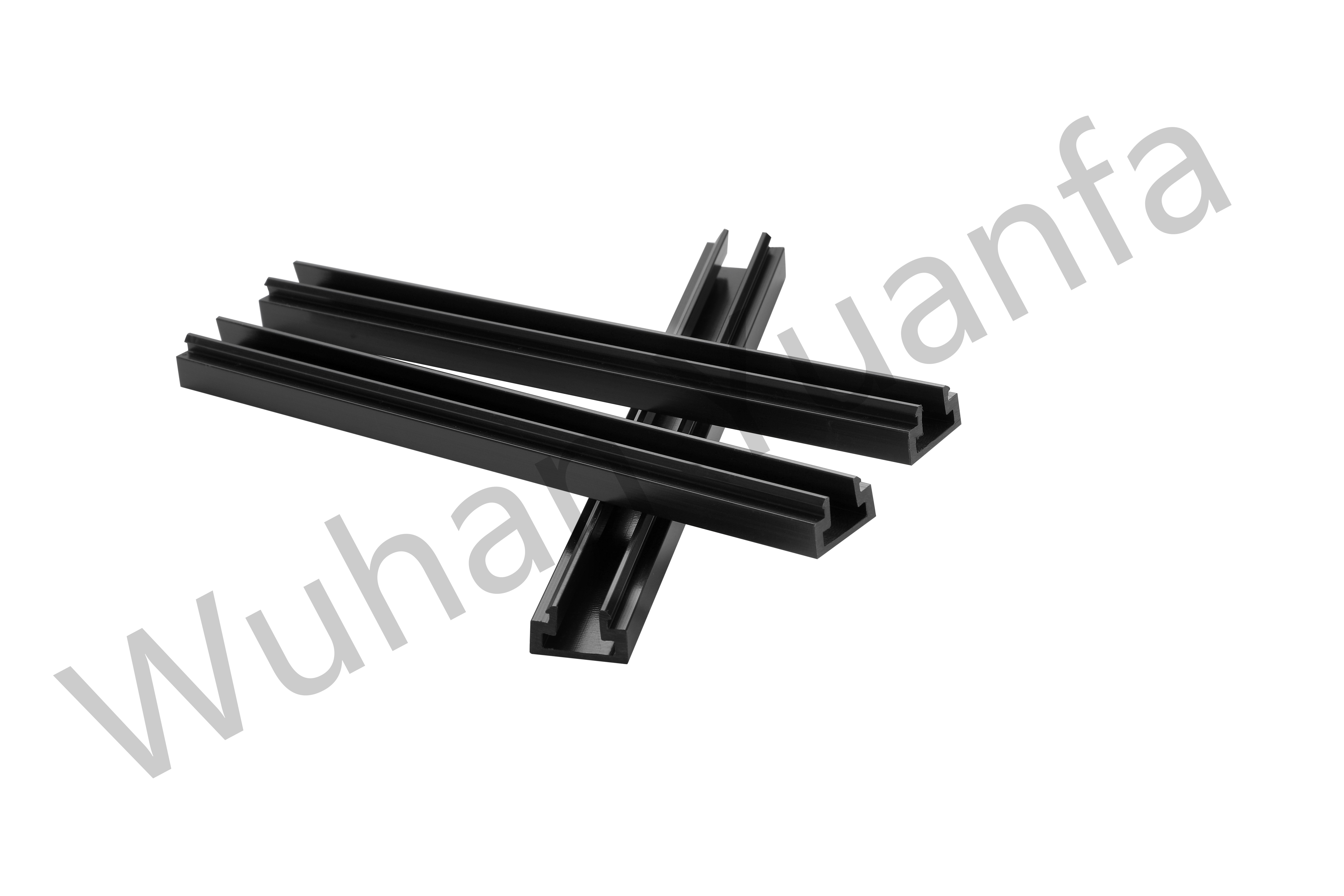
Cross-sectional accuracy dictates your entire assembly workflow. Standard acceptable deviations typically range from ± 0.05mm to ± 0.1mm. The exact range depends heavily on the overall width of the component. The precise width of the profile head remains the strictest non-negotiable metric. You insert this specific part into the aluminum. Even a 0.15mm oversized head will halt an automated assembly line. The part will jam inside the extrusion track. Conversely, an undersized head prevents a strong mechanical crimp. We always prioritize checking the dovetail or insertion head dimensions before inspecting anything else.
Longitudinal bowing causes major headaches during long-span mullion assembly. We define acceptable longitudinal bowing strictly. A standard metric allows less than 1mm of bow per meter of length. The assembly risk is substantial here. Twisted profiles require excessive force during insertion. Workers might use mallets or pneumatic pushers to force the plastic into the metal track. This blunt force risks creating micro-fractures in the polyamide matrix. These unseen fractures weaken the component before wind loads ever hit the building. You must demand perfectly straight extrusions.
Uneven wall thickness directly impacts structural load transfer. Curtain walls face immense suction and pressure cycles. The plastic barrier must transfer these forces between the inner and outer aluminum frames evenly. A thin spot in the wall creates a stress concentration point. It will shear and fail under peak loads. Tolerances for internal hollow chambers also matter greatly. Modern passive-house designs require complex internal geometries to hit specific U-value targets. If these internal webs warp during extrusion, the trapped air chambers deform. Your thermal performance calculations become instantly invalid.
Table 1: Standard Tolerance Guidelines for Polyamide Insulating Profiles
Dimension Metric | Standard Tolerance Range | Assembly Impact if Exceeded |
|---|---|---|
Insertion Head Width | ± 0.05 mm | Profile jams in aluminum cavity or fails to lock during rolling. |
Overall Profile Width | ± 0.10 mm to ± 0.15 mm | Affects overall depth of the mullion and structural alignment. |
Wall Thickness | ± 0.10 mm | Creates uneven shear strength and structural weak points. |
Straightness (Bowing) | < 1.0 mm per meter | Requires excessive insertion force, risking micro-fractures. |
Twist | < 1.0 degree per meter | Prevents automated feeding during the knurling process. |
You must evaluate a High Strength Polyamide Profile based on rigid mechanical testing. We typically use a PA66 GF25 material blend. This means polyamide 66 reinforced with 25% glass fiber. Engineers assess this using Transverse Tensile Strength (Q-value) and Shear Strength (T-value). You evaluate both metrics after the rolling process. Buyers must actively request statistical variance data across multiple production runs. Do not accept a single "peak" laboratory result. The highest lab score means nothing if the factory cannot replicate it consistently. You need consistent shear performance across thousands of units.
Many buyers make a dangerous technical assumption. They assume all 25% glass fiber blends perform equally. This is factually incorrect. Extrusion speed and die design heavily affect fiber alignment. If the molten plastic flows too quickly, the glass fibers clump together. Uneven distribution creates brittle zones alongside overly flexible zones. This fiber alignment directly dictates the mechanical tolerance under wind load. A properly extruded part aligns the microscopic glass fibers longitudinally. This reinforcement acts like rebar in concrete. You must vet a supplier's ability to maintain uniform fiber distribution.
Facade materials endure extreme temperature swings. We must specify required tolerances for the coefficient of linear thermal expansion (CLTE). Polyamide expands and contracts as seasons change. Aluminum does the same. Ensure the profile expands at a rate highly compatible with aluminum. PA66 GF25 closely matches the thermal expansion rate of aluminum alloys. This prevents severe shear stress failure during extreme weather cycles. If the plastic expands faster than the metal, it buckles. If it shrinks faster, it tears away from the crimp. Precise compounding controls this critical expansion variable.
You must interrogate a supplier’s die-making and cooling processes. The extrusion die shapes the hot plastic. However, the cooling calibration locks in the dimensions. Rapid or uneven cooling causes severe warping. The outer skin cools faster than the internal webs. This thermal shock ruins dimensional tolerances permanently. Ask your manufacturer how they control the cooling bath temperatures. Inquire about their calibration tooling downstream from the die. High-quality extruders use complex water calibration systems to gently ease the profile into its final solid state.
High-volume curtain wall projects require thousands of meters of profile. A perfect prototype does not guarantee a perfect production run. Frame specific questions regarding Quality Control (QC) sampling frequency. How often do they measure parts? Do they use automated laser scanners inline? Ask them for their Cpk values. A Cpk index measures process capability. A value over 1.33 indicates a highly controlled process. It proves they can hit your specified tolerances repeatedly without relying on luck. Scalability separates top-tier suppliers from amateur extruders.
Polyamide absorbs moisture naturally from the atmosphere. This moisture slightly alters its dimensions and significantly increases its toughness. It acts as a plasticizer. Dry polyamide is brittle and prone to cracking during the rolling process. Define the tolerance risks if a supplier ships unconditioned profiles. Dry and brittle parts traveling directly from the extruder to your assembly line pose a huge risk. They will crack under the pressure of the aluminum rollers. A reliable supplier conditions the profiles in high-humidity chambers. This controlled absorption stabilizes the dimensions before shipping.
Start by cross-referencing profile tolerances with the aluminum extruder's cavity tolerances. Do this before placing any material orders. You must match the minimum aluminum cavity size against the maximum polyamide head size. Look for the worst-case tolerance stack-up. If the stack-up shows an interference fit, you will have assembly line jams. Bring the aluminum extruder and the polyamide supplier together. Force them to agree on the mating dimensions. This proactive step eliminates finger-pointing later.
Do not accept generic marketing sheets. These glossy brochures lack statistical validity. Demand detailed first-article inspection reports. Request capability indices like Cpk and Ppk. A formal PPAP submission forces the supplier to prove their manufacturing readiness. It requires them to document their control plans and measurement systems. You need hard data showing their tooling produces compliant parts over a continuous shift. This data-driven approach removes emotion and guesswork from your procurement strategy.
Shortlist only those suppliers providing verifiable compliance with recognized industry standards. For thermal barrier profiles, EN 14024 serves as the global benchmark. Look for regional equivalents depending on your project location. EN 14024 defines strict testing methods for shear strength and transverse tensile strength. It also mandates specific aging tests. The laboratory cycles the assembled profiles through extreme heat and moisture. Validating this certification ensures the material handles long-term environmental degradation safely. Always request the actual laboratory certificate, not just a verbal claim.
Never authorize full-scale production without a physical test. Mandate a trial assembly run using the exact production batches. Take the specific aluminum extrusions and the newly produced thermal barriers. Run them through your shop's knurling and rolling machines. Cut the assembled mullion into sections. Perform a push-out shear test immediately. This verifies the actual mechanical lock strength. Only after this physical interface passes the structural engineering requirements should you release the purchase order for the entire project.
Ordering thermal barriers is ultimately an exercise in severe risk mitigation. You must look beyond material costs and evaluate dimensional reliability. Investing in strict tolerance controls at the manufacturing stage pays off immensely. It prevents exponential costs, delays, and structural failures during the final curtain wall installation. We highly recommend mapping out a strict testing protocol. Demand transparency from your extrusion partners regarding their die calibration and moisture conditioning routines. Finally, always consult directly with your structural engineering teams. Finalize your exact dimensional matrices and tolerance stack-ups before issuing any purchase orders.
A: The industry benchmark targets ± 0.05mm for the critical insertion head. This tight tolerance ensures the profile slides smoothly into the aluminum cavity. It also guarantees the aluminum rollers can compress the metal properly, creating a secure mechanical lock without jamming the assembly line.
A: Polyamide absorbs moisture from the air, causing minor dimensional expansion. More importantly, moisture acts as a plasticizer. It transforms the post-extrusion brittle plastic into a tough, resilient material. Conditioning profiles in humidity chambers stabilizes these dimensions and prevents cracking during the rigorous aluminum rolling process.
A: Standard profiles offer guaranteed tolerances and immediate availability. They use tested geometries proven across thousands of projects. Custom dies require significant tooling costs and lead times. However, custom dies become necessary when your facade demands unique U-value targets or complex internal structural geometries.
A: We verify shear strength using a mechanical push-out test on the assembled profile. Standard regulatory compliance testing, such as EN 14024, dictates these procedures. Technicians measure the force required to slide the aluminum away from the polyamide, ensuring the T-value meets the facade's wind load engineering requirements.


