

close
Choose Your Site
Global
Social Media

Author: Site Editor Publish Time: 2026-08-27 Origin: Site
Aluminum frames boast incredible durability and sleek aesthetics. They represent a staple in modern architectural design. However, bare aluminum is highly conductive. This physical property allows vital indoor heat to escape easily during winter. It also lets intense external heat enter during summer. Such high conductivity causes severe energy loss and unwanted interior condensation. Ultimately, it causes building projects to fail stringent energy compliance codes.
You cannot rely on bare aluminum for modern fenestration. Inserting a reliable thermal barrier stops this rapid energy transfer. Specifying the correct material means carefully balancing insulation capabilities alongside structural strength. We will explore the optimal thermal conductivity range for commercial and residential applications. You will discover exactly where standard polyamide 66 containing 25% glass fiber stands against alternative materials. We focus on U-value impacts, structural trade-offs, and procurement criteria for large-scale window systems.
The optimal thermal conductivity for a structural polyamide thermal break is typically between 0.25 and 0.30 W/m·K.
Lower thermal conductivity is not inherently better if it compromises structural strength; a 25% glass fiber reinforcement is the industry standard to prevent shearing and warping.
Polyamide outperforms standard polyurethane (PU) and resins in high-stress applications due to its identical coefficient of thermal expansion to aluminum and high heat tolerance during powder coating.
Supplier evaluation should prioritize verifiable lab data, extrusion dimensional stability, and proven adherence to regional fenestration standards.
Engineers and architects constantly seek the ideal balance between insulation and rigidity. For a standard polyamide thermal break, the industry-standard thermal conductivity (λ-value) sits at approximately 0.30 W/m·K. This specific metric represents the engineered sweet spot. It provides excellent resistance against heat flow. At the same time, it maintains the structural integrity required for heavy fenestration systems.
Pure polyamide actually possesses a lower thermal conductivity. You might wonder why manufacturers do not use it in its pure form. The answer lies in structural mechanics. Pure polyamide lacks the necessary shear strength to hold heavy aluminum profiles together under wind loads. We must reinforce it. Adding a 25% glass fiber matrix (PA66 GF25) provides immense tensile strength. The glass fibers slightly increase the overall conductivity. However, they prevent the profile from shearing, warping, or cracking under stress. This reinforcement is an absolute necessity.
This benchmark conductivity range directly impacts the overall U-factor of aluminum windows and curtain walls. Features translate directly into outcomes. By utilizing a barrier rated at 0.30 W/m·K, manufacturers can meet rigorous passive house standards. They can achieve stringent energy compliance without relying on massively oversized frame profiles. Thinner profiles improve aesthetic appeal. They maximize the visible glass area. System-level performance improves drastically because the barrier interrupts the thermal bridge efficiently. It keeps the interior aluminum shell warm and dry.
Understanding this baseline helps you avoid common specification mistakes. Do not blindly chase the lowest possible λ-value. Always evaluate how the material impacts the complete window assembly. A structurally sound frame insulates far better over its lifespan than a fragile frame containing a marginally better insulator.
The fenestration industry primarily relies on three material categories to thermally isolate aluminum frames. You will frequently compare a thermal break made from polyamide against standard polyurethane (PU) pour-and-debridge systems. Legacy resin options also appear in older architectural specifications. Understanding the trade-offs between these materials ensures better project outcomes.
Polyurethane pour-and-debridge systems can achieve slightly lower thermal conductivity. PU often reaches levels between 0.12 and 0.20 W/m·K. On paper, PU looks like the superior insulator. However, we must balance thermal claims against structural realities. PU lacks the immense structural rigidity of glass-reinforced polyamide. This limits PU usage in heavy, large-span curtain walls. High-wind-load environments easily compromise PU barriers. The pour-and-debridge method also removes a section of the aluminum extrusion entirely. This reduces the overall moment of inertia for the profile.
Polyamide delivers a massive advantage regarding thermal expansion. Aluminum expands and contracts as temperatures change. Polyamide’s coefficient of thermal expansion closely matches aluminum. They expand and contract together at nearly identical rates. This alignment prevents thermal bowing. It eliminates structural fatigue over decades of harsh freeze-thaw cycles. Resins and PU expand at vastly different rates compared to aluminum. Over time, these unmatched expansion rates cause internal shear stress. The barrier can eventually crack or detach from the metal.
Material Type | Thermal Conductivity (W/m·K) | Structural Rigidity | Thermal Expansion Compatibility | Primary Application |
|---|---|---|---|---|
Polyamide (PA66 GF25) | ~ 0.30 | Excellent | Identical to Aluminum | Heavy curtain walls, large windows |
Polyurethane (PU) | ~ 0.12 - 0.20 | Moderate | Poor match to Aluminum | Standard residential windows |
Legacy Resins | ~ 0.25 - 0.35 | Low | Poor match to Aluminum | Obsolete/Low-stress uses |
This comparison chart illustrates why PA66 GF25 dominates modern commercial fenestration. It sacrifices a tiny fraction of insulation capacity to guarantee structural permanence. When you design high-rise structures, structural failure carries catastrophic risks. Polyamide mitigates these risks entirely while still delivering high-end energy efficiency.
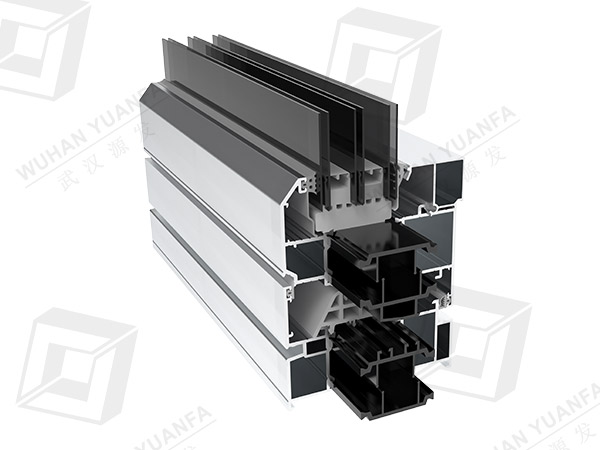
Raw material conductivity only tells part of the story. The physical design and environmental conditions play massive roles in final performance. Engineers manipulate several key variables to maximize insulation without changing the base polyamide material.
Cavity and Geometry Design: Basic flat strips provide decent insulation. However, multi-cavity or hollow polyamide strips perform much better. These complex geometries disrupt internal convection currents. Air gets trapped within the hollow chambers. Trapped air acts as an excellent insulator. This effectively lowers the overall thermal transmittance of the assembly. The raw material's conductivity remains 0.30 W/m·K, but the system U-value drops significantly.
Width and Depth Modifications: Scalability matters in fenestration. Increasing the width of the polyamide strip linearly improves insulation. A 34mm strip stops heat transfer better than a 14.8mm strip. However, wider strips require careful engineering. You must maintain the moment of inertia. Wider gaps between aluminum extrusions can reduce overall frame stiffness. You often need thicker glass fibers or custom web geometries to support wider designs.
Moisture Absorption Factors: We must address physical realities transparently. Polyamide naturally absorbs moisture from the environment. This absorption can marginally alter its thermal conductivity over time. Wet materials conduct heat faster than dry materials. Fortunately, proper extrusion techniques mitigate this. High-quality manufacturing creates a dense, smooth surface finish. Additionally, integrating proper weather sealing and drainage within the aluminum profile keeps the barrier dry in real-world environments.
These variables dictate how you apply the material in real projects. You cannot just pick a standard strip and expect passive house performance. You must consider the geometry, the scalable width, and the moisture defense mechanisms built into your frame design.
Theoretical performance means nothing if the material fails during manufacturing or installation. Polyamide brings specific operational advantages to the factory floor. It also carries execution risks if handled poorly.
Powder coating compatibility stands as a major operational advantage. Aluminum frames require durable finishes. Standard powder coating involves baking the assembled profiles at extreme temperatures. Polyamide can easily withstand baking temperatures exceeding 200°C (400°F). This allows fabricators to insert the barrier into the aluminum extrusions before powder coating or anodizing. You can paint the entire assembled profile at once. Polyurethane cannot survive these temperatures. PU requires fabricators to paint the inner and outer aluminum pieces separately before pouring the barrier. Polyamide dramatically streamlines factory workflows.
You must carefully manage dimensional tolerances to avoid execution risks. A poor-quality extrusion ruins the entire window. The barrier must possess exact dimensional tolerances. Fabricators mechanically crimp the aluminum around the polyamide strip. They use knurling wheels to bite into the plastic. If the strip runs too small, the mechanical crimp feels loose. Structural shearing occurs under wind loads. If the strip runs too large, it cracks during the crimping process. Precision represents a non-negotiable requirement.
Integration risks differ between application types. Differentiating between curtain walls and standard windows is crucial. Standard windows focus heavily on absolute minimum thermal conductivity. They deal with smaller glass weights. Curtain walls require high-depth, structurally critical polyamide strips. In curtain wall engineering, wind load deflection takes absolute precedence. You must prioritize structural safety over a marginal improvement in thermal resistance. Always select robust, deeper strips for high-rise applications.
Choosing the right supplier dictates your project's success. The global market features many manufacturers. Not all produce reliable PA66 GF25 materials. You need a rigorous evaluation framework.
Data Verification: Adopt compliance-aware thinking. Do not trust theoretical material datasheets. Look for suppliers who provide third-party tested thermal conductivity data. Ensure they cite recognized global standards like ISO 10077, ASTM C518, or EN 14024. Verifiable lab data proves their material performs exactly as advertised.
Quality Assurance Checkpoints: Evaluate the internal testing protocols used by the supplier. They should routinely test tensile strength and impact resistance. Fiber distribution consistency remains critical. If the glass fibers clump together during extrusion, the strip develops weak points. Ask how they monitor fiber uniformity across different manufacturing batches.
Supply Chain and Customization: Standard shapes do not fit every architectural vision. Assess the supplier's ability to provide custom die designs. Can they extrude hollow chambers? Can they produce varying widths reliably? A strong partner helps you achieve specific U-factor targets for custom architectural profiles.
Next-Step Actions: Never buy in bulk without testing. Recommend requesting a physical sample run. Ask for specific batch-testing data regarding glass fiber uniformity. Finally, run a thermal simulation using software like THERM. Import the supplier's exact CAD profiles into the software to verify system-level performance.
Treat your supplier as an engineering partner. They should understand your structural requirements. They should proactively offer dimensional tolerance reports. Following these checkpoints eliminates substandard materials from your supply chain.
A thermal conductivity of ~0.30 W/m·K represents the engineered sweet spot for structural fenestration. It perfectly balances thermal resistance, structural safety, and factory manufacturing efficiency. While alternative materials might offer marginally lower raw conductivity, they sacrifice the critical rigidity required for durable aluminum frames. Standard polyamide 66 with 25% glass fiber eliminates thermal bridging without compromising window integrity.
To maximize your next project, focus on geometry and precision. Implement wider, multi-cavity designs to improve overall system U-values. We highly encourage specifiers, architects, and procurement teams to consult their structural engineers early in the design phase. Request verifiable thermal performance sheets from your shortlisted manufacturers. Begin your thermal modeling today to ensure your fenestration easily surpasses regional energy codes.
A: Standard plastics like PVC or ABS lack the structural rigidity and heat resistance required for modern fenestration. PA66 (Polyamide 66) is an engineering-grade thermoplastic. When reinforced with 25% glass fiber, it handles extreme wind loads. PA66 also easily survives the high baking temperatures used during aluminum powder coating, unlike standard plastics.
A: No, it actually slightly increases the thermal conductivity. Glass conducts heat faster than pure polyamide. However, this 25% addition is mandatory. Without the glass fibers, the barrier lacks the shear strength needed to hold aluminum profiles together securely under structural stress.
A: Yes, it can. Polyamide easily withstands baking temperatures exceeding 200°C (400°F) without melting or losing structural integrity. This allows fabricators to insert the barrier into the aluminum profiles before the powder coating process, significantly speeding up production timelines.
A: There is a direct correlation. Increasing the width of the thermal barrier linearly improves the overall fenestration insulation. A wider gap creates a larger separation between the interior and exterior aluminum frames, drastically reducing heat transfer and lowering the system's final U-value.


