

close
Choose Your Site
Global
Social Media

Author: Site Editor Publish Time: 2026-07-31 Origin: Site
Commercial procurement presents a high-stakes reality in modern construction. A failed strut compromises the entire window or façade system instantly. This failure transfers massive liability directly to you, the buyer or manufacturer. Visual inspections offer false comfort. Standard supplier guarantees fall short for modern energy-efficient assemblies. You simply cannot build resilient infrastructure on vague marketing promises. The modern construction landscape demands absolute certainty. Empirical, third-party verifiable test data serves as the only reliable method to mitigate risk. It ensures strict compliance alongside rapidly evolving energy codes. You must validate material integrity before ever signing a purchase order. In this comprehensive guide, we reveal exactly what test reports you should demand. You will learn how to scrutinize mechanical thresholds, verify thermal claims, and ensure long-term dimensional stability. We give you the exact knowledge required to filter out unverified suppliers immediately.
Mechanical verification is primary: Transverse tensile and longitudinal shear strength data are non-negotiable for structural safety.
Thermal claims require proof: Buyers must demand precise U-value simulations (Uf) and thermal conductivity (Lambda) data mapped to current and upcoming industry standards.
Longevity requires extreme testing: Accelerated aging, thermal cycling, and moisture resistance data separate premium polyamide thermal break materials from low-cost alternatives.
Report authenticity matters: Independent, batch-specific testing from accredited labs (e.g., ISO 17025) should heavily outweigh generic in-house marketing data.
Procurement professionals often face immense pressure to reduce upfront material expenses. Many buyers accept generic specification sheets at face value. This assumption often leads to disastrous consequences on the job site. A failed field inspection halts construction completely. Leaky windows invite mold, drafts, and furious building occupants. Massive warranty claims inevitably trace back to inferior extrusion processes. A single system failure destroys your profit margin and damages your industry reputation permanently.
Unscrupulous suppliers sometimes substitute generic plastics for high-grade engineered polymers. These cheap alternatives look identical to the naked eye. However, they lack the precise fiberglass reinforcement required for heavy loads. They suffer premature structural failure under intense thermal stress. Building materials expand and contract constantly across varying seasons. A substandard thermal break cannot handle this dynamic movement. It snaps or distorts inside the aluminum cavity.
You must establish strict success criteria early in the procurement phase. A successful evaluation relies entirely on objective data. You need reports comparing structural thresholds directly. You must verify thermal efficiency under realistic environmental conditions. You also need proof of strict batch-to-batch consistency. Raw data eliminates dangerous guesswork from your supply chain. It protects your commercial interests. It ensures your fenestration projects meet all architectural specifications without compromise.
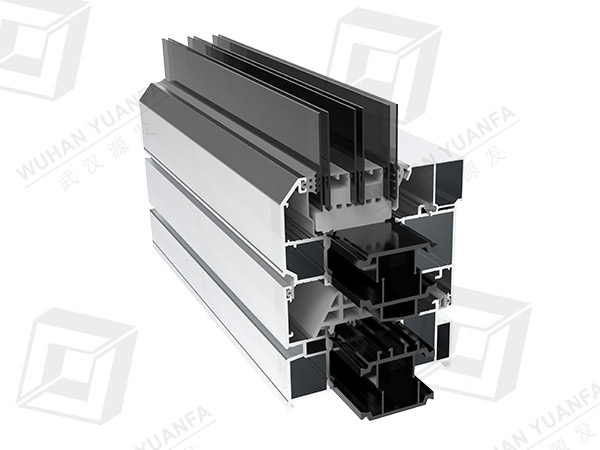
Mechanical performance dictates the safety of your entire framing system. Transverse tensile strength measures the direct pull-out force. This metric proves the physical connection between the aluminum and the thermal breaks withstands high wind loads. High-rise buildings experience massive negative pressure during severe storms. The strut must hold the interior and exterior aluminum profiles together securely. If the tensile strength falls below standard limits, the window frame could literally tear apart under peak environmental stress.
Longitudinal shear strength represents another critical mechanical metric. You must ask for specific shear testing results. This data ensures the strut will not slide within the aluminum pocket. Aluminum and plastic expand at different rates. This differential expansion creates immense shear stress along the joint. Adequate shear strength prevents sliding during thermal expansion or secondary machining. Poor shear resistance leads to warping, bowing, and ultimate structural failure.
You must guide your procurement team to request mechanical data tested against recognized industry standards. Look for testing conducted in accordance with EN 14024 or AAMA TIR-A8. These specific standards dictate rigorous testing environments. They leave no room for supplier manipulation.
To evaluate mechanical integrity accurately, demand data covering these specific sequential procedures:
Initial room temperature baseline testing for shear and tensile limits.
Testing after artificial aging for 1000 hours at high temperatures.
Testing after moisture conditioning to simulate humid environments.
Testing at extreme low temperatures to ensure the material resists embrittlement.
Verification of the knurling and rolling process integrity on the final assembly.
Energy efficiency drives modern architectural decisions globally. You cannot rely on broad claims regarding insulation. You must request specific thermal conductivity data. This is known as the Lambda value. This measurement applies to the strut material itself, not just the completed window assembly. A lower Lambda value indicates superior insulation capability. Generic plastics often exhibit higher conductivity. This hidden flaw ruins the thermal rating of your entire aluminum system.
System-level thermal simulations provide the next layer of necessary proof. Advise your buyers to request complete U-frame (Uf) test reports. You also need to see detailed isothermal graphs. These visual reports demonstrate exactly how the profile performs in intended real-world scenarios. They map the temperature gradients across the cross-section. Isothermal graphs expose weak points where condensation might form. You need this data to prove your window system prevents interior sweating.
You must frame your evaluation around anticipating stricter global energy codes. The industry is rapidly moving toward upcoming 2026 U-value targets. Relying on outdated thermal metrics guarantees future non-compliance. You must ensure the chosen profiles will not become obsolete shortly after installation. By demanding cutting-edge simulation data now, you future-proof your product lines.
Mandatory Thermal Data Metrics Comparison
Metric Type | What It Measures | Why Buyers Must Request It | Target Standard |
|---|---|---|---|
Thermal Conductivity (Lambda) | Heat transfer rate through the raw strut material. | Isolates material efficiency before assembly variables skew results. | EN ISO 10077-2 |
U-Frame (Uf) Value | Heat loss through the assembled aluminum frame. | Proves the complete extrusion meets architectural energy codes. | NFRC 100 / EN ISO 10077 |
Isothermal Graphs | Visual map of temperature gradients across the frame. | Identifies condensation risks and cold bridging flaws. | Project specific criteria |
Initial strength testing only tells part of the story. High initial strength at room temperature means little if the material degrades quickly. Environmental resilience dictates the true lifespan of the system. You must request comprehensive thermal cycling data. This data shows how the material behaves when subjected to extreme temperature fluctuations. A rigorous test cycles the profile repeatedly between -20°C and +80°C. This simulates decades of harsh seasonal changes over an extended period.
Moisture absorption poses a massive threat to standard plastics. You must instruct buyers to look for accelerated aging and UV resistance reports. Moisture uptake fundamentally alters the dimensional tolerances of lower-grade polyamides. It swells the material. It compromises the mechanical strength holding the aluminum together. A premium polyamide thermal break resists significant moisture uptake. It maintains structural rigidity even in damp coastal climates.
Implementation reality differs vastly from controlled laboratory conditions. Profiles sit on job sites exposed to direct sunlight. They endure heavy rain before installation. Weathering data proves the polymer chain remains stable under harsh UV radiation. If a supplier cannot produce advanced weathering reports, they likely use inferior resin blends. You simply cannot risk continuous seasonal exposure degrading your high-end architectural systems.
Collecting data is only the first step. You must know how to identify reliable documentation. Teach your buyers how to scrutinize a laboratory report properly. Always check for accredited third-party laboratory stamps. Look for ISO 17025 accreditation specifically. Verify the test dates immediately. Ensure the document includes explicit material grade callouts. You should see terms like PA66 GF25 clearly printed on the certificate. This guarantees the material uses 25% fiberglass reinforcement.
You must differentiate between batch-specific data and generic marketing collateral. Many suppliers provide years-old "typical performance" sheets. This represents a massive red flag. Typical performance does not guarantee the actual batch arriving at your factory meets those same standards. You must demand recent, batch-traceable quality control data. Traceability ensures accountability. If a failure occurs, you need lot numbers tied to specific mechanical tests.
You can streamline this vetting phase by updating your procurement documentation. Integrate these specific data requests directly into your standard Request for Quotation (RFQ) process.
Require third-party mechanical test reports alongside the initial pricing bid.
Mandate submission of Lambda values and corresponding laboratory certificates.
Request proof of ISO 17025 laboratory accreditation for all submitted data.
Demand a sample Quality Control batch report from a recent production run.
Filter out any supplier who hesitates or refuses to provide raw data upfront.
Requesting comprehensive test data completely shifts the burden of proof back to the supplier. You no longer have to hope the material performs as advertised. This strict approach protects your bottom line. It prevents costly delays and protects your project timelines.
We highly recommend establishing a baseline data requirement document today. Finalize this document before opening any new supplier negotiations. Distribute it to your entire purchasing department.
Encourage your buyers to initiate dialogue only with manufacturers who default to transparency. Proactive suppliers will eagerly provide independent certification. They welcome the scrutiny because their materials actually exceed industry standards. Use empirical data as your ultimate shield against inferior products.
A: Minimum acceptable shear strength varies by standard, but generally, it should exceed 24 N/mm under EN 14024 guidelines at room temperature. You must always refer to your specific architectural engineering requirements. Building height, wind loads, and local codes often demand significantly higher baseline shear strength metrics to ensure structural safety.
A: Reputable suppliers conduct continuous in-house batch testing daily. However, independent third-party certifications should be updated every one to two years. If a supplier changes their raw material source, extrusion machinery, or polymer formula, they must re-test immediately. Never accept third-party reports older than three years.
A: No. ISO 9001 only certifies that a company has a basic quality management system in place. It dictates administrative processes, not material performance. You still need ISO 17025 accredited laboratory test reports to prove the actual physical, thermal, and mechanical capabilities of the extruded profiles.
A: PA66 offers superior melting points, dimensional stability, and chemical resistance compared to basic plastics. When reinforced with 25% fiberglass (GF25), its expansion coefficient perfectly matches aluminum. This specific combination ensures the frame expands uniformly, preventing shear failure and preserving structural integrity during extreme temperature fluctuations.
A: No. In-house testing serves well for internal quality control, but it lacks independent verification. Regulatory bodies and building inspectors require unbiased data. You must demand thermal simulation reports from accredited third-party testing facilities. This external validation guarantees compliance with strict national and global energy codes.


