

close
Choose Your Site
Global
Social Media

Author: Site Editor Publish Time: 2026-08-31 Origin: Site
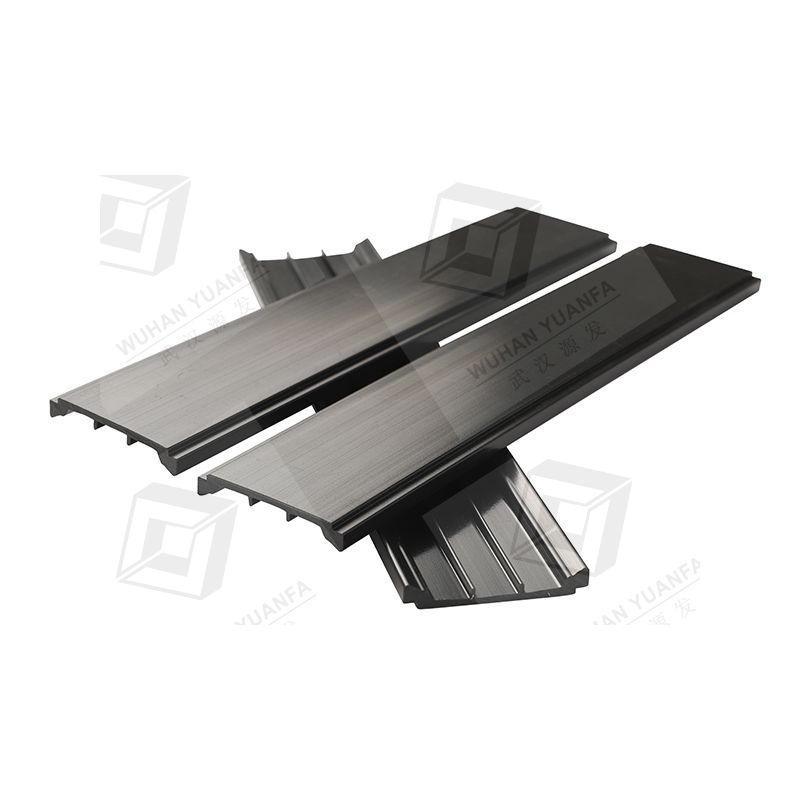
Aluminum window and door fabricators constantly face a critical production challenge. You must balance the intense curing requirements of powder coating ovens without destroying the structural integrity of pre-assembled profiles. Exposing internal structural components to extreme heat demands absolute precision. Fortunately, standard PA66 GF25 polyamide thermal break profiles safely withstand standard powder coating oven temperatures. They easily endure up to 200°C (392°F) for short durations without compromising structural mechanics.
We designed this technical evaluation guide specifically for production managers and architectural specifiers. You will learn how to ensure strict quality control and prevent catastrophic material failure. We will also explore how to maintain compliance throughout the entire coating process. By understanding these thermal limits, you can streamline production cycles safely. Your final architectural assemblies will perform flawlessly in the field, meeting every safety standard.
Optimal Curing Window: Polyamide thermal breaks can reliably withstand 200°C (392°F) for 15 to 20 minutes during the powder coating baking cycle.
Material Superiority: Polyamide 66 with 25% glass fiber (PA66 GF25) offers a melting point of approximately 250°C (482°F), providing a critical safety margin over standard curing temperatures.
Moisture Management is Critical: Proper moisture conditioning prior to baking is required to prevent surface blistering or dimensional distortion.
Post-Bake Structural Integrity: High-quality polyamide retains its required transverse tensile and shear strength after the thermal cycle, complying with EN 14024 and AAMA standards.
Understanding material science is vital for safe manufacturing. PA66 GF25 consists of nylon 66 extruded alongside 25% glass fibers. This specific chemical composition delivers exceptional mechanical strength and heat resistance. The absolute melting point of PA66 GF25 rests at approximately 250°C (482°F). At this extreme temperature, the polymer matrix liquefies completely.
However, the absolute melting point differs significantly from the safe operating temperature. For powder coating applications, the functional safety threshold sits lower. Ovens operate effectively around 200°C (392°F). This creates a comfortable 50°C buffer. The material softens slightly near 200°C but never loses its core structural shape. The embedded glass fibers hold the profile rigid. Once cooled, the polymer matrix re-hardens and regains full mechanical strength.
Powder coating requires precise time and temperature combinations to cure properly. The powder must melt, flow, and cross-link over the aluminum surface. Typical architectural coatings demand either low-bake or standard-bake cycles. Your chosen cycle directly impacts the internal thermal barrier.
During the peak cross-linking phase, the oven holds maximum heat. The polyamide experiences intense thermal exposure. It expands slightly, but the glass fiber matrix restricts severe deformation. Fabricators must carefully monitor time in the oven. Exceeding the recommended bake time causes polymer degradation, even if the temperature remains under 250°C.
Curing Phase | Target Temperature | Duration | Material Behavior |
|---|---|---|---|
Low-Bake Cycle | 180°C (356°F) | 20 - 25 minutes | Excellent stability. Minimal softening of the polymer matrix. |
Standard Cycle | 200°C (392°F) | 10 - 15 minutes | Temporary softening occurs. Glass fibers maintain dimensional rigidity. |
Risk Threshold | 220°C+ (428°F+) | Over 20 minutes | High risk of permanent structural degradation and brittleness. |
Fabricators often compare two primary insulation methods. You can choose either extruded polyamide profiles or poured polyurethane systems. Polyurethane creates a solid thermal barrier, but its thermal stability falls short. Traditional pour-and-debridge polyurethane degrades rapidly at elevated temperatures. It typically cannot survive environments exceeding 160°C (320°F). Exposing polyurethane to powder coating ovens causes severe melting and catastrophic structural failure.
This limitation highlights the distinct business advantage of a high-quality thermal break made from PA66 GF25. Polyamide allows you to roll and assemble the complete aluminum profile first. You can then route the entire unified assembly through the powder coating process. This single-pass coating strategy streamlines production schedules for single-color profiles. You avoid managing separate aluminum halves, reducing handling errors and inventory complexity.
Pure nylon cannot survive an industrial oven. Pure polyamide 66 expands aggressively under heat and loses dimensional stability. We solve this by integrating a 25% multi-directional glass fiber matrix (GF25) into the base polymer. This reinforcement changes the mechanical properties drastically.
The glass fibers act as a microscopic skeleton inside the plastic. While the nylon matrix softens under high heat, the glass fibers refuse to yield. They prevent structural sagging across wide profile spans. They also dictate the direction of thermal expansion. Manufacturers orient these fibers longitudinally during extrusion. This orientation ensures the material expands at a rate compatible with the surrounding aluminum.
Polyamide exhibits naturally hygroscopic behavior. It absorbs moisture directly from the ambient air over time. This absorbed water poses a significant threat during the baking process. When the profile enters a 200°C oven, trapped moisture rapidly vaporizes into steam. This sudden expansion creates micro-blistering along the plastic surface. Industry professionals often call this the "pop" effect.
Escaping steam outgasses violently and ruins the nearby powder coating finish. You will see visible bubbles or pinholes along the aluminum-plastic joint. You must implement a strict mitigation strategy to prevent this. Maintain climate-controlled storage for all unrolled profiles. Optimal moisture content should range between 1.5% and 2% before the assembly enters the oven. Pre-drying strips might be necessary in highly humid manufacturing environments.
Production managers frequently confuse ambient oven air temperature with actual part temperature. The oven thermometer might read 200°C, but thick aluminum profiles heat up slowly. The actual core temperature of the assembly lags behind the ambient air.
This lag creates a dangerous temptation. Operators might slow down the conveyor line to ensure heavy aluminum reaches the target curing temperature. However, the exposed plastic strip heats up much faster than the metal. Prolonged exposure causes uneven heat distribution. The plastic absorbs excessive thermal energy, leading to localized warping or irreversible brittleness. Regular oven calibration and thermal profiling sensors attached to dummy profiles prevent this imbalance.
Aluminum and polyamide possess different coefficients of linear thermal expansion. When heated, aluminum expands at a specific rate. Polyamide expands at a slightly different rate, even when reinforced. This differential movement creates intense shear stress along the mechanical joint during the bake cycle.
The knurled aluminum teeth grip the plastic firmly. As both materials expand, they pull against each other. If the baking cycle exceeds safe durations, this shear stress damages the knurling lock. The joint loosens permanently. Carefully controlling the temperature ramp-up and cool-down phases minimizes this violent thermal shock.
Visual inspections cannot confirm structural safety after a heat cycle. You must conduct rigorous mechanical testing post-cure. Heat exposure can relax the mechanical grip between the metal and the plastic. Push-out testing and shear testing remain mandatory steps for quality assurance.
Technicians cut small samples from the cured profile batch. They place these samples in a hydraulic testing machine. The machine applies force until the joint fails. You must compare these failure points against established industry baselines. Referencing AAMA TIR-A8 and EN 14024 standards ensures the heat cycle did not degrade the mechanical lock. The assembled profile must maintain sufficient load-bearing capacity to withstand heavy wind loads in architectural applications.
Oven heat often induces subtle physical changes. Once the profiles exit the oven and cool to room temperature, you must verify their geometry. Architectural systems demand extremely tight tolerances. Even a millimeter of distortion prevents successful window assembly.
Implement a strict evaluation process for every cured batch:
Measure Overall Shrinkage: Check the total length of the profile against the pre-bake dimensions to calculate shrinkage percentages.
Verify Expansion Tolerances: Measure the cross-sectional width across the thermal barrier joint.
Inspect for Longitudinal Bowing: Lay the profile on a perfectly flat inspection table. Measure any gap between the profile center and the table surface.
Check Cavity Dimensions: Ensure hardware grooves and gasket channels remain perfectly sized for final assembly.
Success requires the profile to maintain exact tolerances. Any deviation indicates an improper baking cycle or poor material quality.
Many modern architectural designs require two-tone finishes. Clients often want a dark exterior and a light interior. In these scenarios, pre-assembled coating becomes impossible. You must employ an alternative approach.
Fabricators powder coat the interior aluminum half and the exterior aluminum half separately. After both halves cure and cool, operators roll the insulating strip between them. This method completely eliminates oven risks for the polyamide. The plastic never sees the inside of a hot oven. While this process requires more handling, it guarantees zero thermal degradation of the insulating barrier.
Selecting a reliable supplier prevents downstream manufacturing failures. You must demand and review the Technical Data Sheet (TDS) for any proposed material. Do not accept generic nylon specifications. You need explicit data for PA66 GF25.
Look closely at the thermal properties section. The TDS must state the continuous operating temperature and the short-term peak temperature ratings. A reputable manufacturer will clearly indicate that their product survives 200°C for 20 minutes. If the TDS lacks this specific oven-curing endorsement, reject the material.
Material traceability protects your manufacturing operation. High-quality suppliers laser-mark every meter of their profiles. This marking typically includes the brand name, material type, and a specific production batch code.
Batch traceability helps isolate issues if a profile fails during the oven cycle. Furthermore, ensure the material meets international standards. Suppliers should hold certifications aligning with Qualicoat regulations. These certifications prove the material undergoes rigorous third-party testing for heat-treated architectural aluminum applications.
Never transition to a new supplier without extensive internal validation. Your oven environment is unique. You must verify how a new material reacts to your specific equipment and climate.
Request varied material samples from short-listed suppliers.
Run these samples through your standard pilot oven testing.
Subject the baked samples to aggressive in-house shear and tensile tests.
Monitor the material for outgassing or blistering under your standard facility humidity.
Evaluation Category | Key Questions to Ask Suppliers |
|---|---|
Thermal Ratings | Does the TDS explicitly rate the material for 200°C powder coating cycles? |
Fiber Composition | Is the glass fiber uniformly distributed at exactly 25%? |
Traceability | Are production batch numbers clearly laser-printed on the extrusion? |
Compliance | Does the material comply with EN 14024 mechanical testing standards post-bake? |
Standardizing on high-quality PA66 GF25 profiles enables safe, pre-assembled powder coating at 200°C. This specific material composition provides a crucial buffer between efficient manufacturing and catastrophic material failure. The glass fibers maintain rigid structural support while the polymer navigates the intense heat of the curing process.
However, successful implementation relies on strict operational discipline. You must monitor oven calibration meticulously. You must manage ambient moisture to prevent aggressive outgassing and blistering. Finally, you must enforce rigorous post-bake mechanical testing to guarantee public safety. We urge production decision-makers to audit their current technical data sheets immediately. Consult your suppliers to secure high-heat specific compliance documentation before your next production run.
A: Standard PA66 GF25 will not melt in a standard powder coating oven. Its absolute melting point is approximately 250°C (482°F). Since typical ovens operate around 200°C (392°F), the material remains safely below its melting threshold, though it may soften temporarily.
A: High-quality PA66 GF25 profiles can safely withstand 200°C (392°F) for 15 to 20 minutes. Prolonged exposure beyond this timeframe increases the risk of permanent mechanical degradation and severe dimensional warping.
A: Blistering occurs due to trapped moisture. Polyamide absorbs humidity from the air. When exposed to 200°C oven heat, this moisture vaporizes rapidly into steam. The escaping steam causes micro-blistering, often called the "pop" effect, which ruins the surrounding finish.
A: It depends on the finish. For single-color profiles, coating after assembly streamlines production. For dual-color designs (e.g., black exterior, white interior), you must coat the aluminum halves separately before rolling the plastic strip.
A: No. Standard pour-and-debridge polyurethane degrades rapidly at elevated temperatures, typically failing around 160°C (320°F). It cannot survive standard powder coating ovens and must be applied after all metal finishing is complete.


