

close
Choose Your Site
Global
Social Media

Author: Site Editor Publish Time: 2026-08-12 Origin: Site
Completing the thermal breaking process is only the midpoint of manufacturing. The true risk for architects, fabricators, and procurement teams lies in post-process composite failure. You need a stringent quality control (QC) baseline to ensure structural safety. Exact fabrication tolerances and guaranteed thermal performance are absolutely vital. Poorly checked extrusions lead directly to catastrophic delamination under stress. Verifiable testing—not just visual inspection—is the only reliable indicator of a successful integration. Relying on simple surface checks leaves your projects exposed to significant structural hazards. We will explore why mechanical and dimensional testing serves as the ultimate proof of quality. You will learn the specific shear, tensile, and material checks required by top manufacturers. This guide provides an evidence-based roadmap for validating your composite assemblies before they reach the job site.
Longitudinal shear strength and transverse tensile tests are non-negotiable to prevent structural delamination.
Dimensional tolerance checks ensure the profile has not warped, bowed, or twisted during the high-pressure crimping phase.
Verifying the material integrity of the polyamide thermal break guarantees long-term durability under extreme temperature fluctuations.
Supplier shortlisting should rely on documented compliance with recognized industry standards (e.g., AAMA, EN) and transparent testing reports.
Skipping quality checks generates massive financial exposure. Utilizing untested profiles creates cascading costs across the entire supply chain. Faulty extrusions often lead to severe on-site installation delays. Installers cannot fit warped profiles into precision-engineered building envelopes. Faulty fenestration systems require immediate replacement. Building code violations halt construction entirely until you resolve the material defects. These cascading issues destroy profit margins rapidly. They damage brand reputation beyond repair. You must treat quality control as a core risk management strategy.
The manufacturing process merges aluminum and a polymer strut. This creates a complex composite material. Aluminum expands and contracts rapidly under sunlight. The polymer reacts differently. This differential thermal expansion puts immense stress on the assembled joint. If manufacturers skip testing, the bond will inevitably fail. High winds and seasonal temperature swings constantly test this bond. Structural failure in a high-rise application presents a severe safety hazard. You cannot afford to guess about the integrity of the connection.
You must know what a passing profile looks like. A passing profile is a stable, unified composite. It performs structurally as a single robust piece. Simultaneously, it acts thermally as two perfectly isolated halves. Proper quality control guarantees this dual performance. The aluminum must transfer loads seamlessly through the polymer strut. The strut must block heat transfer completely. When these two criteria meet, you have a successful thermal break integration.
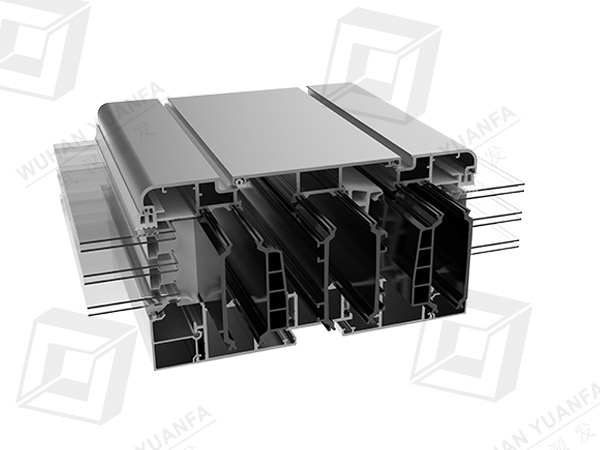
Mechanical testing reveals the hidden strength of the composite joint. Visual inspections cannot see inside the crimped aluminum cavity. You must rely on destructive testing to prove structural integrity.
Longitudinal shear testing measures sliding resistance. The testing machine pushes the insulating strut along the longitudinal axis. It applies steadily increasing force until the bond breaks. This test reveals the actual crimping quality. Poor knurling fails this test instantly. Shallow knurling teeth cannot bite into the polymer. The machine records the peak load before failure. Technicians compare this peak load against strict industry minimums. High shear strength guarantees the profile will handle processing loads during window fabrication.
Transverse tensile strength testing involves lateral force. The universal testing machine tries to pull the aluminum away from the strut. It applies force perpendicular to the extrusion axis. High wind loads exert similar outward forces on building facades. Strong tensile strength prevents window blowouts during severe storms. If the crimping pressure was too low, the aluminum cavity opens. The strut pops out under minimal force. This push-out test confirms the metal cavity securely encapsulates the polymer.
Profiles face severe weather over their multi-decade lifespan. Mechanical tests must account for long-term environmental degradation. Testers simulate these harsh conditions in a laboratory. We bake profiles in industrial ovens to replicate intense summer heat. We freeze them in extreme cold chambers. We soak them in water to simulate moisture exposure. Then, technicians repeat the shear and tensile checks.
Follow this standardized testing workflow to ensure comprehensive data collection:
Extract random samples from every production batch.
Perform initial shear and tensile tests at room temperature.
Place remaining samples into environmental conditioning chambers for 1,000 hours.
Remove samples and allow them to stabilize at room temperature.
Execute post-weathering shear and tensile tests to calculate performance retention.
High-pressure rolling introduces significant deformation risks. Knurling wheels apply tremendous force to the aluminum cavities. Rolling machinery crimps the metal tightly around the strut. Miscalibrated equipment warps the aluminum easily. High pressure distorts thin extrusion walls. This distortion ruins the precise geometries required for modern fenestration.
You must audit specific dimensional tolerances before approving a batch. Precision is non-negotiable for automated fabrication. CNC machines require perfect tolerances. Distorted profiles jam automated cutting saws. They cause severe delays on the factory floor. Fabricators waste countless hours trying to force bowed profiles together.
Inspectors must evaluate the following key measurements:
Straightness and Bowing: We measure deviation along the extrusion length. Bowed profiles ruin architectural sightlines. They prevent windows from sitting flush in the rough opening.
Twist: The profile must remain perfectly planar. Twisted frames make window assembly impossible. They place uneven pressure on insulated glass units. This uneven pressure causes glass panes to shatter spontaneously.
Gap and Flushness Tolerances: The joint between metal and strut requires exact dimensions. Loose gaps invite air infiltration. They allow water to penetrate the building envelope. Tight flushness guarantees weatherproof seals.
Engineers use coordinate measuring machines (CMM) and specialized jigs. These tools capture variations down to the millimeter. Catching a twist early saves thousands of dollars in wasted materials. Always demand dimensional inspection reports alongside mechanical data.
The core of the composite system is the polymer strut. Material specifications dictate the ultimate success or failure of the assembly. Buyers must verify the raw materials used by the manufacturer. Industry standards dictate specific polymer blends. Do not accept substitutions like PVC or standard ABS. These cheaper plastics melt during the powder coating process. They become brittle in freezing weather.
PA66 GF25 is the undisputed industry benchmark. It combines polyamide 66 reinforced with 25% glass fiber. This specific mixture matches the thermal expansion coefficient of aluminum almost perfectly. It prevents internal shear stress during extreme weather changes. Using the correct polyamide thermal break material ensures long-term durability. It withstands the baking temperatures of paint curing ovens without losing mechanical strength.
Quality inspectors utilize visual and microscopic checks. They use magnification tools to examine the cross-section. They hunt for microscopic cracks in the strut. Micro-cracking indicates the rolling pressure was too high. They check for incomplete seating in the cavity. Inconsistent knurling depths compromise the grip. A weak grip causes sudden structural failure. Inspectors also verify the precise location of the sealing wire if polyurethane resin is used.
Physical dimensions dictate thermal transmittance. We validate expected U-values against actual composite measurements. This ensures no thermal bridging occurs. A perfectly positioned strut creates an unbroken thermal barrier. Proper validation guarantees building energy efficiency. It ensures the final window achieves the specified energy ratings.
Material Property Comparison Chart
Property Metric | Aluminum Alloy (6063) | PA66 GF25 | Standard PVC (Not Recommended) |
|---|---|---|---|
Thermal Expansion Coefficient | ~23.4 x 10⁻⁶ /K | ~25.0 x 10⁻⁶ /K | ~70.0 x 10⁻⁶ /K |
Melting Temperature | 600°C+ | 250°C+ | ~80°C (Melts in coating oven) |
Tensile Strength | High | High (Glass-reinforced) | Low (Brittle when cold) |
Procurement teams hold the ultimate responsibility for material quality. You must audit a manufacturer's internal QC processes heavily. Do this during the procurement phase. Do not wait until the first container arrives. Ask hard questions about their daily production line testing. Evaluate their testing equipment. Check if their calibration certificates are up to date. A reliable partner will welcome this scrutiny.
Documentation requirements separate professional suppliers from amateurs. Advise buyers to request specific, batch-level testing data. Request raw shear test graphs showing the exact yield point. Ask for detailed dimensional inspection reports for every extrusion die. Reject generic marketing claims. Brochures do not hold up in court. Real, traceable data protects your investment.
Standardization compliance provides a vital baseline for trustworthiness. International testing methodologies govern how tests are performed. AAMA TIR-A8 dictates the structural performance standards in the US. EN 14024 governs European compliance expectations. These frameworks dictate exact testing speeds, temperatures, and sample sizes. Look for adherence to these specific norms. Adherence offers critical liability protection for your architectural firm or fabrication shop.
Essential QC Documentation Checklist
Document Type | Purpose | Frequency Requirement |
|---|---|---|
Longitudinal Shear Report | Proves resistance to sliding forces | Every production batch |
Transverse Tensile Data | Proves resistance to wind loads | Every production batch |
Dimensional Inspection Sheet | Verifies straightness, bowing, and twist | Per shift / Per die change |
Material Certification (PA66 GF25) | Verifies polymer composition and strength | Annual / Per raw material lot |
Post-process testing is absolutely critical for mitigating downstream construction liabilities. You cannot afford to install untested materials into complex building envelopes. The risks of structural delamination and thermal bridging are too great. Verifiable testing protects your projects from expensive delays and catastrophic failures. Reliable manufacturers embed these mechanical and dimensional checks natively into their daily production lines. They do not treat quality control as an afterthought. Encourage your procurement teams to request technical specification sheets immediately. Demand sample testing reports from shortlisted extrusion partners before committing to bulk orders. Transparency in testing guarantees a secure, high-performing composite product.
A: Technicians use a universal testing machine to evaluate shear strength. The machine applies targeted longitudinal force to the composite assembly. It pushes the insulating strut along the extrusion axis until the bond yields. We measure this peak load and compare it against industry minimums to ensure structural safety.
A: PA66 GF25 is polyamide 66 reinforced with 25% glass fiber. Adding this exact amount of glass fiber aligns the polymer's thermal expansion coefficient perfectly with aluminum. This alignment prevents internal stress, warping, or delamination during extreme weather changes and powder coating processes.
A: No, visual checks have severe limitations. While visual inspection can spot gross misalignments, bowing, or surface damage, it cannot verify internal integrity. It cannot prove the strength of the internal mechanical lock (shear strength) or confirm the exact dimensional tolerances required for automated window fabrication.


