

close
Choose Your Site
Global
Social Media

Author: Site Editor Publish Time: 2026-07-04 Origin: Site
Aluminum serves as the unquestioned industry standard for commercial and high-end residential fenestration. It offers exceptional structural strength. It also provides unmatched aesthetic versatility for modern architectural designs. However, its extremely high thermal conductivity presents a critical engineering challenge. Unbroken aluminum frames act as massive thermal bridges. They facilitate rapid heat transfer between the interior and exterior environments. This rapid transfer severely compromises HVAC efficiency. It routinely leads to persistent interior condensation. Furthermore, standard solid aluminum systems routinely fail strict modern building codes.
To resolve this fundamental vulnerability, engineers must insert a specialized insulating barrier inside the metal frame. For commercial-grade applications, the thermal break polyamide strip has emerged as the definitive global solution. It perfectly balances necessary structural integrity. It simultaneously delivers high-performance thermal isolation. You will learn exactly why this composite technology dominates modern window manufacturing. We will explore its underlying physical properties, load-bearing structural benefits, and direct impacts on energy compliance.
Polyamide strips share the identical coefficient of linear thermal expansion as aluminum, preventing structural warping during extreme temperature fluctuations.
Reinforcing polyamide with 25% glass fiber (PA66 GF25) ensures the barrier can support the heavy structural loads of modern multi-pane glazing.
Integrating a polyamide thermal barrier strip is the most reliable method for aluminum windows to achieve compliance with stringent U-value and condensation resistance mandates.
Unlike liquid-poured alternatives, polyamide strips allow for dual-finish windows (different interior and exterior colors) and withstand high-temperature powder coating processes.
Heat always travels along the path of least resistance. Aluminum conducts thermal energy highly efficiently. In building facades, solid aluminum frames offer an uninterrupted superhighway for heat exchange. Energy moves easily from the heated interior to the freezing exterior during winter. During summer months, the reverse action occurs. Hot outside air warms the cooled interior living spaces. We define this physical vulnerability as thermal bridging.
Traditional unbroken aluminum frames fail modern building standards. They simply cause excessive energy loss. Older window systems cannot meet today’s rigorous environmental requirements. Architects now demand high insulation performance across the entire building envelope. Solid frames lack inherent thermal resistance. This renders unbroken extrusions entirely obsolete for modern construction projects.
Thermal bridging creates a massive and dangerous condensation risk. It lowers the interior frame temperature significantly. Often, the metal surface drops below the room's ambient dew point. Moisture from the indoor air accumulates directly on the cold metal frame. This leads to persistent water buildup along the sills. Left unchecked, toxic mold grows rapidly around window perimeters. The condensation eventually degrades surrounding building materials. Wall cavities rot silently. Drywall crumbles under constant moisture exposure.
Here is how the thermal bridging cycle systematically damages buildings:
Exterior freezing temperatures deeply chill the outer aluminum extrusion.
The solid metal transfers this cold directly to the interior frame section.
Warm indoor air hits the artificially chilled interior metal surface.
Airborne moisture condenses instantly, pooling water on the window sill.
Repeated moisture exposure causes long-term structural degradation nearby.
Engineers primarily use two methods to stop thermal bridging in metal frames. The legacy method uses poured polyurethane resin. The modern standard relies on an engineered polyamide thermal barrier strip. Understanding the transition between these technologies reveals crucial structural improvements.
The legacy approach goes by the industry name "pour and debridge." Manufacturers pour a liquid polyurethane resin into a specifically designed aluminum channel. Once the resin cures into a solid, heavy machinery cuts away the metal bottom. This physical cut severs the thermal bridge. However, this older method carries distinct limitations. Polyurethane lacks high shear strength. It struggles to hold heavy glass loads. It also fails in high-heat manufacturing environments. Frames can warp or lose structural integrity under extreme climate stress.
Polyamide extrusion offers a vastly superior mechanical advantage. Manufacturers extrude a rigid, solid polyamide profile. They roll this solid strip into specialized pockets within the aluminum extrusions. First, a machine knurls the metal pocket to create a rough gripping surface. Next, heavy rollers crimp the metal tightly around the plastic strip. This action creates a remarkably strong, unified composite profile. The mechanical lock holds heavy glass securely in place.
The most critical advantage lies in the expansion coefficient. Polyamide and aluminum expand and contract at the exact same rate. This shared thermal expansion property remains absolutely vital for long-term durability. It entirely eliminates internal shear stress between the dissimilar materials. You avoid frame distortion over decades of intense seasonal temperature shifts. The structural bond remains perfectly intact. Consequently, seal failure becomes highly unlikely.
Thermal Barrier Technology Comparison
Feature | Polyurethane (Pour & Debridge) | Polyamide Extrusion |
|---|---|---|
Material State | Liquid resin cured in place | Pre-extruded solid composite |
Structural Integrity | Moderate load-bearing capability | Exceptionally high shear strength |
Expansion Rate | Differs significantly from aluminum | Practically identical to aluminum |
High-Heat Tolerance | Low (melts during baking cycles) | Excellent (survives powder coating) |
Design Flexibility | Single continuous channel required | Enables complex multi-cavity designs |
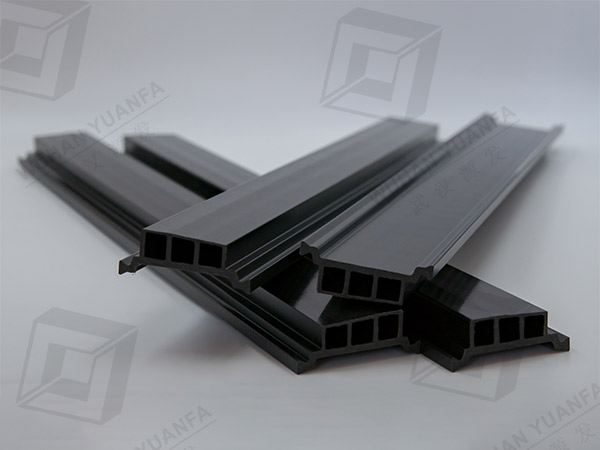
The fenestration industry standard relies on a highly specific material formulation. We define this chemical formulation as PA66 GF25. It stands for Polyamide 66 reinforced with exactly 25% fiberglass. Pure polyamide provides excellent thermal resistance on its own. However, raw polymer lacks the ultimate tensile strength needed for heavy building facades. Adding 25% glass fiber solves this structural problem completely. The resulting PA66 GF25 thermal break strip becomes exceptionally rigid and durable.
Tensile and shear strength matter immensely in commercial window applications. Modern architectural designs feature incredibly heavy triple-glazed insulated glass units (IGUs). The thermal barrier cannot simply act as an insulator. It must operate as a primary load-bearing structural component. It literally holds the interior and exterior aluminum frames together under massive stress. The glass fiber reinforcement gives the strip incredible structural power. It prevents the window assembly from sagging under extreme pane weight. Heavy wind loads and natural building settling will not break this vital bond.
High-temperature resilience defines another essential physical property. The PA66 GF25 formulation easily withstands temperatures up to 200°C (392°F). This extreme heat resistance is critical for modern manufacturing workflows. Fabricators usually assemble the thermally broken frame first. Then, they send the entire assembly through a powder-coating baking oven. The intense oven heat cures the durable paint finish. Older polyurethane systems would melt or severely degrade inside these ovens. In contrast, fiberglass-reinforced polyamide survives the baking cycle without any structural degradation.
Key structural benefits of this specific formulation include:
Maintains a rigid composite shape under intense hurricane-level wind loads.
Supports massive vertical weights from large architectural glass panels.
Resists harsh chemical baths utilized during metal anodizing processes.
Retains high mechanical locking strength after decades of environmental exposure.
Thermal performance validation requires strict, measurable laboratory data. Inserting a high-quality thermal barrier drastically lowers the U-factor of the entire unit. The U-factor measures the actual rate of heat loss through the assembly. Lower numbers equate to vastly better insulation. A solid aluminum frame possesses a terrible U-factor rating. Splitting the metal frame with specialized polyamide stops the heat transfer instantly. The window assembly immediately becomes highly energy efficient.
Modern barriers leverage high cavity complexity to maximize insulation. Engineers no longer rely on simple flat plastic strips. They design complex geometries inside the extrusion die. Multi-cavity hollow strips trap pockets of still air. Small structural fins jut out from the strip surface. These fins actively disrupt convective air currents. They stop warm air from continuously looping inside the internal frame cavity. This physical disruption further enhances the overall R-value.
Summary Chart: U-Value Impact Based on Barrier Geometry
Frame Configuration | Internal Convection Status | Estimated U-Factor Rating |
|---|---|---|
Solid Aluminum (Unbroken) | High uninterrupted heat flow | Poor (Fails modern codes) |
Single Flat Polyamide Strip | Moderate air looping inside cavity | Good (Meets baseline codes) |
Multi-Cavity Hollow Strip | Trapped stagnant air pockets | Excellent (High efficiency) |
Complex Strip featuring Fins | Fully disrupted convection currents | Superior (Passive House level) |
Meeting regulatory standards now acts as a mandatory project requirement. Building codes grow stricter globally every single year. You simply cannot pass local or international mandates without integrating these advanced barriers. Standard bodies like ASHRAE 90.1 set incredibly tough baselines for commercial buildings. Residential programs like Energy Star require exceptionally low U-factors for product approvals. Elite programs like Passive House standards demand extreme thermal isolation. The engineered polyamide barrier guarantees verifiable compliance across all these strict regulatory frameworks.
Precise manufacturing directly dictates structural success in fenestration. Dimensional tolerances matter far more than you might expect. Extruding these materials requires absolute engineering precision. Even a fraction of a millimeter variance during extrusion causes catastrophic failure. A slightly thin strip creates a dangerously loose mechanical lock. The aluminum profile will not crimp tightly enough around the plastic. This severely compromises the entire window's structural integrity, leading to failed shear tests.
Moisture conditioning acts as a critical hidden requirement in the manufacturing process. High-quality thermal break polyamide strip profiles emerge from the hot extrusion die completely dry. In this totally dry state, the polymer remains overly brittle. Manufacturers must properly moisture-condition them post-extrusion in specialized humidification chambers. The material needs to absorb a specific, calculated percentage of water. This precise hydration process achieves optimal material toughness. It prevents the rigid plastic from cracking under the immense pressure of the mechanical crimping machines.
Fabricators must apply extremely strict vendor evaluation criteria before purchasing. Choosing the right supplier directly impacts your long-term product liability. You must demand verifiable raw material sourcing records. Cheap plastic fillers aggressively compromise the required 25% fiberglass ratio. Look for established ISO certifications in their primary manufacturing plants. Assess their custom profile extrusion capabilities to handle complex fin designs. You need a reliable partner who guarantees strict batch-to-batch consistency and provides documented shear testing results.
Common Manufacturing Mistakes to Avoid:
Skipping the crucial moisture conditioning phase to forcefully speed up production.
Accepting excessively wide dimensional tolerances from budget-focused suppliers.
Using weak, non-reinforced plastics instead of authentic PA66 GF25.
Failing to calculate the proper knurling depth and crimping pressure for the aluminum cavity.
The engineered polyamide barrier functions as much more than a simple insulating add-on. It operates as a vital structural composite holding the entire assembly together. It fundamentally dictates the overall energy performance of the fenestration system. It guarantees the long-term mechanical durability of the split frame. Ultimately, it ensures mandatory regulatory compliance for modern commercial aluminum windows.
Architects and manufacturers must take proactive steps regarding their component choices. Audit your current thermal break specifications closely today. Make sure you only specify properly reinforced fiberglass formulations. Consult directly with engineering-focused extrusion suppliers. They will assist you in optimizing your complex profile designs. Through careful specification, you will confidently meet the unique demands of your specific climate zone requirements.
A: Yes. Polyamide strips can be mechanically rolled into curved aluminum profiles. However, this process requires precise engineering calculation of the bending radii. You must ensure the mechanical lock remains perfectly secure without stretching or cracking the plastic strip during the bending procedure.
A: It expertly enables "dual-color" design configurations. Because the interior and exterior aluminum extrusions remain physically separate pieces joined by the strip, fabricators can paint or anodize them in entirely different architectural finishes prior to final assembly.
A: When properly specified as PA66 GF25 and mechanically rolled into the profile with correct crimping pressure, the thermal break is designed to last the entire functional lifetime of the aluminum window system. It will perform without degrading, shrinking, or losing its critical structural bond.


