

close
Choose Your Site
Global
Social Media

Author: Site Editor Publish Time: 2026-08-16 Origin: Site
Aluminum fenestration relies heavily on effective insulation to meet modern building demands. Today, robust thermal breaking technologies stand at the center of this evolution. They transform highly conductive metals into energy-efficient framing systems. Stricter commercial energy codes, such as ASHRAE 90.1 and Title 24, force fenestration manufacturers and architects to optimize aluminum frames. They must achieve higher insulation values without compromising structural integrity.
Upgrading an extrusion line or specifying a new framing system requires an important choice. You must select between traditional Pour and Debridge (P&D) or mechanical Polyamide Strips. This article moves past high-level definitions to evaluate both methods thoroughly. You will learn how they compare on structural performance, manufacturing realities, and dual-finish capabilities. We will help you determine the most effective approach for your specific architectural and production needs.
Pour and Debridge (P&D) utilizes a poured polyurethane liquid, excelling in rapid, high-volume production for single-finish profiles with strong shear strength.
Strip Thermal Breaking (using polyamide struts) relies on a mechanical crimping process, offering unmatched flexibility for wider insulation cavities and dual-color (interior/exterior) architectural finishes.
The optimal choice depends on fenestration design complexity, required U-factors, existing capital equipment, and market demand for bicolor aesthetics.
Manufacturers generally approach aluminum profile insulation through two distinct methodologies. You must understand the core mechanics of each process. This understanding helps you align your production capabilities with architectural market demands.
The Pour and Debridge process relies on a liquid polyurethane compound. Operators pour this chemical mixture into a specially designed, extruded aluminum channel. The liquid fills the entire cavity uniformly. It then requires a dedicated curing period to harden into a solid polymer structural barrier. Once fully cured, the profile moves to a specialized CNC milling machine. This machine physically cuts away the solid aluminum bridge at the bottom of the channel. We call this specific milling step debridging. Removing the metal bridge entirely eliminates the conductive thermal path.
A key characteristic of P&D is its continuous, highly adhesive insulating barrier. The polyurethane bonds directly to the raw or treated aluminum at a molecular level. It creates a solid monolithic structure. You gain an immediate structural composite once the chemical curing finishes.
This alternative method utilizes solid, pre-extruded struts. Manufacturers typically make these struts from polyamide 66 reinforced by 25 percent fiberglass. Unlike P&D, this process uses two completely separate aluminum extrusions. One forms the interior profile, and the other forms the exterior profile.
The process begins by mechanically knurling the insertion pockets on both metal profiles. Knurling creates tiny, sharp teeth in the metal cavity. Next, operators insert the rigid struts into these pockets. Finally, heavy rolling machinery crimps the aluminum teeth down onto the strut feet. The defining characteristic here is immediate mechanical connection. It connects two distinct metal extrusions. It creates a physical barrier without any wet curing times or chemical reactions.
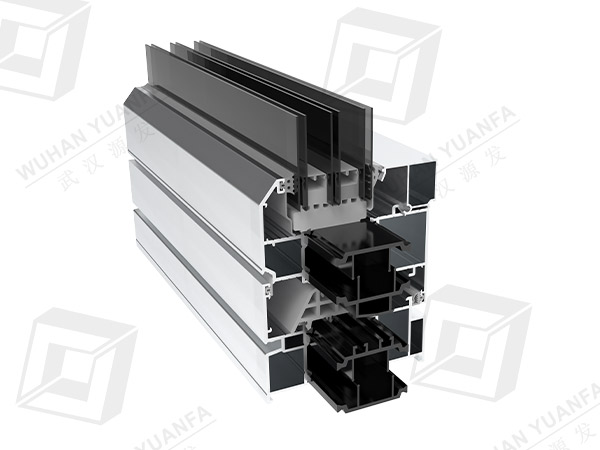
When you evaluate these systems, you must look closely at their structural and thermal capacities. Building codes demand higher performance every year. Your framing choice must meet strict fenestration guidelines.
Both methods offer excellent baseline thermal resistance. However, their scalability differs significantly. P&D systems face physical limitations regarding cavity width. The physics of a liquid pour restrict how wide or deep you can design the channel. If you make the channel too wide, the liquid may not cure evenly. The structural integrity of the polyurethane could degrade across wider spans.
Conversely, the mechanical strip method allows highly scalable cavity widths. You can easily specify a wider thermal break to meet stringent passive house or NFRC standards. You achieve this simply by using a broader strut. You do not need to change the primary aluminum die. This flexibility gives architects massive design freedom. They can increase the U-factor performance on demand.
P&D inherently provides exceptional monolithic composite action. The chemical adhesion of the polyurethane creates immense longitudinal shear strength. It resists the sliding forces between the inner and outer metal shells. Historically, it offers superior shear performance because the bond forms at a micro-surface level.
Strip systems rely entirely on precision knurling and rolling. The mechanical crimp must bite deeply into the fiberglass-reinforced strut. You need strict quality control to ensure proper structural composite action. If machinery falls out of calibration, you risk slippage under heavy wind loads. Proper execution guarantees strength, but poor execution leads to structural failure.
Metric | Pour and Debridge (P&D) | Polyamide Strip |
|---|---|---|
Thermal Scalability | Limited by channel depth and pour physics | Highly scalable by changing strut width |
Composite Action | Chemical adhesion (Monolithic) | Mechanical crimp (Friction/Bite) |
Curing Requirement | Requires climate-controlled chemical curing | Immediate dry mechanical assembly |
Shear Strength Source | Molecular polymer bond | Knurled teeth biting into fiberglass |
The differences in production environments dictate which technology suits your factory best. Assembly speed, defect rates, and machinery footprint vary heavily between the two systems.
Modern architecture frequently demands different colors for interior and exterior window frames. Here, the polyamide thermal break holds a massive advantage. It enables independent painting or anodizing of the interior and exterior extrusions before final assembly. You simply coat the separate metal pieces in different colors, then crimp them together. This process is crucial for modern architectural demands.
P&D starts as a single, unified aluminum extrusion. Because it begins as one piece, achieving a dual-finish requires labor-intensive masking. Operators must tape off one side, paint it, cure it, remove the tape, mask the newly painted side, and paint the remaining metal. This workflow drastically increases defect rates. It also inflates production time and slows down your finishing line.
P&D operations require specific environmental controls. You need secure chemical storage for the polyurethane components. You must maintain climate-controlled curing areas to ensure proper polymer cross-linking. Temperature or humidity fluctuations can ruin a batch. Furthermore, you need precise CNC debridging saws to remove the metal bridge accurately. The machinery footprint is substantial.
Strip assembly utilizes purely dry, mechanical machinery. You need knurling wheels, insertion guides, and rolling discs. This equipment generally occupies a smaller, cleaner factory footprint. You eliminate chemical odors and hazardous material handling. However, it requires highly precise calibration tools. Operators must constantly measure crimp shear values to maintain structural integrity.
Selecting an insulation method involves analyzing long-term durability. Window frames must survive decades of elemental exposure. You must assess how materials react to stress, heat, and structural testing.
All fenestration systems face extreme temperature fluctuations. Older polyurethane formulations sometimes experienced dry shrinkage over several decades. The material would slowly contract, breaking the weather seal and compromising insulation. Modern polymers, like advanced Azon systems, have largely mitigated this specific issue. However, chemical breakdown remains a historical concern for some specifiers.
Polyamide behaves differently. It features a coefficient of linear thermal expansion nearly identical to aluminum. When the sun heats the metal frame, both the metal and the strut expand at the exact same rate. This synchronization minimizes shear stress on the joint during extreme temperature shifts. The mechanical lock remains stable whether installed in freezing climates or desert heat.
You must validate both methods through rigorous testing. The industry standard is AAMA TIR-A8, which dictates the Structural Performance of Composite Thermal Barrier Framing Systems. Do not guess on structural integrity. Ensure your vendors can supply certified testing data. They should provide exact numbers for shear strength and transverse tensile strength based on your specific profile geometries.
Best Practice: Always perform daily quality checks on knurling wheels for strip systems. Sharp teeth ensure a secure mechanical bite. Replace dull wheels immediately.
Common Mistake: Skipping proper surface treatment before pouring polyurethane. Poor aluminum preparation leads to weak chemical adhesion and subsequent joint failure.
Neither technology is universally superior. Your decision relies entirely on your product mix, facility constraints, and target audience. Use the following framework to shortlist the right strategy.
Your primary market demands standard, single-color anodized or painted finishes.
You require maximum longitudinal shear strength for specific high-windload commercial applications.
You already possess functioning P&D infrastructure. You want to avoid new capital expenditure on crimping machinery.
Your product designs utilize relatively narrow insulation cavities that fit well within standard pour limitations.
Your market demands complex, dual-finish fenestration systems with different interior and exterior colors.
You need to achieve ultra-low U-factors by easily swapping out strut widths. You want to avoid redesigning expensive aluminum dies for every climate zone.
You want a dry assembly process. You prefer to operate free from chemical curing constraints and hazardous material handling.
You require a system where the thermal expansion rates of the insulator and the metal match perfectly.
The choice between Pour and Debridge and mechanical strip systems significantly impacts your factory floor and your final product. P&D excels in rapid, single-color production where immense shear strength is non-negotiable. Meanwhile, mechanical struts provide unparalleled flexibility for dual-color designs and scalable insulation depths. Neither technology wins every scenario. The correct application depends entirely on aesthetic demands, U-factor targets, and your current manufacturing capabilities.
As a next step, advise your stakeholders to audit their current extrusion lines. Review local building code trajectories for the next three to five years to anticipate insulation requirements. Finally, request sample structural test reports from both polyurethane and polyamide material suppliers. Comparing these reports against AAMA standards will ensure your final framing system remains safe, compliant, and highly competitive.
A: Yes. Some advanced hybrid systems use both methods for distinct parts of a curtain wall. For example, a manufacturer might use P&D for high-shear mullions and polyamide strips for dual-color operable vents. However, this hybrid approach requires highly complex manufacturing coordination and dual assembly lines.
A: Yes. When properly knurled and crimped according to strict AAMA standards, fiberglass-reinforced polyamide provides excellent structural integrity. Manufacturers use it globally in heavy commercial high-rises, provided the assembly passes rigorous longitudinal shear and transverse tensile tests.
A: It does not limit the actual type of coating you can use. However, achieving two different colors on the inside versus the outside requires expensive and time-consuming masking. This makes it much less economically viable than strip systems for modern bicolor designs.


