

close
Choose Your Site
Global
Social Media

Modern buildings demand airtight, highly efficient envelopes. However, steel and concrete framing create hidden pathways for rapid heat loss. Structural thermal break material acts as a critical load-bearing insulation layer designed to interrupt these high-conductivity pathways within a building’s envelope. Failing to specify the correct isolation layers does more than just increase monthly utility bills. It introduces severe condensation risks, triggers long-term mold liabilities, and guarantees code compliance failures under stringent frameworks like ASHRAE 90.1. You need a precise understanding of material capabilities and installation requirements to prevent systemic envelope failure. This guide delivers a rigorous breakdown of material types, critical evaluation criteria, and implementation realities. We will explore everything from heavy structural steel connections to advanced curtain wall components, giving you the practical knowledge needed for commercial, industrial, and high-performance building applications.
Systematic Failure Risk: A thermal break is only as effective as its weakest link. Using a thermal pad without insulating the connecting bolts creates a thermal bypass, rendering the system useless.
Material-to-Application Match: There is no universal "best" material. Selection depends on balancing low thermal conductivity (k-value) with critical compressive and shear strength requirements.
The "Thickness Fallacy": Thicker isn't automatically better. Adding a break often requires larger connection flanges; if the pad is too thin, the increased steel surface area can result in greater heat loss than having no break at all.
Compliance & ROI: Modern structural thermal breaks directly contribute to LEED certification (EA and MR credits), secure tax incentives, and are mandatory in strict local energy codes.
Heat naturally seeks the path of least resistance. Uninsulated steel and concrete act as massive thermal highways. They constantly pull warmth out of your building during winter. They draw heat inside during summer. Uninsulated balconies serve as a perfect example of this phenomenon. They act like giant structural cooling fins projecting from the building. In fact, a single uninsulated balcony slab can cause up to 30% of a building's total heat loss. This massive energy drain happens even though the balcony represents a tiny fraction of the exterior envelope.
Beyond energy loss, you face severe condensation and owner liability issues. Indoor air naturally holds moisture. When warm indoor air hits a cold, uninsulated structural beam, condensation forms immediately. This physical reaction revolves around the dew point. Engineered isolation layers keep interior surface temperatures safely above this critical dew point. You must strictly control condensation in modern high-humidity environments. Hospitals, natatoriums, and crowded commercial spaces demand this protection. Failure here leads to hidden mold growth, poor indoor air quality, and severe structural degradation over time.
Many contractors fall victim to the "DIY pad" fallacy. They attempt to save money on structural isolation materials. Instead of engineered composites, they substitute generic rubber or Teflon pads. This dangerous shortcut usually retains standard carbon steel connecting bolts. A basic pad completely fails to stop heat transfer because the metal bolts act as intense thermal bridges. Furthermore, generic rubber compresses unpredictably under structural load. This shortcut compromises the entire building's structural integrity while offering zero thermal benefit.
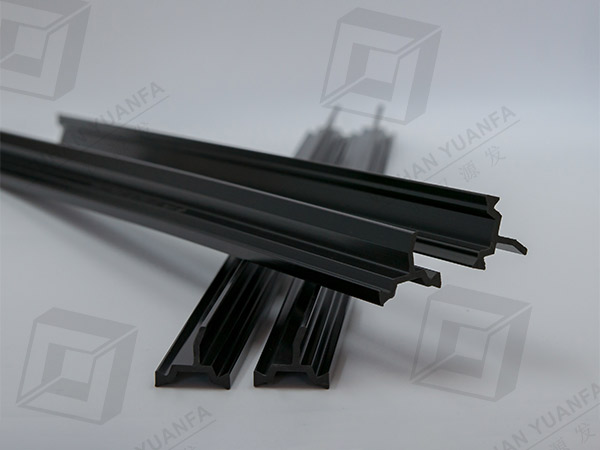
You cannot use a single material for every structural connection. You must match the material's physical properties to the exact load scenario.
Heavy load connections require immense strength. We typically specify thermoset resins and fiberglass-reinforced polymer (FRP) laminates here. These materials deliver exceptional compressive strength and extreme creep resistance. You need them specifically for high-moment connections. Common applications include cantilevered balconies, heavy masonry support angles, and large rooftop equipment grids. They hold massive weights without yielding.
For mid-level loads, high-density closed-cell polyurethane foam works exceptionally well. This material excels where moderate load-bearing meets high moisture exposure. You will frequently see it utilized in foundation walls, column bases, and cold storage facilities. The closed-cell structure guarantees water impermeability. It stops moisture migration completely while providing robust thermal resistance.
Continuous exterior wall runs demand a highly specialized approach. We rely on FRP composite Z-Girts for these applications. They serve as a direct replacement for highly conductive steel Z-girts in rainscreen systems. Switching to FRP significantly improves your wall assembly's effective R-value. Moreover, these advanced composites readily meet stringent exterior fire codes. They form an unbroken thermal barrier across the facade.
Window framing and curtain walls face massive temperature swings. Manufacturers constantly evaluate a polyamide thermal break system against traditional polyurethane pour and debridge methods. Polyamide systems utilize rigid thermal struts. These struts offer superior structural rigidity. They handle extreme high-wind loads effortlessly. They also allow for dual-finish, two-tone aesthetic customization between interior and exterior profiles. Meanwhile, pour and debridge methods offer excellent cost-efficiency for continuous window insulation in lower-stress applications.
Summary of Material Types and Applications
Material Type | Primary Application | Key Structural Benefit |
|---|---|---|
Thermoset Resin / FRP Laminates | Balconies, Rooftop Equipment | Extreme compressive strength, creep resistance |
High-Density Polyurethane Foam | Foundation Walls, Column Bases | Water impermeable, moderate load bearing |
FRP Composite Z-Girts | Façade Rainscreen Systems | Replaces steel, high fire resistance |
Polyamide Struts | Curtain Walls, Aluminum Windows | High rigidity for wind loads, dual-finish ready |
You must evaluate structural isolation materials based on strict engineering principles rather than marketing claims. Let us examine the specific criteria that determine a successful installation.
Many specifiers misunderstand the relationship between material thickness and heat flow. This creates an engineering paradox known as the "Thickness Fallacy." Cutting a continuous steel beam to insert an isolation pad requires adding large end-plate flanges. Adding this extra steel drastically increases the highly conductive surface area. If your isolation pad measures less than one inch thick, the added steel flange can ruin your thermal performance. The increased steel area negates the insulation benefits entirely. Thicker isolation materials offset this expanded flange area.
You must balance structural safety with energy efficiency. Conductivity and compressive strength share an inverse relationship. Materials possessing high structural load capacity usually feature poorer thermal performance. Highly insulative, soft foams cannot safely hold heavy structural loads. Specifiers must calculate the optimal threshold for specific joint loads. Never sacrifice structural safety for slightly better insulation values.
Chart: The Inverse Relationship of Structural Insulation
Performance Focus | Compressive Strength (psi) | Thermal Conductivity (W/mK) | Typical Material Category |
|---|---|---|---|
Maximum Insulation | Low (Under 500 psi) | Excellent (Below 0.05) | Light Foams |
Balanced Approach | Medium (1,000 - 5,000 psi) | Good (0.05 - 0.15) | High-Density Polyurethane |
Maximum Structural Load | High (Over 10,000 psi) | Moderate (0.20 - 0.30) | FRP Laminates |
Fire ratings matter immensely for exterior walls and heavy load connections. Compliance requires rigorous testing data. You must verify your materials meet ASTM E119 or NFPA 285 standards. Do not specify combustible plastics in fire-rated exterior assemblies without proper testing documentation. The wrong material could accelerate fire spread across a building facade.
The correct material choice directly drives your LEED scoring. You secure Energy and Atmosphere (EA) credits by significantly reducing the building's modeled energy consumption. You also gain Materials and Resources (MR) credits. Look specifically for materials labeled Red List Free. Verify they feature zero Ozone Depletion Potential (ODP) and carry a low Global Warming Potential (GWP).
Even the best engineering specifications fail due to poor site execution. You must watch out for several common implementation risks.
Implementation risks often occur right on the job site. The "complete system" requirement stands paramount above all other rules. Inserting a structural pad between two steel flanges remains a vastly incomplete solution. Heat easily travels directly through the connecting steel bolts. You must mandate the use of insulating thermal washers and structural insulation bushings. These critical components prevent heat from short-circuiting through the raw steel bolts. Missing washers render the main pad entirely useless.
Steel-to-concrete connections introduce unique engineering complexities. Embedding raw steel plates deeply into concrete walls creates massive, hard-to-fix thermal bridging. Coordinating perfectly between concrete pouring crews and steel welders complicates matters further. Pre-engineered embed plates offer a reliable solution. They feature fully integrated structural isolation. These modular plates bridge the physical gap between trades. They eliminate ad-hoc, error-prone site modifications.
You must demand thorough verification through 3D thermal modeling. Stop using simple area-weighted average formulas for complex structural nodes. Heat flow does not follow straight, predictable lines around bolted connections. You need robust 3D thermal simulation software. This technology accurately predicts non-linear heat flow. It properly validates the effective U-values of your structural joints long before construction ever begins.
Finding the correct system requires a disciplined, step-by-step approach. Follow this checklist to ensure structural integrity and thermal efficiency.
Step 1: Define the Load Profile. You must meticulously map out all tension, shear, and moment forces occurring at the penetration point. A rooftop chiller grid requires vastly different compressive strength than a lightweight exterior sunshade. Consult your structural engineer before reviewing material data sheets.
Step 2: Assess Environmental Exposure. Determine the interior and exterior humidity levels. Map out the expected fire-rating requirements for the specific wall assembly. Evaluate the freeze-thaw cycle exposure the joint will face over the building's lifespan. Moisture-rich environments require completely waterproof, closed-cell materials.
Step 3: Evaluate Vendor Capabilities. Prioritize manufacturers offering custom pre-cutting and precision pre-drilling services. Factory-cut materials fit perfectly. This practice sharply reduces on-site contractor modifications, significantly lowers field labor costs, and minimizes critical installation errors.
Thermal break materials serve as foundational structural components, not optional supplementary accessories. They are critical to maintaining building integrity, preventing moisture damage, and hitting rigorous modern energy targets. Remember to evaluate materials based on their compressive strength alongside their insulation values. Prioritize systems offering comprehensive isolation, including specialized washers and bushings, to prevent energy bypasses through steel bolts.
Always match the material's compressive strength to the specific load application.
Mandate comprehensive 3D thermal modeling during the design phase to accurately predict complex heat flows.
Utilize complete isolation systems on the job site, ensuring bolts and fasteners are fully insulated.
Specify pre-drilled and pre-cut materials to reduce on-site installation errors.
Take action today by reviewing your current structural details. Ensure your framing penetrations integrate complete isolation systems. This proactive step guarantees lasting compliance, protects structural integrity, and maximizes energy performance.
A: Yes. Strict continuous insulation mandates are becoming standard. ASHRAE 90.1 heavily penalizes thermal bridging. Many local building codes now specifically require structural isolation at concrete and steel envelope penetrations to meet mandatory energy efficiency targets.
A: No, provided it is properly engineered. High-performance composite materials undergo rigorous structural testing. They are specifically manufactured to match or exceed the required structural safety factors for shear, tension, and compressive loads. You just need to specify the correct grade.
A: A basic pad only sits between flanges. A complete system isolates the entire connection. It includes the pad, specialized insulating bushings for the bolt holes, and thermal washers. This prevents heat from bypassing the pad and traveling through the steel bolts.


