

close
Choose Your Site
Global
Social Media

Author: Site Editor Publish Time: 2025-10-28 Origin: Site
Ever wondered how modern buildings stay energy efficient? Polyamide Insulating Profiles hold the key. These profiles are crucial in reducing heat transfer in metal frames, enhancing energy efficiency. In this post, you'll learn about their role in construction, their benefits, and why they're indispensable for sustainable building designs.
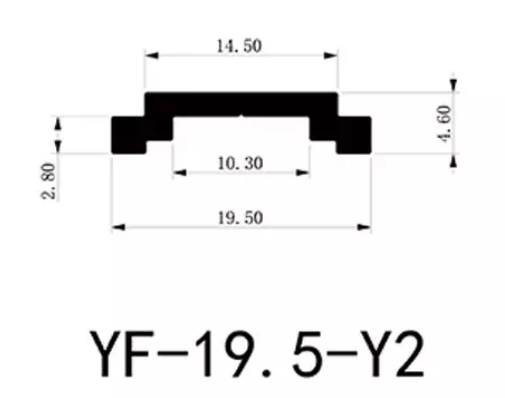
Polyamide 66, commonly known as Nylon 66, forms the backbone of many insulating profiles used in modern construction. It is a synthetic polymer known for its excellent mechanical strength, thermal stability, and chemical resistance. These properties make it ideal for thermal breaks in metal frames, such as aluminum or steel, where it helps reduce heat transfer significantly. Polyamide 66’s molecular structure provides durability and resilience, enabling profiles to withstand harsh environmental conditions without degrading.
Standard Polyamide 66 GF (Glass-Fiber Reinforced): Reinforced with glass fibers, this type enhances strength and stiffness, making it suitable for structural applications requiring robust thermal breaks.
Low Lambda Polyamide: Designed for superior thermal insulation, this variant offers lower thermal conductivity, improving energy efficiency in buildings.
High Glass Fiber Content Profiles: Profiles with higher glass fiber percentages deliver increased mechanical performance, ideal for demanding applications.
Custom Cross-Sections: Profiles are available in numerous shapes and sizes, allowing seamless integration into diverse window, door, and façade systems.
Sustainability drives innovation in polyamide profiles. Recycled polyamide variants use post-consumer or industrial waste materials, reducing environmental impact without compromising performance. Key points include:
Performance: Recycled polyamide profiles maintain comparable strength, thermal resistance, and durability to standard versions.
Environmental Benefits: Using recycled materials lowers carbon footprint and conserves resources.
Certification: Many recycled polyamide profiles meet strict material health certifications, ensuring safety and sustainability compliance.
Cost Implications: While sometimes slightly more expensive due to processing, recycled profiles offer long-term value through environmental benefits and regulatory alignment.
Manufacturers often provide both recycled and standard polyamide profiles, giving architects and builders options based on project goals and sustainability targets.
Polyamide insulating profiles act as thermal breaks in metal frames, drastically reducing heat transfer between the interior and exterior. Metals like aluminum conduct heat quickly, causing energy loss in buildings. By inserting polyamide profiles between metal parts, they block heat flow due to polyamide’s low thermal conductivity. This creates a barrier that slows temperature changes, keeping indoor environments more stable.
This thermal separation helps maintain comfortable temperatures inside buildings year-round. In winter, it prevents warm air from escaping, and in summer, it stops hot air from entering. The result is less reliance on heating and cooling systems, which lowers energy consumption and carbon emissions.
Using polyamide insulating profiles can significantly reduce heating and cooling costs. For example, a window frame without thermal separation might have a Uf value (thermal transmittance) around 6 W/(m²K), while the same frame with polyamide insulation can drop to about 1.4 W/(m²K). Lower Uf values mean better insulation and less heat loss.
Consider a typical window frame with a 0.5 m² surface area and a temperature difference of 5 K between inside and outside. Without insulation, it might consume about 131 kWh annually for heating or cooling. With polyamide profiles, energy use can drop to roughly 33 kWh, saving nearly 75% of energy. This translates to significant yearly cost savings on energy bills, often making polyamide profiles a cost-effective investment over time.
Better thermal performance: Polyamide’s low thermal conductivity reduces heat transfer substantially.
Enhanced comfort: Reduced cold spots and condensation on interior surfaces improve occupant comfort.
Energy savings: Lower heating and cooling demands reduce utility bills.
Sustainability: Less energy use means smaller carbon footprints.
Compliance: Helps meet energy codes and passive house standards.
Non-insulated frames often cause thermal bridging, where heat easily passes through metal parts, creating cold surfaces and energy loss. Polyamide breaks this bridge, making the whole frame more efficient.
Table: Energy Savings Example for a Window Frame
| Parameter | Non-Insulated Frame | Polyamide Insulated Frame |
|---|---|---|
| Uf Value (W/(m²K)) | 6.0 | 1.4 |
| Frame Surface Area (m²) | 0.5 | 0.5 |
| Temperature Difference (K) | 5 | 5 |
| Annual Energy Consumption (kWh) | 131.4 | 32.9 |
| Energy Cost per kWh (€) | 0.30 | 0.30 |
| Annual Energy Cost (€) | 39.42 | 9.87 |
| Annual Savings (€) | - | 29.55 |
Polyamide insulating profiles play a crucial role in modern building structures, especially in windows, doors, and facades. They act as thermal breaks, separating the inner and outer metal parts to prevent heat transfer. This separation is vital for aluminum or steel frames, which otherwise conduct heat rapidly, causing energy loss and condensation issues.
In windows, polyamide profiles fit between the inner and outer frame sections, improving thermal performance without compromising structural integrity. Doors benefit similarly, where these profiles reduce cold spots and enhance comfort. Facades use polyamide insulating profiles to create energy-efficient curtain walls that meet strict thermal regulations.
The profiles come in many shapes and sizes, making them adaptable to various design needs. They ensure seamless integration into different frame systems, preserving aesthetics and functionality.
Aluminum Frames: The most common application. Profiles fit perfectly, providing excellent thermal separation.
Steel Frames: Polyamide profiles withstand steel's mechanical demands while offering thermal insulation.
Hybrid Systems: Used in mixed-material frames combining metals and plastics, ensuring consistent insulation.
Custom Metal Alloys: Profiles can be tailored to suit specific alloys, maintaining performance and durability.
Manufacturers design profiles to match the thermal expansion rates of metals used, preventing stress and deformation. This compatibility ensures long-lasting performance and avoids installation issues.
Polyamide insulating profiles are highly customizable. Manufacturers offer a wide range of cross-sectional shapes and tolerances to meet unique project requirements. This customization allows:
Precise Fit: Profiles match the exact dimensions of window, door, or facade frames, ensuring tight joints.
Design Flexibility: Architects and engineers can specify complex shapes to optimize thermal breaks and structural support.
Ease of Installation: Consistent tolerances facilitate quick and accurate assembly, reducing labor costs.
Adaptation to Production Methods: Profiles can be designed for extrusion, machining, or other fabrication techniques.
Such versatility makes polyamide profiles suitable for both standard and bespoke building components. It also supports innovations in facade design, enabling energy-efficient and visually appealing structures.
Tip: When selecting insulating profiles, prioritize those offering customizable cross-sections to ensure perfect integration with your metal frame systems and maximize thermal performance.
Polyamide insulating profiles show excellent resistance to chemicals, cleaning agents, and weather conditions. They withstand exposure to acids, alkalis, and solvents commonly found in construction and maintenance environments. This chemical resistance ensures profiles maintain their structural and insulating properties over time.
Weather resistance is another key strength. Polyamide profiles endure UV radiation, rain, snow, and temperature fluctuations without cracking, warping, or discoloration. They remain stable during anodizing and powder coating processes, which are typical in metal frame fabrication. This durability guarantees long-lasting performance even in harsh climates.
Sustainability is a growing priority in construction. Many manufacturers now offer recycled polyamide profiles made from post-consumer or industrial waste. These recycled materials help reduce environmental impact by lowering raw material consumption and carbon emissions.
Recycled polyamide profiles meet strict material health certifications, ensuring safety and environmental compliance. They deliver nearly the same mechanical strength and thermal insulation as standard profiles. Using recycled polyamide supports circular economy principles and aligns with green building standards.
Polyamide insulating profiles provide reliable performance over many years. Their resistance to mechanical stress, chemicals, and weathering minimizes degradation risks. This longevity reduces maintenance needs and warranty claims, benefiting manufacturers and end users alike.
Profiles maintain tight tolerances and dimensional stability, preventing thermal bridging or frame deformation over time. This consistent performance helps buildings retain energy efficiency and occupant comfort throughout their lifespan.
Tip: Choose polyamide insulating profiles certified for material health and made from recycled content to boost sustainability without sacrificing durability or performance.
Polyamide insulating profiles offer a highly cost-effective solution for thermal separation in metal frames. Their production uses efficient extrusion processes, allowing manufacturers to provide profiles at competitive prices. Despite the relatively low cost, these profiles deliver excellent thermal insulation, reducing energy loss significantly. This balance between price and performance makes polyamide profiles an attractive choice for builders and fabricators aiming to meet energy efficiency standards without inflating project budgets.
Additionally, polyamide profiles’ durability means fewer replacements and repairs over time. This long service life translates into better return on investment. Builders can specify polyamide profiles knowing they won’t face frequent maintenance costs, which often arise from less robust alternatives. The upfront cost is offset by the savings in energy bills and reduced upkeep, making polyamide profiles a smart economic choice.
Polyamide insulating profiles contribute to lower warranty claims and maintenance expenses. Their resistance to weather, chemicals, and mechanical stress helps maintain frame integrity over years. This reliability reduces the risk of frame deformation, corrosion, or thermal bridging, common problems that can lead to costly repairs or replacements.
Manufacturers benefit from fewer complaints and warranty issues because polyamide profiles retain their insulating properties and dimensions. For building owners, this means less downtime and lower maintenance budgets. The profiles’ ability to withstand harsh environmental conditions without degradation ensures consistent performance, protecting investments in window, door, or facade systems.
Using polyamide insulating profiles results in tangible energy cost savings. For instance, a typical aluminum window frame without thermal separation might have a Uf value around 6 W/(m²K), leading to higher heat loss. Adding polyamide profiles can reduce the Uf value to approximately 1.4 W/(m²K), cutting heat transfer drastically.
Consider a window frame with a 0.5 m² surface area and a 5 K temperature difference between inside and outside. Without insulation, annual energy consumption for heating or cooling could reach about 131 kWh. With polyamide insulation, this drops to roughly 33 kWh, saving nearly 75% energy. At an energy cost of €0.30 per kWh, this equates to annual savings of about €29.55 per window frame.
Such savings accumulate quickly across multiple windows or entire buildings, significantly lowering operating costs. These economic benefits make polyamide insulating profiles a valuable investment for both new constructions and renovations.
Polyamide insulating profiles often carry prestigious material health certifications, such as the Cradle to Cradle (C2C) Material Health Gold certification. This certification verifies that the materials used in the profiles are safe for human health and the environment throughout their lifecycle. It involves thorough testing for harmful substances and ensures sustainable manufacturing processes. Profiles certified under such standards assure architects, builders, and end users of their safety, sustainability, and compliance with green building requirements.
These certifications cover various polyamide types, including standard glass-fiber reinforced polyamide 66, low lambda variants, and recycled polyamide profiles. They confirm that even recycled materials meet strict health and environmental criteria. This transparency supports responsible sourcing and helps projects achieve environmental certifications like LEED or WELL.
Polyamide insulating profiles must meet rigorous industry standards to guarantee performance, safety, and reliability. These standards cover mechanical properties, thermal performance, chemical resistance, and dimensional tolerances. Compliance ensures the profiles function correctly as thermal breaks in metal frames, maintaining energy efficiency and structural integrity.
Standards also regulate testing methods for thermal conductivity, fire resistance, and durability under weather exposure. Following these norms helps manufacturers produce consistent, high-quality profiles suitable for diverse climates and building types. It also aids fabricators and installers by providing clear guidelines on profile dimensions and installation requirements. Commonly referenced standards include:
EN ISO 1461: Hot dip galvanized coatings on fabricated iron and steel articles.
EN 14024: Thermal insulating products for building applications.
ASTM D4066: Standard classification system for nylon plastics.
Adhering to these standards promotes interoperability between components and ensures profiles integrate seamlessly into window, door, and facade systems worldwide.
Manufacturers of polyamide insulating profiles operate globally, with production facilities across Europe, North America, and Asia. This global presence ensures availability of certified, high-quality profiles that meet local building codes and environmental regulations.
Compliance with international regulations such as REACH in Europe and RoHS in various regions guarantees profiles are free from restricted substances. Global manufacturing also allows for customization to meet specific regional standards or client needs.
Moreover, manufacturers maintain strict quality control and continuous product development to stay abreast of evolving regulations and market demands. This commitment ensures profiles remain reliable, sustainable, and compatible with the latest construction technologies.
Polyamide insulating profiles significantly enhance energy efficiency in buildings by reducing heat transfer in metal frames. Key benefits include excellent thermal insulation, durability, and sustainability, especially with recycled variants. These profiles are crucial for modern construction, offering compatibility with various metal systems and customization options. As construction trends lean towards sustainability, the demand for such profiles will grow. Yuanfa provides high-quality polyamide profiles that deliver long-term value, aligning with environmental standards and offering cost-effective solutions for energy-efficient building projects.
A: Polyamide Insulating Profiles are components used in construction to reduce heat transfer in metal frames, enhancing energy efficiency.
A: They act as thermal breaks in metal frames, significantly reducing heat transfer and maintaining stable indoor temperatures.
A: They prevent heat loss, reduce energy costs, and meet thermal regulations in windows, doors, and facades.
A: Yes, they offer similar strength and insulation as standard profiles, with added environmental benefits.


