

close
Choose Your Site
Global
Social Media

Author: Site Editor Publish Time: 2026-01-27 Origin: Site
Energy efficiency has become a critical factor in the design and construction of large-scale projects, as buildings account for a significant portion of global energy consumption. With increasing environmental concerns and rising energy costs, sustainable construction practices are essential to reduce operational energy use and minimize the environmental impact of buildings. In this context, thermal insulation polyamide profiles play a crucial role in enhancing energy efficiency. These profiles are designed to reduce heat transfer between building components, helping to maintain stable indoor temperatures and reduce the reliance on heating and cooling systems. By integrating polyamide profiles into large-scale projects, construction professionals can improve the thermal performance, reduce energy costs, and contribute to meeting green building standards, making them an ideal solution for modern energy-efficient buildings.
Thermal insulation polyamide profiles are made from polyamide (nylon), a durable thermoplastic polymer, reinforced with glass fibers. These profiles act as thermal breaks, reducing heat transfer between building components, such as metal frames, and the interior of the building. They help maintain stable indoor temperatures, improving energy efficiency in construction.
Superior Thermal Insulation
Polyamide profiles have low thermal conductivity, effectively preventing heat transfer, which helps reduce the need for heating and cooling systems.
Durability and Strength
Reinforced with glass fibers, these profiles are durable, resistant to moisture, UV rays, and extreme temperatures, ensuring long-lasting performance.
Lightweight yet Strong
Polyamide profiles are lightweight but offer excellent strength, making them easy to install while maintaining structural integrity.
Environmental Resistance
Polyamide resists moisture and harsh weather, making it suitable for use in diverse climates.
Recyclability and Sustainability
Made from recyclable materials, polyamide profiles support eco-friendly construction practices.
Long-Term Cost Efficiency
While the initial cost may be higher, energy savings from reduced HVAC use make polyamide profiles cost-effective in the long run.
Thermal insulation polyamide profiles are widely used in windows, facades, and curtain walls of large buildings, where energy efficiency and structural integrity are essential.
In large-scale construction, windows, facades, and curtain walls are critical components that often experience significant heat loss or gain. Polyamide profiles are used in these systems to create thermal breaks between metal frames and the interior spaces, reducing heat transfer and maintaining stable indoor temperatures.
Windows: Polyamide profiles are inserted between the inner and outer parts of window frames, preventing heat from passing through the metal frame. This keeps buildings cooler in summer and warmer in winter, leading to energy savings.
Facades: In facade systems, polyamide profiles prevent heat transfer between the outer metal structure and the interior, improving the overall thermal efficiency of the building's exterior.
Curtain Walls: Polyamide profiles are used between metal components in curtain wall systems, acting as thermal barriers and enhancing the building's insulation properties.
Polyamide profiles contribute to thermal efficiency by minimizing the heat loss in winter and heat gain in summer, which reduces the workload on heating and cooling systems. This results in lower energy consumption and reduced operational costs over time. The profiles help buildings maintain a consistent indoor temperature, improving comfort and reducing the need for energy-intensive HVAC systems.
In addition to their thermal performance, polyamide profiles also enhance structural integrity. Their durability and strength ensure that the window, facade, and curtain wall systems remain stable over time, even in challenging environmental conditions. Polyamide's resistance to moisture, UV rays, and extreme temperatures ensures long-lasting performance, making it a reliable choice for large-scale projects that require both energy efficiency and strength.
One of the primary benefits of using thermal insulation polyamide profiles in large-scale construction is their significant contribution to energy savings. By acting as a thermal break, polyamide profiles prevent excessive heat transfer between the interior and exterior of the building. This reduces the reliance on heating and cooling systems, leading to lower energy consumption and reduced operational costs. Over time, buildings with polyamide profiles can see up to 40% reduction in energy usage, translating into substantial savings on energy bills.
Polyamide profiles offer exceptional durability and weather resistance, making them ideal for large-scale projects exposed to varying environmental conditions. Reinforced with glass fibers, these profiles are resistant to moisture, UV rays, and extreme temperatures, ensuring that they perform consistently over time. This weather resistance minimizes the need for frequent repairs or replacements, making polyamide profiles a cost-effective solution for maintaining building performance in the long run.
For large buildings, which are often subject to harsh weather conditions, this durability ensures long-lasting performance, reducing maintenance costs and extending the lifespan of the building’s exterior elements.
Thermal insulation polyamide profiles are also beneficial for sustainability in large-scale construction. Made from recyclable materials, they support eco-friendly building practices and help reduce the environmental impact of construction projects. Their high thermal efficiency helps buildings meet stringent green building standards such as LEED, BREEAM, and Green Star.
By improving energy efficiency and reducing the carbon footprint, polyamide profiles contribute to creating buildings that not only perform well but also meet global sustainability goals. Their recyclability also supports the circular economy, reducing waste and promoting the reuse of materials at the end of the building’s lifecycle.
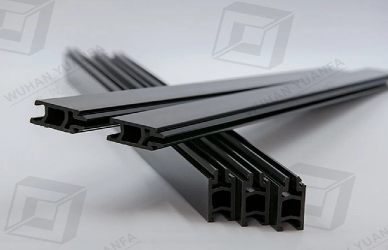
Thermal insulation polyamide profiles have a higher initial cost compared to traditional materials like fiberglass or foam. However, their long-term savings in energy consumption and maintenance costs make them highly cost-effective for large-scale projects. Polyamide profiles improve thermal efficiency, reducing the need for heating and cooling, and leading to lower energy bills—typically a 20-40% reduction in energy use annually. Their durability and weather resistance also reduce maintenance needs, providing further long-term savings.
Corporate Office Tower, New York
Polyamide profiles used in windows and curtain walls reduced the building’s energy bills by 30%. The initial investment was recouped within five years due to energy savings.
Luxury Hotel, Dubai
In a luxury hotel, polyamide profiles reduced HVAC system energy load by 25% and helped the building achieve LEED certification, improving sustainability.
Mixed-Use Development, London
In this development, polyamide profiles contributed to a 35% energy saving and reduced long-term maintenance costs, making them a cost-effective solution.
Material Handling
Polyamide profiles, while lightweight, may still require careful handling due to their fragility and flexibility. Their size and length can complicate storage and movement on-site in large projects.
Installation Complexity
Installing polyamide profiles involves precision and custom fitting to ensure proper integration with metal frames and curtain walls. This can be time-consuming and may require specialized skills.
Initial Cost
Polyamide profiles typically have a higher initial cost compared to traditional materials, which can be a challenge in projects with tight budgets.
Compatibility with Other Materials
Integrating polyamide profiles with other building materials can be challenging if not properly coordinated, potentially affecting overall thermal performance.
Improved Material Handling
Using specialized equipment and pre-assembling profiles before transportation can ease handling and reduce risks.
Streamlined Installation
Training installers and pre-cutting profiles to specific dimensions can speed up installation and ensure precision.
Justifying Initial Cost
Presenting a cost-benefit analysis that highlights long-term energy savings and maintenance reduction helps justify the higher upfront cost.
Coordination with Other Materials
Ensuring close collaboration between architects, engineers, and contractors ensures seamless integration and optimal thermal performance.
These profiles offer superior thermal efficiency, durability, and cost savings over time, making them perfect for large buildings requiring long-term performance.
By reducing heat transfer, polyamide profiles maintain stable indoor temperatures, reducing the need for heating and cooling, thus lowering energy costs.
Yes, polyamide profiles are resistant to moisture, UV radiation, and extreme temperatures, making them suitable for use in various climates.
While the initial cost may be higher, the long-term energy savings and reduced maintenance costs make them a cost-effective choice for large-scale construction.
Thermal insulation polyamide profiles are essential for large-scale projects due to their superior energy efficiency, durability, and cost-effectiveness. By providing an effective thermal break, these profiles significantly reduce heat transfer, lowering the energy consumption of buildings and reducing reliance on heating and cooling systems. Their durability ensures long-term performance, even in harsh environmental conditions, minimizing maintenance needs and extending the lifespan of building components. While the initial investment may be higher, the long-term savings from reduced energy costs and maintenance make polyamide profiles a highly cost-effective choice. In addition, their sustainability and compatibility with green building standards make them a key solution for creating energy-efficient, eco-friendly buildings in large-scale construction projects.


