

close
Choose Your Site
Global
Social Media

Author: Site Editor Publish Time: 2026-07-06 Origin: Site
Tightening energy efficiency standards are rapidly reshaping commercial and residential building codes globally. Modern fenestration systems must meet aggressive thermal targets without sacrificing structural strength. This creates a highly challenging dilemma for manufacturers and fabricators today. You must balance strict U-value requirements against necessary structural integrity and factory production realities. Many fabricators initially look at standard plastic inserts as an easy choice. Basic materials like unreinforced PVC or standard resins often promise superficial upfront advantages. However, they introduce significant long-term failure risks compared to engineered thermal break polyamide strips. Choosing the wrong insulator leads directly to composite degradation, severe air infiltration, and failed compliance down the line. In this comprehensive guide, we explore the distinct engineering differences between these barrier materials. You will learn exactly why structural physics, high-temperature durability, and factory fabrication efficiency truly matter. We will also uncover practical steps showing you how to source the correct materials for high-performance building systems.
Coefficient of Thermal Expansion (CLTE): Polyamide reinforced with glass fibers closely matches the thermal expansion rate of aluminum, preventing shear stress and composite failure.
Fabrication Resilience: Polyamide withstands standard powder coating and anodizing oven temperatures (up to 200°C+), allowing continuous processing; standard plastics melt or deform.
Structural Load Capacity: Polyamide maintains rigid structural load-bearing capabilities in extreme weather, crucial for heavy commercial applications.
Total Cost of Ownership: The initial cost premium of polyamide is offset by reduced warranty claims, lower fabrication friction, and compliance with stringent energy regulations.
Window and door manufacturers face a distinct, pressing business problem daily. They must break the conductive thermal loop inside aluminum frames effectively. Aluminum transfers cold and heat rapidly across its entire surface. This physical trait leads to massive energy loss in modern architectural buildings. Fabricators need a highly durable barrier blocking this energy transfer completely. However, they cannot afford to lose the critical structural rigidity required for heavy wind loads and modern triple glazing. The two frame halves must always perform as a single solid unit under extreme environmental pressure.
Treating the thermal barrier as just "a piece of plastic" creates a dangerous false economy. Standard plastics degrade rapidly under continuous mechanical stress. They cause hidden air and water infiltration as the internal joint weakens over time. Fenestration systems relying on them frequently fail strict structural safety certifications. A reliable thermal barrier must meet several strict success criteria simultaneously to ensure lifelong performance.
It must deliver exceptionally low thermal conductivity to stop energy flow.
It requires immense shear strength to lock the internal and external frame halves tightly together.
It must offer unyielding dimensional stability under severe environmental temperature fluctuations.
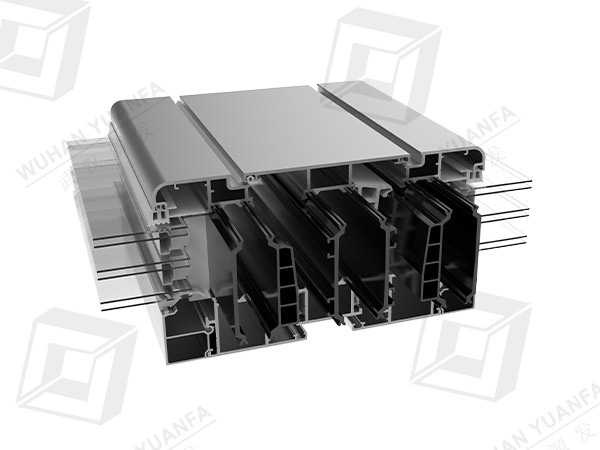
We must carefully compare the Coefficient of Linear Thermal Expansion (CLTE) of different framing materials. Aluminum expands at roughly 23×10⁻⁶/K. Glass-fiber reinforced polyamide expands at approximately 30×10⁻⁶/K. In stark contrast, standard PVC or basic polyurethane often reaches a staggering 70-80×10⁻⁶/K. This drastic difference introduces a severe mechanical risk during daily operations. Mismatched expansion leads directly to a destructive phenomenon known industrially as "creep."
As outdoor temperatures shift daily, standard plastics expand much faster than the surrounding aluminum shell. This constant pushing and pulling weakens the crimped joint internally. Over time, creep systematically compromises the mechanical lock between the metal profile and the core insulator. A carefully engineered thermal break polyamide strip moves in close harmony with the aluminum framework. This specific physical synchronization prevents internal shear stress and maintains long-term structural integrity. You avoid dangerous composite failure by matching the physical expansion traits perfectly.
Material Type | CLTE (x10⁻⁶/K) | Melting Point / Softening Point | Structural Integrity Under Load |
|---|---|---|---|
Architectural Aluminum | ~23 | 660°C | Excellent |
Polyamide (PA66 GF25) | ~30 | >250°C | Excellent |
Standard Plastic (PVC) | 70 - 80 | Softens ~80°C | Poor |
Temperature resilience strictly separates engineered polyamides from basic commercial plastics. The melting point differences between the two material options are drastic. Polyamide PA66 GF25 easily handles prolonged temperatures exceeding 250°C. Standard PVC begins to soften and deform structurally at just 80°C. This lower temperature limit poses huge physical risks for architectural structural integrity globally. Dark-painted aluminum facades naturally absorb massive amounts of direct solar radiation daily.
On a hot summer afternoon, internal frame temperatures spike significantly. Basic PVC inserts lose their core rigidity, directly threatening the entire window structure. Fire safety represents another critical engineering concern here. High-temperature resistance helps maintain the rigid frame shape during extreme building emergencies. Polyamide keeps the inner and outer aluminum profiles securely bonded far longer than basic unreinforced plastics. This extra structural time can prove vital for building occupant safety.
Long-term chemical stability determines the true functional lifespan of any fenestration product. Standard plastics degrade rapidly from continuous environmental exposure. They become highly brittle after enduring prolonged UV exposure and regular thermal cycling. This brittleness causes microscopic structural cracks to form under heavy dynamic wind loads. Once initial cracks appear, the thermal barrier loses its mechanical locking strength entirely.
Conversely, a rugged polyamide insulation strip retains its original tensile strength over several decades. The heavily reinforced material naturally resists internal moisture ingress and oxidative chemical breakdown. You never have to worry about the internal barrier shattering inside the hidden frame after ten years. It stays exceptionally tough, structurally resilient, and dimensionally stable regardless of harsh external weather conditions.
Manufacturing workflows consistently dictate overall production volume and factory floor efficiency. Standard plastics introduce a major logistical constraint for busy modern fabricators. They require strict "paint-then-assemble" workflows on the active production line. Basic plastic inserts simply cannot survive the extreme heat generated inside powder coating curing ovens. Fabricators must paint the aluminum halves completely separately before rolling them together carefully.
This divided process drastically increases manual handling time and factory logistical complexity. It also raises the frustrating risk of cosmetic surface damage during the final rolling and crimping stages. Polyamide offers a massive fabrication advantage here. It easily enables highly efficient "assemble-then-paint" workflows. You combine the raw aluminum and polyamide profile into a single secure unit first. Then, you send the entire raw assembly straight through the high-temperature powder coating ovens safely.
Mechanical workability directly impacts your daily tooling lifespan and routine maintenance schedules. Polyamide handles standard factory cutting, precision drilling, and high-speed milling exactly like raw aluminum. The rigid engineering material leaves consistently clean, sharp edges without melting or smearing. Machine operators can process composite frames rapidly without facing constant manufacturing interruptions. Clean machining prevents ugly physical burrs from interfering with final corner joint assemblies.
Standard plastics often melt aggressively during high-speed factory cutting procedures. The friction-induced heat causes these soft plastics to clog expensive saw blades and fine drill bits. Frequent tool cleaning slows down the entire fenestration assembly line dramatically. Using engineered polyamide ensures continuous, totally friction-free factory machining operations. Operators spend far less time maintaining clogged tools and significantly more time producing finished frames.
Modern architectural design heavily demands massive, uninterrupted heavy glass spans. Large, high-performance triple-glazed systems place tremendous physical weight directly on window and door frames. You must actively account for these extremely heavy loads during your early material specification phase. A rigid, structurally sound thermal break profile for doors is absolutely critical here.
Commercial doors experience violent dynamic forces that static residential windows never face. A weak standard plastic insert will compress dangerously under the immense glazing weight. This slow compression directly causes door sagging, premature hinge failure, and severe operational friction over time. Engineered polyamide strictly maintains exact dimensional tolerances under high continuous vertical loads. It reliably keeps the heavy commercial door swinging smoothly for its entire expected architectural lifecycle.
Material choice definitively dictates your factory's ability to pass standardized fenestration testing. Global programs like AAMA and EN 14024 require rigorous thermal and structural validation data. Standard basic inserts act as a major compliance liability in today's demanding market. Regions rapidly adopting Net Zero building codes or rigorous Passive House standards automatically reject poor thermal performers.
You need highly reliable shear strength data to certify heavy commercial aluminum frames properly. Polyamide consistently provides the documented performance metrics explicitly required by independent testing laboratories globally. Relying on basic plastics risks catastrophic formal certification failures. Failed tests severely delay project approvals and frequently lock window manufacturers out of lucrative commercial bidding opportunities entirely.
You must establish strict evaluation criteria when sourcing new internal profiles. Demand authentic PA66 formulated with exactly 25% multi-directional glass fiber reinforcement. This specific engineering blend is known globally across the construction industry as PA66 GF25. Be highly cautious against accepting "watered-down" polyamide material blends.
Some untrustworthy suppliers mix recycled or lower-grade baseline resins to bypass rigorous manufacturing standards. These chemically compromised blends predictably sacrifice critical structural specifications. They drastically lower the material melting point and severely reduce joint shear strength. You should consistently implement strict intake verification steps to guarantee performance:
Request official material data sheets verifying the exact 25% glass fiber content prior to ordering.
Review thermal expansion metrics to ensure complete alignment with your standard aluminum profiles.
Check the stated melting point independently to confirm high-temperature durability for powder coating.
Dimensional accuracy plays a massive role in maintaining structural frame security. Focus your attention closely on the extruded strip's dovetail and knurling geometry areas. These very small geometric details strictly ensure a perfectly tight mechanical shear connection. During the fast mechanical rolling process, the knurled aluminum bites deeply into the polyamide head.
If extrusion tolerances vary by even a tiny fraction of a millimeter, the joint fails instantly. A loose mechanical joint permanently compromises the entire thermal and structural barrier system. Tight, verified extrusion tolerances consistently guarantee a solid, permanent mechanical lock every single time. Pay close attention to dimensional reporting from your vendor.
Evaluating a new vendor goes far beyond just checking their listed unit price online. You need a reliable manufacturing partner truly capable of scaling safely alongside your production volume. Look closely for transparent operations and strong technical factory support. Use the following structured checklist to evaluate potential supplier capabilities properly:
ISO Certifications: Ensure they hold internationally recognized quality management credentials indicating rigorous process control.
Custom Die Extrusion: Verify their internal ability to design, cut, and produce complex custom profile shapes rapidly.
Batch-to-Batch Consistency: Ask for detailed internal testing protocols proving rigid dimensional stability across entirely different production runs.
Raw Material Traceability: Confirm they source premium PA66 pellets rather than undocumented, weak regrind materials.
Evaluating internal thermal barriers goes far beyond simple weather heat resistance. It remains fundamentally a strict structural and risk-management decision for your manufacturing business. Choosing the wrong internal insert jeopardizes the entire assembled fenestration system. We clearly see standard plastic inserts fall severely short of modern architectural demands. They melt inside powder coating ovens and warp dangerously under intense solar heat.
Their unmatched thermal expansion rates create dangerous internal mechanical stress within the aluminum frame. Consequently, these basic plastics remain largely obsolete for producing high-performance fenestration today. A true engineered polyamide strip serves as the absolute baseline requirement for modern fabricators. It ensures strict structural compliance with tightening energy codes worldwide. Start by actively auditing your current internal frame specifications. Verify your supplier's material data strictly against rigid PA66 GF25 industry standards to guarantee long-term operational success.
A: Standard plastic inserts pose severe long-term risks in commercial fenestration. They fundamentally lack the rigid structural load capacity required for heavy architectural glazing. Additionally, their incredibly high thermal expansion rate causes severe shear stress when paired alongside aluminum frames. This mechanical mismatch frequently leads to sudden code compliance failures. Fabricators often face compromised air and water infiltration ratings when using these basic unreinforced inserts.
A: It radically improves factory workflow efficiency and daily production volume. Engineered PA66 GF25 easily withstands curing oven temperatures exceeding 200°C without melting or deforming physically. Fabricators can safely roll the aluminum and polyamide together first before entering the powder coating phase. This streamlined "assemble-then-paint" approach completely eliminates complex secondary assembly steps. You save highly valuable manufacturing time and drastically reduce cosmetic surface damage risks.
A: Yes, commercial doors constantly experience violent dynamic impact forces and heavy operational cycles. A dedicated profile features much wider, heavily reinforced geometries designed specifically for these immense physical stresses. This added structural rigidity securely prevents long-term frame sagging and premature hinge failure. It also eliminates the operational friction directly caused by heavy triple-glazed commercial doors compressing standard plastic inserts over time.
A: Polyamide barriers easily last for several decades. They seamlessly match the expected operational lifespan of the exterior aluminum frame itself. Standard PVC inevitably suffers from severe internal shrinkage and structural brittleness due to continuous UV exposure and harsh thermal cycling. Conversely, glass-fiber reinforced polyamide consistently retains its tough structural integrity. It actively resists moisture degradation and oxidative breakdown over many years of field deployment.


