

close
Choose Your Site
Global
Social Media

Author: Site Editor Publish Time: 2026-07-17 Origin: Site
Modern architectural and industrial systems face a critical engineering dilemma. You must balance robust structural integrity against increasingly stringent thermal efficiency requirements. Engineers know how hard it is to satisfy both demands simultaneously. Traditional metal rods deliver exceptional shear strength for heavy-duty applications. However, they act as highly conductive thermal bridges. This flaw completely undermines your energy efficiency goals. Engineered plastics offer a proven path forward. Heat-stabilized polyamides have emerged as the primary alternative to conventional metals in modern assemblies. This article provides a strictly technical and commercial comparison of these materials. We evaluate them based on thermal load capabilities and mechanical stress endurance. This guide will help specifiers and procurement teams select the right material for their projects. You will learn exactly when to specify metals and when to pivot to engineered polymer solutions.
Thermal Efficiency: Polyamide operating rods reduce thermal bridging by up to 90% compared to aluminum or steel counterparts.
Mechanical Trade-offs: While metal offers superior absolute tensile strength, fiberglass-reinforced polyamide (e.g., PA66 GF25) provides sufficient rigidity for most operating mechanisms while shedding significant weight.
Wear & Maintenance: Polyamide’s inherent self-lubricating properties eliminate the metal-on-metal galling and corrosion risks common in high-moisture or chemical environments.
Decision Rule: Specify metal for extreme load-bearing, uninsulated applications; specify polyamide when U-value compliance, weight reduction, and thermal isolation are critical success factors.
Energy codes push building boundaries further every single year. Global standards like LEED v4.1 and the Passive House Institute mandate exceptionally low overall system U-values. Traditional metal components once served as industry defaults across all mechanical linkages. Now they represent a significant thermal liability. Structural performance alone no longer dictates material selection in modern engineering.
The core issue lies in the thermal bridging flaw. A continuous metal rod easily bypasses external thermal breaks. It acts as a superhighway for heat transfer. Energy flows rapidly from the warm side of an assembly to the cold side. This transfer causes severe localized condensation on internal surfaces. Over time, this moisture accumulation fosters mold growth and degrades surrounding materials. In extreme winter climates, this energy loss leads to localized freezing within HVAC equipment or sensitive fenestration systems. Mechanisms freeze solid and fail to operate.
Engineered polymers resolve this exact challenge. Specifying non-metal operating rods represents a deliberate, highly technical structural choice. We do not use them merely as a cheaper plastic alternative. Heat-stabilized and reinforced polymers solve complex thermodynamic challenges while maintaining mechanical viability. They interrupt the conductive pathway entirely. This deliberate shift protects the integrity of the insulated envelope and guarantees consistent mechanical operation regardless of external temperature extremes.
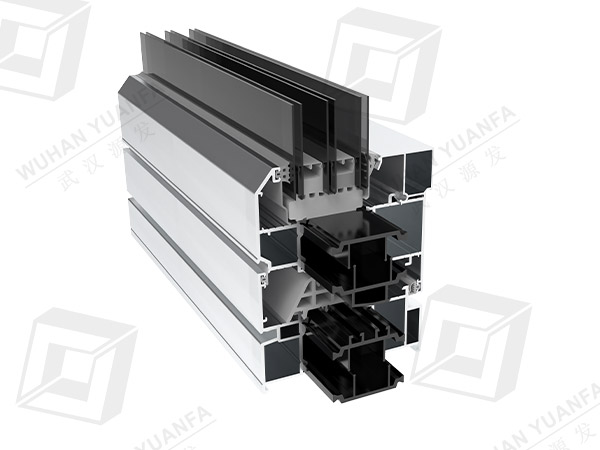
We must look closely at empirical data benchmarks to understand the thermal gap. Aluminum transfers heat at approximately 205 W/m·K. Carbon steel conducts at roughly 50 W/m·K. Reinforced polyamide operates in a completely different physical realm. It conducts heat at merely 0.2 to 0.3 W/m·K. This massive reduction effectively isolates interior climates from exterior extremes. System designers gain immense flexibility when they eliminate this heat transfer penalty.
Material Type | Thermal Conductivity (W/m·K) | Relative Thermal Bridging Risk | Corrosion Resistance |
|---|---|---|---|
Standard Aluminum (6061) | ~205 | Extreme | Moderate (Prone to Galvanic) |
Carbon Steel | ~50 | High | Low (Requires Coating) |
Polyamide (PA66 GF25) | ~0.25 | Negligible | Exceptional |
Engineers routinely question the Heat Deflection Temperature (HDT) of polymers. Skeptics worry about plastics melting or deforming under load. Modern heat-stabilized polyamide grades safely dispel this myth. They maintain structural integrity continuously at highly elevated temperatures. Depending on the exact glass fiber fill ratio, advanced grades perform reliably between 120°C and 150°C. We confidently deploy these materials near commercial boilers, solar tracking linkages, and industrial drying ovens.
Metal undeniably wins in raw load-bearing applications. Steel provides ultimate tensile and shear strength. You cannot ignore this fundamental material property. Heavy industrial gates or massive structural actuators demand metallic components. However, most daily operating mechanisms never experience these extreme forces. They primarily require consistent stiffness and reliable cyclical performance.
Specific strength measures the strength-to-weight ratio of a material. Engineered polyamide excels dramatically in this category. It provides high rigidity while shedding significant mass. This weight reduction directly decreases the operational load on surrounding actuators and hinges. Motors work much less to move lighter linkages. Consequently, this specific strength extends the lifespan of the entire electromechanical system.
Polyamides feature inherent self-lubricating properties. They drastically reduce the need for external greases or liquid lubricants. Wet grease inevitably attracts airborne dust and abrasive particulate matter. This dust forms a grinding paste that rapidly destroys metal components. Eliminating external lubricants inherently lowers your long-term maintenance schedules. The linkage runs clean and smooth for millions of cycles.
Corrosion poses a constant threat to metallic systems. Metals suffer heavily from oxidation and galvanic corrosion. Dissimilar metals react aggressively when exposed to ambient moisture. Polyamide remains completely electrically insulating and chemically inert. It resists humidity, road salts, and common industrial chemicals effortlessly. This inert nature makes it the premier choice for coastal installations and aggressive manufacturing environments.
Moisture absorption represents the primary engineering risk for polyamide systems. Standard Nylon 6 and Nylon 66 naturally absorb water from the surrounding atmosphere. This moisture uptake alters the dimensional tolerances of the extruded profile. A water-logged component can swell and lose some of its initial tensile strength. Engineers must recognize this fundamental polymer behavior during the initial drafting phase.
Proper mitigation requires careful material specification. You must specify dimensionally stable, properly conditioned grades. Adding glass fibers significantly limits overall moisture uptake. A 25% glass-filled PA66 locks in dimensional stability even in high-humidity zones. Always account for regional environmental humidity when designing exact mechanical clearances. You cannot simply drop a polymer rod into a slot designed for steel.
Thermal expansion presents another physical challenge. The Coefficient of Thermal Expansion (CTE) differs significantly between metals and raw polymers. Unfilled plastics expand rapidly when exposed to heat. You must design joint clearances properly to prevent the mechanism from binding during summer months. Fortunately, adding glass reinforcement lowers the CTE substantially. It brings the expansion rate of the polyamide much closer to that of structural aluminum.
Common edge cases exist where you must stick with metal. Metal remains strictly non-negotiable under specific extreme conditions. Ultra-high shear forces demand hardened steel. Ambient temperatures consistently exceeding 200°C require specialized metal alloys. Furthermore, any application requiring direct, prolonged fire exposure dictates the use of non-combustible metallic elements. You must evaluate your extreme edge cases carefully before switching materials.
Fenestration and commercial facades rely heavily on thermal isolation. Advanced curtain walls demand absolute minimal heat transfer. We utilize polyamide operating rods extensively in these structures. You can install them seamlessly alongside polyamide window accessories to build completely thermally broken locking systems. This powerful combination completely eliminates condensation on interior window frames. It preserves indoor air quality and protects interior architectural finishes from water damage.
HVAC and thermal management systems also benefit substantially. Damper controls and actuator linkages face massive temperature differentials daily. Sub-zero air outside meets warm, humid air inside. Preventing heat transfer across the damper mechanism prevents system condensation entirely. In freezing environments, this stops ice buildup from locking the mechanism. Polymer linkages solve this specific operational hazard reliably.
Industrial machinery applications highlight extreme chemical resistance. Food and beverage processing plants utilize aggressive, caustic cleaning agents daily. Chemical manufacturing exposes moving parts to corrosive acidic fumes. Polyamide parts resist both extreme heat and caustic wash-downs. Metal rods degrade, rust, and fail quickly in these harsh environments. The engineered polymer ensures continuous production line uptime.
Procurement and engineering teams need a clear evaluation framework. Ambiguity leads to systemic failures. Follow this strict checklist to streamline your material selection process effectively:
Define your maximum and minimum operating temperature ranges accurately.
Calculate the maximum continuous mechanical load the linkage will endure.
Determine the absolute acceptable U-value loss for the total assembly.
Identify any potential exposure to caustic chemicals, UV light, or constant moisture.
Evaluate the desired lifecycle and cycle count of the moving mechanism.
Take decisive action to validate your final choice. Encourage your engineering teams to request comprehensive material data sheets (MDS). Review the exact tolerance capabilities of your chosen extrusion partner. Tight tolerances matter immensely in dynamic moving linkages. Order prototype samples for your facility. Conduct rigorous environmental and load testing under real-world conditions before committing to full-scale production runs.
Polyamide operating linkages represent a highly specialized upgrade for modern assemblies. They are never just a compromise to save upfront costs. Modern thermal systems require extraordinary energy efficiency. They demand superior corrosion resistance to survive harsh environments. Engineered plastics deliver both advantages without sacrificing essential mechanical rigidity. When properly specified, they outperform traditional metals in longevity and thermal isolation.
Take control of your system's performance today. Consult directly with an experienced extrusion engineering team. Match the precise polymer blend to your exact structural requirements. Adjust the glass fiber percentage to hit your specific strength targets. Specify the correct heat stabilizers for elevated temperature zones. Tailoring the material guarantees long-term system success and protects your final product.
A: Standard commercial plastics often shatter in freezing environments. However, engineers specify impact-modified or specially conditioned polyamides for sub-zero applications. These engineered grades maintain their vital elasticity in extreme cold. They safely absorb mechanical shocks without fracturing, making them perfect for arctic HVAC damper systems and high-altitude thermal breaks.
A: Polyamide cannot match the raw ultimate yield strength of solid aluminum. You will likely need to adjust the cross-sectional design to compensate. However, heavily glass-reinforced variants (like PA66 GF25) easily handle standard operational torque. Proper geometric sizing ensures they perform flawlessly in most commercial locking mechanisms.
A: Prolonged UV radiation degrades raw, untreated polymers over time. The material turns brittle and loses tensile strength. To prevent this, manufacturers incorporate UV stabilizers or carbon black directly into the polymer matrix. If your application involves direct sunlight exposure, you must explicitly specify UV-resistant polyamide grades to guarantee longevity.


