

close
Choose Your Site
Global
Social Media

Author: Site Editor Publish Time: 2025-09-01 Origin: Site
In modern construction, energy efficiency, sustainability, and design flexibility are no longer optional—they are essential. Buildings must meet stringent thermal performance standards while maintaining durability, comfort, and aesthetic appeal. Polyamide Insulation Strips have emerged as a key material that addresses these needs. They serve as thermal breaks in aluminum window and curtain wall systems, reducing energy loss and improving indoor comfort.
However, the role of Polyamide Insulation Strips goes beyond simple energy savings. In 2025, these strips are being used creatively for sound insulation, vibration control, and smart building integration. Understanding how they are manufactured and the innovations driving their development offers valuable insight into why they are becoming indispensable in the construction industry.
Polyamide Insulation Strips are high-performance materials made primarily from polyamide resins, often reinforced with fiberglass. Common variants include PA66GF25 and PA6 blends, which combine mechanical strength, thermal resistance, and dimensional stability. These strips are designed to act as thermal barriers, separating interior and exterior aluminum or metal profiles to prevent heat transfer and condensation.
Thermal Insulation – Prevents heat transfer in aluminum frames, reducing energy consumption.
High Temperature Resistance – Can withstand high temperatures during processing and in-service conditions without deformation.
Durability – Resistant to UV exposure, corrosion, and wear, ensuring long-term performance.
Design Flexibility – Can be produced in various shapes, sizes, and colors for aesthetic integration.
Structural Support – Enhances the mechanical stability of aluminum and metal profiles.
Polyamide Insulation Strips are widely used in residential, commercial, and industrial buildings. They are essential for high-performance window frames, curtain walls, and facades that comply with modern energy codes and green building standards. Their versatility also allows for creative applications in vibration damping, acoustic insulation, and design customization.
The quality of Polyamide Insulation Strips begins with selecting premium raw materials:
Polyamide Resins – PA66 or PA6 with consistent molecular weight for uniform thermal and mechanical properties.
Glass Fibers – Typically 25% by weight, added to enhance tensile strength, stiffness, and dimensional stability.
Additives – UV stabilizers, flame retardants, and colorants to meet specific project requirements.
Manufacturers adhere to rigorous standards to ensure the raw materials meet performance and safety requirements. This includes:
Tensile strength and elongation testing
Thermal conductivity and heat deflection analysis
UV resistance and weatherability assessments
High-quality materials are crucial to ensuring that Polyamide Insulation Strips perform reliably in both extreme climates and long-term applications.
The production of Polyamide Insulation Strips begins with meticulous material preparation. Polyamide pellets and glass fibers are carefully weighed, blended, and dried to remove moisture. Drying is critical, as moisture can cause defects such as bubbles or reduced strength during extrusion.
Advanced blending systems ensure a uniform distribution of glass fibers and additives, creating a consistent material base for high-quality strips.
The blended material is fed into an extrusion machine, where it is heated to a high temperature to create a molten mixture. The molten polyamide is then forced through precision molds, forming the desired strip shape.
During extrusion:
Temperature is carefully controlled to prevent degradation of the polymer.
Screw speed and pressure are adjusted to ensure uniform density and shape.
Strip dimensions are continuously monitored for consistency.
This process ensures that Polyamide Insulation Strips achieve both the thermal and mechanical properties required for high-performance applications.
After extrusion, the strips are cooled using water baths or air cooling systems. This step solidifies the material and stabilizes its dimensions.
Calibration tools, such as sizing rollers, ensure that each strip meets precise width, thickness, and tolerance specifications. Accurate calibration is essential for the strips to fit perfectly into aluminum or metal profiles.
Once cooled, the strips undergo surface finishing to remove minor imperfections and achieve a smooth appearance. Finishing may include:
Polishing or sanding surfaces
Adding textures for design aesthetics
Applying protective coatings if required
Finally, the strips are cut to length and packaged for quality inspection.
Quality control is integral to producing reliable Polyamide Insulation Strips. Each batch is tested for:
Thermal performance (heat transfer reduction)
Mechanical strength (tensile, flexural, and impact tests)
Dimensional accuracy and surface quality
Environmental resistance (UV, corrosion, and moisture)
Only strips that meet all specifications are approved for shipment, ensuring customers receive consistent, high-quality products.
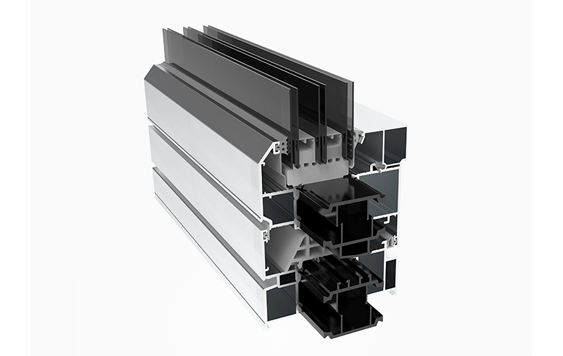
Recent innovations have led to polyamide formulations with enhanced properties:
Higher temperature resistance – Suitable for advanced coatings and industrial applications.
Eco-friendly compositions – Recyclable materials with low emissions.
Improved strength-to-weight ratio – Reducing material usage while maintaining performance.
These advancements expand the range of applications for Polyamide Insulation Strips, from traditional thermal breaks to cutting-edge architectural solutions.
Modern factories are increasingly using automated production lines, robotic handling, and real-time monitoring systems to improve efficiency and precision. Smart manufacturing allows manufacturers to:
Reduce material waste
Increase production consistency
Shorten lead times
Maintain high-quality standards across large volumes
Automation ensures that Polyamide Insulation Strips are produced reliably and cost-effectively.
Polyamide Insulation Strips can be customized to meet project-specific requirements:
Dimensions and thickness for various aluminum profiles
Color options to match architectural design
Surface textures for aesthetic integration
Customization allows architects to blend functionality with creativity. Strips can contribute to visual appeal while performing critical thermal, acoustic, and structural roles. This flexibility makes polyamide strips ideal for high-end residential, commercial, and industrial projects.
Sustainable manufacturing practices are increasingly important in 2025. Leading producers of Polyamide Insulation Strips implement:
Energy-efficient extrusion and drying processes
Low-emission production techniques
Recyclable materials and waste reduction
High-performance polyamide strips help buildings meet LEED, BREEAM, and other international green building certifications. Their use reduces energy consumption, lowers carbon emissions, and supports sustainable construction practices worldwide.
The demand for Polyamide Insulation Strips continues to grow, driven by:
Stricter energy codes and building regulations
Rising awareness of sustainability and green construction
Increasing adoption in smart buildings and modular construction
Future developments will focus on:
Higher-performance polyamide materials with even better thermal and mechanical properties
Smart integration with IoT-enabled building systems
Enhanced aesthetic customization options
By embracing these trends, architects, engineers, and builders can leverage Polyamide Insulation Strips to create buildings that are energy-efficient, resilient, and visually striking.
Understanding how Polyamide Insulation Strips are manufactured highlights the precise combination of high-quality materials, advanced technology, and rigorous quality control that ensures their reliability and versatility. From material preparation and extrusion to finishing, inspection, and customization, every step is carefully designed to deliver optimal thermal performance, durability, and design flexibility.
In 2025, innovations in material science, smart manufacturing, and sustainable production have elevated Polyamide Insulation Strips beyond simple thermal breaks. They now play a vital role in energy-efficient residential buildings, industrial vibration isolation, and creative architectural design, offering a perfect balance of functionality, aesthetics, and environmental responsibility.
For those looking to implement high-performance polyamide solutions, Wuhan Yuanfa New Material Co., Ltd. is a leading manufacturer specializing in advanced polyamide insulation strips. Their expertise in research, precision production, and customization ensures that every project achieves superior thermal performance and design quality. Readers and industry professionals are encouraged to reach out to Wuhan Yuanfa’s expert team to explore their product range and discover how these innovative strips can elevate construction projects to the next level.


