

close
Choose Your Site
Global
Social Media

Author: Site Editor Publish Time: 2026-07-02 Origin: Site
Modern facade engineering demands a perfect blend of striking aesthetics and resilient performance. You design massive glazed exteriors to capture natural light, yet these vast expanses face relentless environmental punishment. Building envelopes require exceptional thermal management to meet strict energy codes. However, attempting to isolate these massive metal structures often risks weakening their mechanical integrity under severe wind loads and constant thermal cycling.
This article provides you an evidence-based framework for specifying high-performance thermal barriers. We look far beyond basic spec sheets. Instead, we guide you through the real-world complexities of structural implementation and thorough supplier vetting. You will discover how to evaluate material strength, navigate strict regional standards, and select components tailored for demanding building envelopes. Let us explore how precise engineering guarantees long-lasting facade performance.
Polyamide 66 reinforced with 25% glass fiber (PA66 GF25) is the industry standard for structurally demanding facade applications.
Evaluating polyamide profiles for aluminum facade systems requires balancing thermal transmittance (U-value) with mechanical shear strength.
Matching the linear thermal expansion coefficient of the insulation strip to the aluminum is critical to prevent structural distortion over time.
Supplier selection must hinge on dimensional tolerance capabilities, verifiable third-party testing (e.g., EN 14024, AAMA), and compatibility with post-assembly surface treatments.
Commercial building envelopes face two massive vulnerabilities. First, they experience severe energy loss through high metal conductivity. Second, they endure extreme structural stress from environmental loads. Heavy glazing creates immense dead loads. Meanwhile, dynamic wind pressure constantly pushes and pulls the exterior. To survive these forces, large-surface aluminum system profiles require incredibly robust internal engineering.
The chosen thermal break must fulfill a dual purpose. It must perfectly isolate the interior and exterior aluminum extrusions to block heat transfer. At the same time, it must maintain composite structural performance. The inner and outer aluminum frames must act as a single unified profile. The thermal barrier sits directly in the shear path between these frames. If this central spine fails, the entire facade system loses its structural integrity.
Under-specifying this critical component introduces severe risks. Many projects suffer because designers accept inferior materials like standard polyvinyl chloride (PVC). Standard plastics simply cannot handle composite shear forces. They warp under high temperatures and snap under heavy wind suction. This leads to catastrophic shear failure. The frames shift independently, causing thermal bowing. Weather seals rupture. Water infiltration begins. Ultimately, you face high-cost remediation and extensive structural repairs.
Always calculate the maximum expected wind load before defining the thermal break width.
Treat the insulation strip as a primary load-bearing structural element, not merely an energy-saving accessory.
Consult facade engineers early to determine the specific moment of inertia required for the composite assembly.
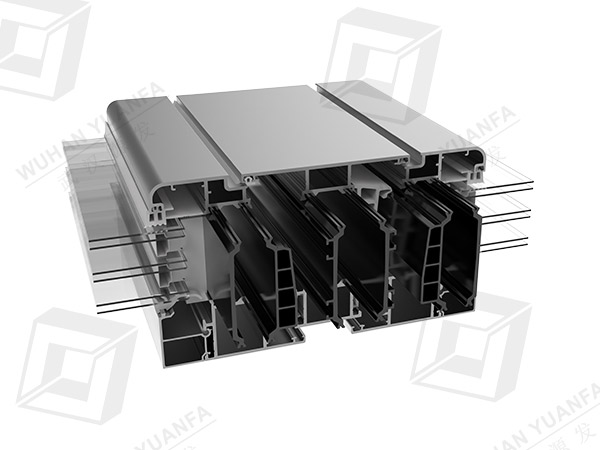
Selecting the right insulation strip requires a careful analysis of multiple engineering dimensions. You cannot rely on basic thermal resistance numbers alone. You must evaluate the material composition, geometry, and manufacturing precision.
The industry standard mandates PA66 GF25. This specific material consists of Polyamide 66 blended with 25% fiberglass reinforcement. The raw material quality dictates the final structural capacity. However, simply adding glass fibers is not enough. The extrusion process must control fiber orientation. Standard linear extrusion forces all fibers to align in one direction. This creates weakness along the transverse axis. Premium polyamide profiles for aluminum facade manufacturing utilizes proprietary dies. These dies force multi-directional fiber distribution. This multi-axial alignment guarantees high load-bearing capacity across all stress points.
Facade designers constantly negotiate a strict trade-off. Wider thermal profiles deliver superior insulation. They lower the Uf-value by extending the distance heat must travel. Unfortunately, widening the plastic strip reduces the composite shear strength. A longer span bends and deflects more easily under load.
To solve this, engineers evaluate complex internal geometries. You can disrupt convection by adding hollow chambers and internal fins. These designs trap stagnant air to boost thermal performance. More importantly, they add structural ribs to maintain rigidity. You get the insulation benefits of a wide profile without sacrificing the mechanical lock.
Profile Geometry | Thermal Insulation Effect | Shear Strength Capacity | Ideal Application Scenario |
|---|---|---|---|
Solid Flat Strip (15-20mm) | Basic | Extremely High | High wind-load areas, heavy mullions |
C-Shape (20-25mm) | Moderate | High | Standard curtain walls, medium spans |
Multi-Cavity Tubular (30mm+) | Superior (Passive House) | Moderate to High | Extreme cold climates, high energy codes |
Profile variance heavily impacts the rolling and knurling process. Aluminum assembly plants use knurling wheels to cut teeth into the extrusion groove. Next, they insert the polyamide strip. Finally, heavy rolling discs crush the aluminum over the polyamide to lock it. If the plastic strip varies by a fraction of a millimeter, this mechanical bite fails.
You must demand extremely tight dimensional tolerances. Acceptable limits hover around ±0.05mm. When the dimensions fluctuate, the rolling machine either crushes the plastic or leaves gaps. Tight tolerances ensure absolute airtightness. They guarantee the structural lock required in large-span applications.
Numerous plastics exist on the market. Manufacturers constantly pitch cheaper alternatives. Yet, PA66 GF25 remains the undisputed choice for massive architectural glazing. The reasons tie directly to fundamental material science.
Aluminum reacts aggressively to temperature changes. It expands in summer heat and contracts during winter freezes. The insulation strip sits locked inside this moving metal. If the plastic expands at a different rate, the resulting internal shear stress destroys the assembly. Bi-metallic bowing occurs. PA66 GF25 features a linear thermal expansion coefficient remarkably similar to aluminum. They expand and contract together. This synergy mitigates internal stress and prevents structural distortion during extreme temperature fluctuations.
Implementation realities heavily influence material selection. Facade panels rarely arrive raw. Manufacturers assemble the aluminum and thermal breaks first. Next, they send the entire composite profile through a surface treatment line. Powder coating processes require baking ovens that reach up to 200°C (392°F).
PA66 GF25 withstands these extreme curing temperatures without losing its shape. Cheaper alternatives melt. Polyurethane (PU) pour-and-debridge systems deform. Standard PVC completely degrades. Polyamide allows seamless post-assembly finishing, streamlining production schedules.
Skeptics often note one specific trait of polyamide. It absorbs a slight amount of moisture from the air. In basic plastics, this indicates weakness. However, structural variants of PA66 GF25 use this trait to their advantage. The slight moisture absorption acts as a plasticizer. It actually stabilizes the material, making it tougher and more impact-resistant over time.
Furthermore, curtain walls regularly encounter aggressive alkaline materials during installation. Wet cement, plaster, and cleaning chemicals constantly splash onto the frames. PA66 GF25 chemically resists these harsh alkaline exposures far better than standard PVC or unreinforced plastics.
Specifying materials based on catalog promises is dangerous. You must implement strict risk mitigation strategies. This involves verifying compliance standards and validating exact design compatibility.
Never accept internal factory test data as the final proof. Mandatory verification against strict regional codes is non-negotiable. In Europe, curtain wall insulation strips must meet EN 14024 standards. This code defines rigorous structural requirements for composite metal profiles. In North America, the equivalent benchmark is AAMA TIR-A8. Both standards test the limits of composite performance.
You must demand certified aging tests from your suppliers. A facade must last decades. The testing data must show thermal cycling results. Engineers freeze the composite, then boil it, repeating this cycle hundreds of times. The lab then measures transverse tensile strength and longitudinal shear strength post-aging. If the shear strength drops significantly after humidity exposure, the strip is not fit for commercial use.
Your chosen thermal break must perfectly match your aluminum extrusion. Standard Euro-grooves accommodate standard strip shapes easily. However, large architectural projects often demand custom proprietary aluminum geometries. You must verify compatibility early in the design phase.
Complex architectural shapes require custom die creation. You might need unique C-shapes, asymmetrical T-shapes, or expansive multi-cavity designs. These intricate shapes pose severe manufacturing challenges. Poorly designed dies create uneven cooling during extrusion. This leads to invisible micro-cracking in the interior corners of the plastic. When the facade takes a wind load, these micro-cracks propagate, leading to sudden failure. Ensure your supplier possesses the engineering expertise to simulate die flow and prevent corner stress concentrations.
Assuming a passed tensile test translates to high shear strength. They measure completely different force directions.
Failing to test the specific aluminum alloy alongside the thermal strip. Different alloys possess varying groove hardness.
Ignoring the impact of structural silicone sealants on the exposed edges of the polyamide.
Vetting the manufacturer is just as critical as analyzing the material. A perfect specification fails if the factory cannot deliver consistent quality. You must evaluate capacity, quality assurance, and technical support.
Commercial skyscrapers require miles of thermal strips. You must evaluate the supplier’s extrusion line capacity. Small workshops might produce excellent samples but fail during mass production. High-volume projects demand continuous supply to prevent job site delays. Ask for exact monthly tonnage capacities. Verify their inventory of raw PA66 resin. Supply chain stability guarantees your project stays on schedule.
Examine the factory floor protocols. True quality assurance happens in real-time, not just in post-production. Look for continuous in-line laser measurement systems. These lasers scan the extrusion millimeter by millimeter, ensuring the dimensions never drift out of the ±0.05mm tolerance zone.
Demand batch-level shear testing reports. The factory should cut sections from every production run, knurl them into aluminum, and physically break them in a shear testing machine. Watch out for glaring red flags. If a supplier lacks material traceability, walk away. They must provide raw material certificates proving they use genuine PA66 and premium glass fibers, not recycled scrap.
Request Physical Samples: Do not rely on digital models. Order trial batches of the exact profile shape. Run these samples through your own factory’s knurling and rolling machines to verify the mechanical bite.
Audit Test Data: Request the specific EN 14024 or AAMA test data corresponding to your requested profile width. Data for a 14.8mm strip does not validate a 32mm strip.
Run Thermal Simulations: Request exact CAD geometries from the supplier. Import these DXF files into thermal simulation software like THERM or Flixo. Verify the final U-value of your specific composite assembly.
Perform Pull-Out Tests: Assemble a short mock-up frame. Perform localized pull-out tests to verify the transverse tensile strength holds up against your region's wind-load codes.
Review Surface Treatment Compatibility: Send the assembled mock-up through your powder coating oven. Inspect the thermal break post-baking for any signs of micro-warping or blistering.
Selecting the right polyamide profile is a fundamental structural decision. It goes far beyond simply checking a box for energy efficiency. The long-term lifespan of a large-surface aluminum facade depends entirely on the hidden thermal break. You must carefully balance glass-fiber reinforcement, precise internal geometries, and rigorous certified testing to guarantee safety.
Never compromise on material integrity. Insist on exact dimensional tolerances and demand multi-axial fiber distribution. When you prioritize structural stability alongside thermal insulation, you prevent disastrous failures and ensure decades of flawless performance. Now, take action. Consult your engineering teams to define precise U-value and shear load targets. Reach out to shortlisted manufacturers, request bespoke material data sheets, and schedule trial assembly runs immediately.
A: Standard plastics lack mechanical rigidity and deform under heat. PA66 GF25 includes 25% fiberglass, giving it superior tensile strength. It shares a matched thermal expansion rate with aluminum, preventing bi-metallic bowing. Furthermore, PA66 GF25 easily withstands high powder-coating oven temperatures without melting.
A: Width depends on local climate codes and structural wind loads. Wider strips (e.g., 30mm+) drastically improve thermal insulation but naturally lower shear strength. To compensate, wide strips require complex internal chamber designs and ribs to maintain rigid composite strength.
A: High-quality PA66 GF25 profiles can be assembled before powder coating because they resist standard curing temperatures up to 200°C. However, anodizing requires acidic chemical baths that can degrade polyamide. For anodized facades, you must assemble the profiles after treating the aluminum.
A: You should demand compliance with EN 14024 for European structural requirements or AAMA TIR-A8 for North American composite performance. Additionally, look for ISO 9001 quality management certifications from the profile manufacturer to ensure consistent batch quality.


