

close
Choose Your Site
Global
Social Media

Author: Site Editor Publish Time: 2026-07-05 Origin: Site
Selecting the right structural materials is the defining factor in an aluminum window’s ability to meet stringent modern energy codes. Architects and builders push for expansive glass facades, making frame efficiency an absolute priority for every project. While the external profile design matters, the internal material integrity dictates both the overall thermal transmittance and the long-term structural stability of the fenestration system. Substandard materials inevitably fail under intense manufacturing stress or prolonged environmental exposure, compromising the entire building envelope. You cannot afford to ignore these critical internal components when designing windows.
This guide comprehensively breaks down how to evaluate, compare, and source high-quality PA66 GF25 materials. We will help procurement teams and system designers avoid common pitfalls and select verified products. Read on to master the exact specifications required for genuinely high-performance fenestration systems. We will explore material baselines, structural criteria, potential manufacturing risks, and best practices for evaluating reliable suppliers.
Material Authenticity is Critical: True PA66 GF25 must contain exactly 25% glass fiber reinforcement to match the linear thermal expansion coefficient of aluminum and survive powder-coating oven temperatures.
Dimensional Tolerance Dictates Yield: Variances in strip geometry lead to rolling failures, poor shear strength, and increased scrap rates on the assembly line.
Look Beyond Thermal Claims: A supplier must provide structural testing data (like longitudinal shear strength) alongside thermal conductivity metrics to prove viability.
Shape Impacts Performance: Choosing between I-shape, C-shape, or multi-cavity thermal barrier profiles directly impacts convective heat loss and hardware compatibility.
You need reliable fenestration materials to succeed in today's demanding market. Polyamide 66 reinforced with 25% glass fiber (PA66 GF25) represents the non-negotiable standard for commercial and high-end residential frames. Unreinforced plastics cannot handle the sheer mechanical forces exerted on modern windows. Wind loads and heavy triple-glazing put tremendous stress on the frame. PA66 GF25 provides unmatched tensile strength. It locks the internal and external aluminum extrusions together tightly. This composite assembly must function as a single structural unit. Without the 25% glass fiber content, the profile lacks the necessary rigidity. Building inspectors and architects specifically look for this exact material designation.
Aluminum expands when it gets hot. It contracts when it gets cold. Most common plastics expand at a vastly different rate than metal. This mismatch causes significant problems. PA66 GF25 behaves differently. It features a linear thermal expansion coefficient almost identical to aluminum. They expand and contract together at virtually the exact same rate. This alignment prevents frame distortion during extreme temperature cycling. It stops structural warping when the sun beats down on a dark-colored exterior frame. Furthermore, matching expansion rates protect the primary seals. Sealing failures allow water infiltration and air leaks. By using aligned materials, you preserve the structural integrity of the entire composite profile over decades of exposure.
Modern building codes demand lower energy loss. Upgrading the width and cavity structure directly reduces thermal transfer. Using wider insulating strips for aluminum frames improves your overall U-value. Heat naturally flows through solid materials. You must break this path to prevent energy loss. Complex geometries perform better than simple solid blocks. Many designers now specify hollow, multi-cavity shapes. These designs trap air inside small enclosed chambers. Still air is an excellent insulator. This approach significantly minimizes convective heat loss across the frame. It also prevents interior condensation. When the interior aluminum stays warm, moisture from the room will not condense on the frame. This protects the surrounding drywall and finishes from mold.
Evaluating a thermal break polyamide strip requires strict data analysis. You cannot rely on marketing claims alone. System designers must demand comprehensive lab test reports. Every batch must meet specific structural and thermal thresholds.
You must assess the ability of the material to hold the inner and outer aluminum profiles together. Windows face intense wind loads and building settlement forces. The transverse tensile strength measures how much pulling force the connection can endure before snapping. You should always look for data exceeding industry baselines. Typically, acceptable material performs greater than 80 N/mm. If the strength falls below this mark, the window risks catastrophic structural separation during severe storms. The frame literally pulls itself apart.
Strict tolerances are absolutely mandatory in composite window manufacturing. We often require tolerances of ±0.05mm. Minor deviations cause severe loose fits during the knurling and rolling process. The knurling machine creates small teeth in the aluminum channel. The rolling machine presses the metal firmly into the polyamide. If the dimension is slightly too thin, the teeth cannot grip the plastic securely. This compromises the composite profile instantly. If the dimension is too thick, the rolling wheels will jam. You will crush the profile and increase factory scrap rates.
You must verify the actual lambda (λ) value of the extrusion. Reliable PA66 GF25 typically hovers around 0.30 W/(m·K). This represents a well-balanced formula prioritizing both insulation and strength. Beware of supplier claims promising significantly lower thermal conductivity values. You cannot magically drop this number without altering the chemical composition. Some manufacturers reduce the glass fiber content to improve the insulation score. Doing so destroys the mechanical strength. True lower values require additional interventions. You must add foam inserts into the cavities or apply low-e foils. Never accept a suspiciously low lambda value at face value.
Frames undergo harsh treatments during production. Ensuring the material can withstand standard powder-coating baking cycles is critical. Aluminum frames often bake at around 200°C for 15 to 20 minutes to cure the paint. Unreinforced plastics melt into a puddle at these temperatures. Genuine PA66 GF25 endures this baking cycle effortlessly. It survives without melting, sagging, or losing its critical tensile properties. If the material warps in the oven, the entire assembled window frame is ruined.
Evaluation Metric | Standard Target Value | Manufacturing Consequence if Failed |
|---|---|---|
Transverse Tensile Strength | > 80 N/mm | Frame separation under wind load |
Dimensional Tolerance | ± 0.05 mm | Loose mechanical lock during rolling |
Thermal Conductivity (λ) | ~ 0.30 W/(m·K) | Poor U-value / Failed energy codes |
Heat Deflection Temperature | > 240°C | Sagging during powder coating ovens |
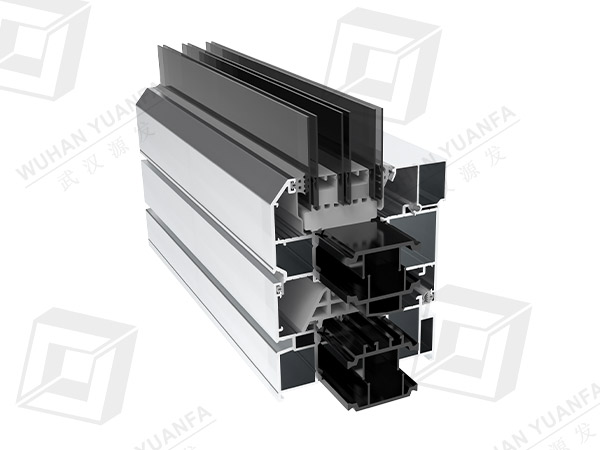
You will inevitably encounter alternative materials pitched as suitable substitutes. We strongly advise you to proceed with extreme caution. Utilizing inferior thermal barrier profiles leads to rapid system failure.
PVC represents an unacceptable substitute for structural applications. It has a dangerously low melting point. You cannot powder-coat a composite frame containing PVC. Furthermore, PVC suffers from a massive thermal expansion mismatch compared to metal. When the sun heats the window, the metal expands differently than the PVC. This tears the internal seals apart. PVC also degrades rapidly under UV radiation and mechanical stress. It becomes brittle and cracks. PA66 GF25 solves all these issues definitively.
Pour-and-debridge systems utilize liquid polyurethane. Manufacturers pour this resin into an open aluminum channel. Once it cures, they cut the bottom of the metal channel away. This physically separates the inner and outer metal. However, this method brings severe structural limitations. Polyurethane lacks the rigid spanning strength of reinforced polyamide. The process also introduces massive manufacturing complexities. You need specialized pouring equipment and precise curing environments. Polyamide strips provide a highly reliable, mechanical lock. You simply roll the metal onto the rigid profile. It is cleaner, faster, and structurally superior for modern heavy glazing.
Industry terminology often confuses buyers. Both terms describe methods of isolating metal frames. However, they describe different structural capabilities. Traditional pour-and-debridge is simply a "break." It stops the heat but offers minimal structural bridging. A polyamide strut acts as a genuine structural component. It holds the frame together across wide gaps. Polyamide struts offer superior structural spanning capabilities. They support large-format commercial glazing effortlessly. They replace older, non-reinforced technologies entirely. When you need heavy-duty performance, you always specify a strut.
Even the best materials fail if you mishandle them on the factory floor. You must understand the chemical and physical realities of polyamide to prevent manufacturing defects.
PA66 is inherently hygroscopic. This means it absorbs moisture directly from the surrounding air. Proper factory storage is an absolute necessity. You cannot leave these materials sitting outside or in damp warehouses. Excessively dry profiles behave unpredictably. They become extremely brittle and shatter during the rolling process. Conversely, saturated profiles cause massive issues during powder coating. The trapped moisture turns to steam in the 200°C oven. This steam pushes through the paint, creating bubbles and blisters on the frame surface. You must maintain controlled humidity environments for raw material storage.
The manufacturing process relies heavily on uniform material strength. Compromised glass fiber distribution creates severe weak points. Sometimes, during poor extrusion, the fiberglass clumps together. This leaves other areas entirely unreinforced. When the heavy steel rolling wheels apply pressure, these unreinforced areas fail. They crack or shear apart instantly. You lose the mechanical lock. A compromised lock means the window will eventually sag or leak. You must demand consistent fiber dispersion from your supplier.
You must carefully identify the hidden risks of unusually cheap materials. If a price seems too good to be true, the supplier is likely cutting corners. Bad suppliers frequently mix recycled plastics into the hopper. They often reduce the glass fiber content well below the required 25%. Recycled blends contain impurities that drastically reduce structural integrity. They create brittle extrusions that cannot handle wind loads. By accepting these cheap blends, you risk catastrophic window failure on the job site. The liability easily outweighs the initial material savings.
Storing polyamide extrusions in direct sunlight or highly humid environments.
Failing to calibrate the knurling wheels before running a new batch of metal.
Applying too much downward pressure on the rolling machine, crushing the plastic teeth.
Skipping random sampling tests for sheer strength on the daily assembly line.
Sourcing high-quality components requires a rigorous vetting process. You cannot treat these structural elements as simple commodity plastics. Standardizing your procurement approach guarantees consistent factory output.
You must always verify the origin of the base materials. Request official raw material certificates for every major shipment. The document must prove the exact chemical makeup of the polyamide. It must also verify the exact percentage of fiberglass. Do not accept vague descriptions. The certificates ensure the supplier actually purchased high-grade PA66 rather than cheaper nylon variants.
A supplier is only as good as their internal testing lab. You need to know what to look for in a manufacturer’s testing facility. Ask them to demonstrate their on-site tensile testing equipment. They should pull-test samples from every production run. Look for digital profile projectors on the factory floor. These optical devices verify dimensional checks down to the micron. Ensure they utilize thermal cycling chambers to test material fatigue. If they lack this equipment, they cannot guarantee quality.
Procurement teams must decide between standard off-the-shelf geometries and proprietary shapes. Standard profiles work perfectly for generic aluminum frames. They offer faster delivery and zero tooling fees. However, investing in custom dies makes sense for proprietary multi-cavity designs. Custom designs allow you to achieve highly specific U-values. They also allow you to integrate precise hardware channels directly into the plastic. Evaluate your production volume before committing to custom tooling.
Assess the supplier's true production capacity. A reliable partner must operate multiple extrusion lines simultaneously. If they only have one or two machines, a single breakdown ruins your production schedule. Evaluate their supply chain resilience. Ask where they source their raw polymers. Ensure they can meet your high-volume manufacturing schedules during peak building seasons.
Request and review independent third-party lab test reports for thermal conductivity.
Verify exact dimensions using optical projection tools on sample deliveries.
Demand raw material origin certificates stating exactly 25% glass fiber content.
Audit their factory storage conditions to ensure moisture control protocols exist.
Demand structural proof: Always request material samples and corresponding lab test reports for longitudinal shear strength before approving any supplier.
Enforce strict tolerances: Specify tight dimensional accuracies (±0.05mm) to prevent rolling failures and assembly line scrap.
Protect your inventory: Implement climate-controlled factory storage to manage the hygroscopic nature of polyamide materials.
Prioritize authentic blends: Reject suspiciously cheap quotes that rely on recycled plastics and compromised fiberglass ratios.
Transitioning to or upgrading your PA66 GF25 profiles is a vital balancing act between structural safety and thermal efficiency. Relying on verified performance data and thoroughly vetting the supplier's manufacturing consistency are the only ways to ensure your energy-efficient frames perform as designed. For procurement teams, the immediate next step is initiating a side-by-side technical evaluation of potential supplier samples.
A: It stands for "Glass Fiber 25%". It means the Polyamide 66 base material is reinforced with 25% fiberglass by weight, providing the necessary tensile strength and thermal stability for structural aluminum frames.
A: Yes, provided it is genuine PA66 GF25. It is designed to endure standard curing oven temperatures (up to 200°C/392°F for short durations) without losing its structural integrity.
A: Generally, a wider strip increases the distance between the interior and exterior aluminum profiles, reducing the thermal transmittance (U-value). However, increasing width requires careful structural engineering to maintain the frame's load-bearing capacity.
A: Indicators include unusually low prices, a brittle feel, inconsistent surface finish, cracking during the rolling process, and an inability to provide verifiable, third-party lab test reports for longitudinal shear strength.


