

close
Choose Your Site
Global
Social Media

Author: Site Editor Publish Time: 2026-07-09 Origin: Site
Modern commercial architecture faces a fundamental engineering conflict. Clients constantly demand expansive aluminum curtain walls. They want abundant natural light and striking aesthetics. Meanwhile, increasingly stringent energy codes mandate drastic reductions in building energy consumption. Frameworks like ASHRAE 90.1 and LEED v4 require high-performance building envelopes to combat climate change. Aluminum is an exceptionally strong and lightweight framing material. However, it possesses very high thermal conductivity. This inherent trait necessitates decoupling the interior and exterior extrusion profiles. You cannot simply join internal and external metal components directly. Doing so creates a massive energy leak. Modern insulation technology solves this critical issue. The thermal break polyamide strip serves as the industry-standard structural insulator. It effectively bridges this temperature gap without sacrificing structural safety. This guide provides an objective look at these essential components. We will evaluate their impact on façade performance, overall structural integrity, and manufacturing workflows.
Thermal Efficiency: Polyamide strips significantly lower the overall U-factor of aluminum assemblies and improve the Condensation Resistance Factor (CRF).
Structural Synergy: Polyamide 66 reinforced with 25% glass fiber shares a nearly identical Coefficient of Linear Thermal Expansion (CLTE) with aluminum, preventing shear stress and composite failure during extreme temperature fluctuations.
Design Flexibility: Unlike pour-and-debridge systems, polyamide profiles allow for two-tone color finishes (interior vs. exterior) and complex, multi-cavity geometric designs.
Decision-Stage Focus: Selecting the correct strip requires balancing thermal targets, wind load requirements, and fabrication capabilities.
Unmitigated thermal bridges in aluminum framing create significant business problems. They lead directly to severe energy loss and interior condensation. Many commercial buildings fail to meet local building code compliance strictly because of these thermal leaks. When heat bypasses bulk insulation through highly conductive aluminum mullions, HVAC systems work overtime. You end up wasting tremendous amounts of electricity and gas to maintain internal temperatures.
Let us examine the mechanism of action. Aluminum transfers heat rapidly from warm areas to cold areas. Inserting a low-conductivity barrier directly interrupts this heat transfer path. The barrier splits the solid metal frame into two separate sections. Heat energy struggles to cross this non-metallic zone. We call this decoupling. It creates a thermal break. This physical concept applies perfectly whether you are heating a building in winter or cooling it in summer.
A successful thermal break must achieve several critical goals simultaneously. It needs minimal thermal transmittance. It must offer zero compromise on wind load resistance. Furthermore, you need long-term durability against moisture and UV exposure. Without these specific traits, the facade will eventually fail. Building owners face expensive remediation if the internal mullions sweat. Condensation leads directly to mold growth and interior water damage. Therefore, structural insulators must perform flawlessly under extreme environmental stress.
Evaluating different thermal break technologies requires looking at multiple dimensions. We must compare structural integrity alongside thermal capabilities to make informed engineering decisions.
Polyamide utilizes a robust mechanical locking method. Fabricators knurl the aluminum pocket first. They then roll the rigid strip securely into place. This process creates a strong composite profile. In contrast, pour-and-debridge systems rely entirely on the chemical adhesion of polyurethane. Polyurethane is poured into a channel as a liquid. The metal bottom is later cut away to create the break.
Polyamide offers superior high-temperature resilience. It maintains excellent structural integrity during powder coating and anodizing processes. Typical powder coating ovens reach 200°C. Polyamide handles this heat effortlessly. Polyurethane often requires metal finishing before the thermal break is applied. This complicates the manufacturing sequence. It forces fabricators to manage finished extrusions carefully to avoid scratching the painted surfaces.
Let us look at baseline thermal conductivity values. We must acknowledge transparent assumptions here. Polyurethane can offer a slightly lower baseline conductivity material-to-material. However, polyamide allows for wider, complex multi-cavity designs. These advanced geometries ultimately achieve superior system-level U-factors. You can extrude polyamide into intricate hollow shapes. You cannot do this easily with poured polyurethane.
Performance Metric | Polyamide (PA66 GF25) | Polyurethane (Pour & Debridge) |
|---|---|---|
Locking Mechanism | Mechanical (Knurled & Rolled) | Chemical Adhesion |
High-Temp Resilience | Excellent (Up to 200°C) | Poor (Requires pre-finishing) |
Geometric Flexibility | High (Multi-cavity, hollow) | Low (Solid block only) |
Dual-Color Finishing | Yes (Pre-finished separately) | Difficult (Requires masking) |
Polyamide strips enable distinct interior and exterior finishes naturally. You join two separate pre-finished aluminum profiles mechanically. This allows a building to feature a weather-resistant exterior color alongside a complementary interior shade. Polyurethane requires expensive masking tape procedures to achieve two-tone finishes. Masking wastes time and introduces severe quality control risks on the factory floor.
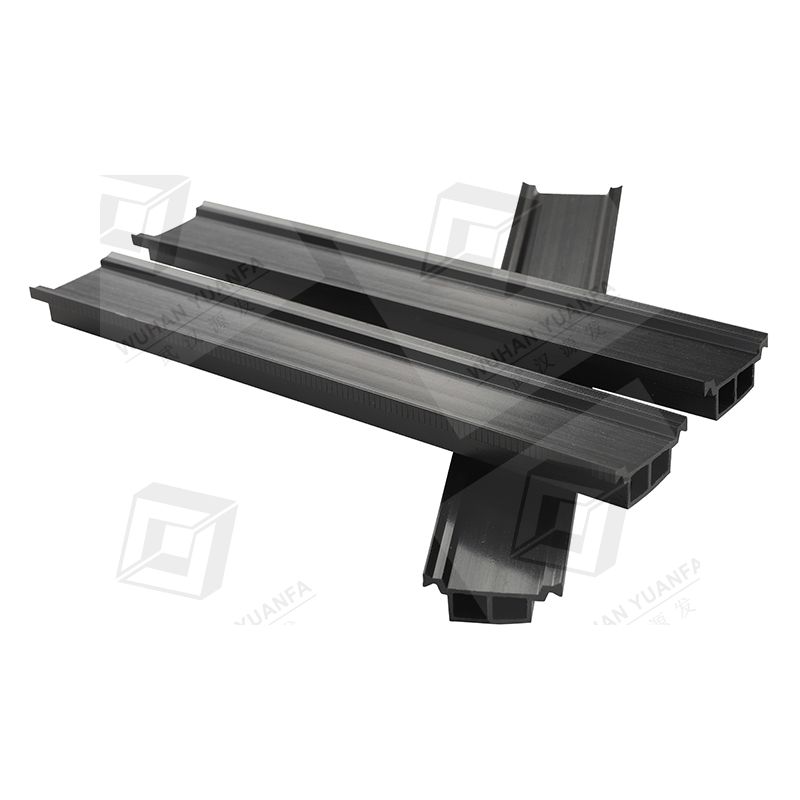
Upgrading your curtain wall framing yields massive measurable benefits. Precision engineering ensures maximum energy efficiency across the entire building envelope.
Moving from standard breaks to wide, complex polyamide insulating profiles yields massive framing U-factor (Uf) improvements. Engineers routinely see Uf reductions ranging from 30% to well over 50%. Standard 14.8mm strips provide baseline compliance for moderate climates. Upgrading to 34mm or 44mm multi-chamber profiles drops thermal transmittance dramatically. This directly helps architects meet stringent LEED v4 targets effortlessly.
The thermal break location directly dictates the internal dew point. It must align perfectly with the glass insulating unit (IGU). Proper alignment keeps interior surface temperatures above the dew point. This acts as a critical risk-mitigation factor against mold and water damage. If the aluminum frame cools below the ambient dew point, moisture forms immediately. Polyamide creates a warm-edge effect on the internal framing, protecting the interior environment.
Advanced profile designs manipulate airflow within the profile cavity. They do not just sit there passively. Innovative shapes actively improve facade performance.
Hollow Chambers: They trap dead air. Dead air acts as a powerful natural insulator against cold transfer.
Internal Fins: These structures block internal convection currents. They stop cold air from swirling inside the extrusion gap.
Specialized Flags: These thin extensions support weather gaskets perfectly. They create a tighter continuous seal around the glazing unit.
These specific features boost thermal performance significantly. You achieve better insulation without requiring thicker, heavier, and more expensive glazing units.
Excellent materials still require flawless execution. Fabricators face several challenges when building these composite structures for high-rise applications.
The mechanical crimping process demands specialized, high-precision equipment. Fabricators must execute precise knurling, insertion, rolling, and shear testing. Knurling remains the most critical step. The machine cuts tiny teeth into the aluminum pocket. If the knurling is too shallow, the strip will slip under heavy wind loads. Proper teeth ensure a permanent mechanical lock.
Improper rolling pressure poses severe structural risks. Too much pressure distorts the aluminum extrusions. Too little pressure creates a weak composite joint. You must implement strict QA/QC protocols on the factory floor. Standards like AAMA TIR-A8 dictate the structural performance of composite thermal barrier framing systems. Fabricators pull test samples daily. They shear the samples to verify the composite strength.
Here are common mistakes to watch out for during assembly:
Skipping the shear test calibration on new extrusion batches.
Using dull knurling wheels, which fail to grip the plastic adequately.
Applying uneven pressure across the rolling discs, causing extrusion bowing.
Polyamide profiles have realistic storage constraints before assembly. They absorb ambient moisture naturally from the air. Fabricators must maintain humidity control prior to assembly. This prevents dimensional swelling. If they absorb too much water, they become difficult to insert into the aluminum channels. However, once assembled within the aluminum frame, they remain highly stable. They endure decades of environmental exposure without degrading.
Choosing the right component requires a systematic approach. Engineering teams must balance competing demands to ensure long-term success.
You must first determine your target U-factors. Next, calculate all required structural load capacities. This includes the dead load of the heavy glass and maximum expected wind loads. You also must consider local climate extremes. A building in Dubai faces vastly different thermal stresses than a commercial tower in Toronto.
Match the strip depth and geometry to your specific thermal target. Facade thermal break strips come in various sizes.
Standard depths range from 14.8mm to 24mm for moderate climates.
High-performance depths push up to 40mm or more for passive house standards.
Geometries include flat strips, C-shapes, and complex multi-hollow designs.
Wider strips provide much better insulation. However, they also alter the overall depth of the curtain wall mullion. Architects must plan for this increased frame depth.
Never specify a product without hard data. Require localized testing data immediately. Look for NFRC or European EN standards compliance. Demand material certifications ensuring exactly 25% glass-fiber reinforcement. This precise ratio guarantees the correct thermal expansion coefficient. Request recent shear-strength test reports from the manufacturer to ensure structural safety.
Procurement and engineering teams must engage manufacturers early in the design phase. Run comprehensive thermal simulations before finalizing extrusion dies. THERM modeling reveals potential cold spots instantly. Catching a thermal bridge digitally saves thousands of dollars in re-tooling costs later.
A thermal break polyamide strip is not just an energy-saving component. It serves as a primary structural element of the curtain wall system. It holds the entire exterior facade together while blocking massive heat transfers. Building envelopes continue to face stricter energy regulations globally. Relying on outdated framing techniques is no longer viable for modern construction.
The balanced structural-thermal capabilities of polyamide make it the dominant choice. It excels in modern commercial fenestration. It easily withstands environmental stress, supports heavy triple-glazing, and delivers superior insulation. Unlike liquid-poured alternatives, it allows for beautiful dual-color finishes and complex geometric extrusions.
Take action on your next facade project today. Download technical specification sheets from verified manufacturers. Request a detailed thermal modeling consultation to optimize your frame designs. Contact an experienced engineering team to review your specific curtain wall drawings. Early collaboration ensures your building meets both aesthetic visions and rigorous energy codes perfectly.
A: The lifespan of a high-quality polyamide strip equals the lifespan of the aluminum framing itself. Under normal environmental conditions, they routinely last 40 to 50 years or more. They resist UV degradation and moisture damage effectively once locked inside the extruded aluminum profile.
A: Yes, they routinely handle heavy triple-glazed units. However, this requires strict structural engineering calculations. Fabricators must perform shear strength testing to ensure the composite profile can bear the dead load. High-depth, heavy-duty strips are specifically manufactured for demanding heavy glazing applications.
A: Polyamide 66 reinforced with 25% glass fiber (PA66 GF25) is combustible but self-extinguishing. It is not entirely fireproof. Engineers incorporate it into overall facade fire-stopping strategies. The material melts under extreme direct flame but does not actively spread fire through the curtain wall cavity.
A: Mechanical rolling creates a strong composite profile. However, wide strips introduce slight shear slippage compared to solid aluminum. Engineers calculate the "effective moment of inertia" to account for this. They design the surrounding aluminum slightly thicker to maintain absolute structural rigidity across the entire mullion.


