

close
Choose Your Site
Global
Social Media

Author: Site Editor Publish Time: 2026-07-31 Origin: Site
The strip insertion process represents far more than a routine manufacturing step. It serves as the critical juncture determining structural integrity and energy efficiency for modern fenestration systems. Engineers and fabricators universally understand the core concept behind thermal breaking. However, actual mechanical execution presents significant daily challenges. Joining two separate aluminum extrusions using a rigid non-conductive strut frequently exposes hidden production bottlenecks. It also reveals severe quality control failures affecting final product performance.
This comprehensive guide breaks down the precise mechanical insertion process step-by-step. You will learn about mandatory material prerequisites required for high-stress applications. We also detail the essential quality assurance frameworks necessary for compliance. We provide actionable insights to help you evaluate fabrication partners accurately. Mastering these fabrication stages ensures your composite profiles easily withstand rigorous global building standards.
The strip insertion process dictates the composite shear strength of the final profile; poor execution leads to structural failure.
A standard process relies on three non-negotiable stages: knurling, insertion, and mechanical crimping (rolling).
Using a highly engineered polyamide thermal break (like PA66 GF25) is mandatory for this process, as its thermal expansion coefficient matches aluminum, preventing warping post-assembly.
Verifiable quality control—specifically longitudinal shear testing—must immediately follow the insertion process to ensure compliance with global building standards.
Modern architectural profiles face a strict dual requirement. The assembled profile must completely sever the thermal bridge between exterior and interior environments. Simultaneously, it must function mechanically as a single, solid structural unit. Buildings experience high wind pressures and heavy dead loads from insulated glass units daily. The composite frame must bear these forces without separating or deflecting excessively.
Defining success for this process requires measurable criteria. A successful insertion process yields zero slippage between the aluminum extrusion and the central plastic strut. The final assembly maintains exact dimensional tolerances. This dimensional stability is crucial for subsequent cutting, milling, and corner joining. If the profile bows or twists during assembly, the fabricator cannot use it for high-end window systems.
Precision carries a stark financial reality. Miscalibrated rolling machines frequently generate high scrap rates. Sub-par strip materials compromise long-term weatherproofing. These manufacturing errors frequently lead to failed compliance tests during independent laboratory audits. Discarding warped aluminum extrusions heavily impacts fabricator ROI. Investing in high-quality machinery and premium insulating materials upfront protects your bottom line and preserves brand reputation.
Understanding the physical transformation requires an objective look at the mechanical workflow. Operators must execute three distinct stages flawlessly.
The process begins by modifying the aluminum extrusion’s inner cavity. Industry professionals refer to this cavity as the "hammer" or "c-slot". Specialized machines mechanically score the inside of this channel using hardened steel cutting wheels. This action creates rows of tiny micro-teeth.
Creating these micro-teeth is absolutely critical for structural integrity. Smooth aluminum cannot grip the rigid plastic strut effectively. Without proper knurling, the system inevitably suffers longitudinal shear failure under stress. The teeth bite into the plastic during the final crimping phase.
Best Practice: Operators must replace knurling wheels regularly. Worn wheels create shallow teeth, severely reducing composite shear strength.
Common Mistake: Failing to vacuum away aluminum swarf (shavings) after knurling. Debris left inside the cavity prevents the strip from seating properly.
Once the cavities are prepared, the feeding mechanism takes over. The thermal break strip is guided precisely into the knurled channels. Advanced insertion machines feed the strut into both the inner and outer aluminum profiles simultaneously.
Automated, low-friction feeding is necessary for this step. The plastic strut must slide seamlessly down the entire length of the six-meter extrusion. Manual feeding often causes snagging. High-friction feeding systems risk stressing or fracturing the strut before operators can lock it permanently in place. Automated sensors ensure perfect alignment before the assembly moves to the final stage.
The final assembly requires immense physical force. Heavy-duty machinery applies progressive mechanical pressure via a series of precision rolling discs. Most modern machines use three to four pairs of these discs to achieve gradual deformation.
During this stage, the machine physically deforms the aluminum hammer. The metal crimps securely over the dovetail ends of the insulating strip. This action locks the assembly permanently together. Operators must calculate and set this pressure meticulously.
You face two distinct risks here. Over-crimping applies excessive force, cracking the delicate plastic strip or crushing the aluminum cavity. Under-crimping leaves a loose assembly, causing the profiles to slide against one another under wind load. Both errors result in immediate structural failure.
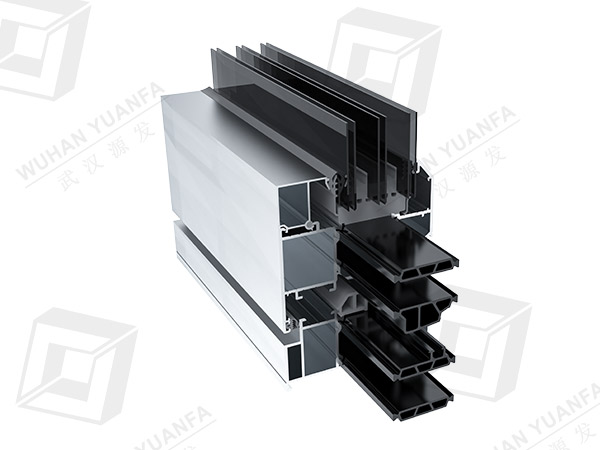
The materials chosen for fenestration must survive extreme manufacturing environments. Fabricators bake composite profiles during the final powder coating process. Ovens routinely reach temperatures up to 200°C for twenty minutes or more. A highly engineered polyamide thermal break easily withstands these oven temperatures. It never melts, sags, or loses its structural shape during curing.
Physics dictates why this material dominates the market. We must examine the Coefficient of Linear Thermal Expansion (CLTE). Pure plastics expand much faster than metals when heated. However, manufacturers reinforce polyamide with 25% glass fiber (creating PA66 GF25). This specific formulation expands and contracts at virtually the same rate as aluminum. This matched expansion rate prevents severe warping and bi-metallic bending post-assembly.
We can briefly contrast this method with older alternatives. Some regions still utilize PVC strips or polyurethane pour-and-debridge methods. Mechanical strip insertion using reinforced polyamide remains highly preferred for heavy architectural systems. PVC degrades quickly under UV exposure and intense heat. Pour-and-debridge lacks the high structural shear strength required for massive curtain wall mullions.
Comparison of Insulating Strut Materials
Material Type | Thermal Expansion Match | Heat Resistance (Powder Coating) | Structural Load Capacity |
|---|---|---|---|
Polyamide (PA66 GF25) | Excellent (Matches Aluminum) | High (Up to 200°C) | Very High |
PVC | Poor | Low (Prone to melting) | Low |
Polyurethane (Pour) | Moderate | Moderate | Moderate |
Fabricating the profile represents only half the job. Verifying its structural integrity guarantees safety. Recognized global building standards demand strict quality control immediately following the rolling phase.
This metric serves as the primary QA standard for structural integrity. Technicians cut short samples from the freshly assembled profile. They place these samples into a calibrated laboratory press. The machine measures the exact pushing force required to slide the aluminum away from the plastic strip.
If the knurling was too shallow or the crimping too loose, the profile will fail this test prematurely. Consistent longitudinal shear testing ensures compliance with rigorous guidelines like EN 14024. It proves the assembly acts as one composite unit.
Laboratories also measure the transverse tensile strength. This test evaluates the pull-apart force. Grips attach to the inner and outer aluminum sections, pulling them in opposite directions. This confirms the crimping process securely locked the dovetail joint. If the metal pulls away easily, operators must recalibrate the rolling discs immediately.
Mechanical stress sometimes causes unintended shape changes. Technicians are required to measure the assembled profile against the original CAD drawings carefully. They use digital calipers and specialized gauges. They check for bowing, twisting, or cavity crushing. The rolling process must never alter the intended geometry. Perfect dimensional verification ensures seamless installation later on the job site.
Manufacturing complexity scales dramatically depending on the final application. The insertion process adapts to meet these shifting demands.
When producing simple residential window sashes, the workflow remains relatively straightforward. These profiles usually feature single cavities and narrow insulating strips. However, moving to deep, multi-cavity curtain wall mullions requires entirely different equipment setups. Complex curtain walls often utilize multiple strips within a single extrusion to achieve maximum thermal performance.
Meeting modern passive house standards introduces new implementation realities. These high-efficiency designs require inserting complex, multi-hollow polyamide strips. Often, these strips exceed 30mm or even 44mm in width. Handling wide, multi-chambered strips mandates specialized, low-friction guiding equipment. Even a slight misalignment during insertion will fracture a delicate multi-hollow strut.
Structural considerations grow exponentially stricter for high-rise applications. Curtain walls bear significantly higher positive and negative wind loads. They also carry heavier triple-glazed glass units. Consequently, the knurling depth and crimping pressure tolerances become exponentially more critical. Engineers demand rigorous mathematical verification for curtain wall assemblies. A failed shear connection on a high-rise building invites catastrophic consequences.
Procurement and production managers carry heavy responsibilities when auditing an insertion line. You must evaluate potential fabrication partners based on their technological capabilities and transparency.
CNC-controlled knurling and rolling machines are an absolute necessity. Modern automation removes human error from the equation. Computer controls guarantee consistent crimping pressure across an entire 6-meter extrusion. Relying on manual dials and analog adjustments invites dangerous inconsistencies. You should avoid partners utilizing outdated, manual rolling equipment for structural architectural profiles.
Traceability separates premium partners from average suppliers. We strongly recommend partnering with fabricators who provide comprehensive documentation. They should supply documented shear test data for every production run. Demand batch traceability linking the specific aluminum extrusions to the exact batch of polyamide strips used.
Machinery and Partner Audit Criteria
Audit Category | Minimum Requirement | Premium Indicator |
|---|---|---|
Knurling Technology | Dedicated knurling wheels | Automated wear detection sensors |
Rolling Equipment | Motorized disc adjustment | Full CNC control with pressure monitoring |
Quality Assurance | Daily shear testing logs | Digital batch traceability software |
The true value of thermal breaking is only realized through a mathematically precise insertion process. Superior insulating materials mean very little if the mechanical assembly fails. Flawless knurling, frictionless insertion, and precise rolling transform two separate extrusions into one cohesive, high-performance structural unit.
Take proactive steps to secure your supply chain. Encourage buyers and project managers to request specific shear test data regularly. Ask your suppliers for the material data sheets (MDS) detailing the polyamide strips. Secure this documentation before signing off on any new profile system. Verifying these details guarantees long-lasting performance and compliance.
A: Tape is often used for topical insulation or localized thermal bridging prevention in localized builds. It offers surface-level thermal resistance. Conversely, a mechanical strip acts as a load-bearing structural component inside the extrusion. It physically separates the aluminum halves while carrying structural loads.
A: No. It requires heavy, calibrated factory machinery, including specialized knurling and rolling equipment. Strict environmental controls are also necessary to ensure structural integrity. On-site conditions cannot provide the precision required for permanent mechanical crimping.
A: Pure polyamide is too flexible for these specific applications. Adding 25% fiberglass (PA66 GF25) gives the strut the massive tensile strength required to withstand the mechanical rolling process and long-term wind loads. It also matches the thermal expansion rate of aluminum.


