

close
Choose Your Site
Global
Social Media

Author: Site Editor Publish Time: 2026-08-28 Origin: Site
Aluminum serves as an ideal structural material for modern curtain walls. However, architects face a serious challenge today. Aluminum acts as a highly efficient conductor of heat. This property creates unmitigated thermal bridging across the entire building envelope. Such bridging causes severe problems for commercial developments. Facades often fail to meet stringent energy codes like ASHRAE 90.1 or LEED standards. Interior condensation forms rapidly along the metal mullions. This excess moisture damages interior finishes and drastically inflates HVAC operational costs. You need a reliable structural thermal break. A Polyamide Profile provides the industry-standard solution. It severs the conductive path effectively. It also completely preserves the load-bearing integrity of your facade. We will explore how this engineered barrier transforms aluminum framing. You will learn the specific mechanisms behind its insulating power. We will also cover essential material evaluations, performance metrics, and critical manufacturing quality controls.
Polyamide profiles drastically lower the overall thermal transmittance (U-value) of aluminum curtain walls by acting as an insulating barrier between the exterior and interior extrusions.
Glass-fiber reinforcement (typically PA66 GF25) ensures the profile possesses the mechanical strength required to handle high wind loads and structural dead loads.
The coefficient of linear thermal expansion of polyamide closely matches that of aluminum, preventing shear stress, warping, or structural fatigue during extreme temperature fluctuations.
Upgrading to a high strength polyamide profile simplifies assembly via mechanical crimping, offering superior quality control compared to traditional pour-and-debridge (polyurethane) methods.
Aluminum framing acts as a superhighway for heat transfer. Modern building designs rely on high-performance insulated glazing units (IGUs). IGUs do an excellent job of slowing thermal movement through the glass. However, solid aluminum mullions simply bypass these advanced glazing systems. Heat takes the path of least resistance. During winter, interior heat rushes outward through the continuous metal frame. During summer, solar heat blasts into the air-conditioned interior. This rapid conduction undermines the entire thermal envelope. It effectively cancels out the energy savings provided by expensive triple-pane glass.
Thermal bridging creates localized cold spots inside a building. During cold weather, the interior mullion surface temperatures drop rapidly. They frequently fall below the dew point of the indoor air. When warm indoor air hits these freezing metal surfaces, moisture condenses immediately. This interior condensation causes catastrophic long-term damage. Water pools on window sills and soaks into adjacent drywall. Mold growth follows shortly after the moisture appears. This organic growth ruins expensive interior finishes. It also creates severe indoor air quality issues for building occupants. Facility managers must then spend heavily on premature remediation and repairs.
Energy codes grow stricter every single year. Local and international energy performance regulations now mandate aggressive carbon reduction targets. Organizations strictly enforce standards like ASHRAE 90.1. Green building certifications like LEED heavily penalize poor thermal envelope performance. Unbroken aluminum frames simply cannot meet these modern thresholds. Consequently, structural thermal breaks no longer serve as optional upgrades. They represent a baseline requirement for all new commercial developments. Failing to address thermal bridging during the design phase leads to denied building permits. It also guarantees massive compliance failures during post-construction energy audits.
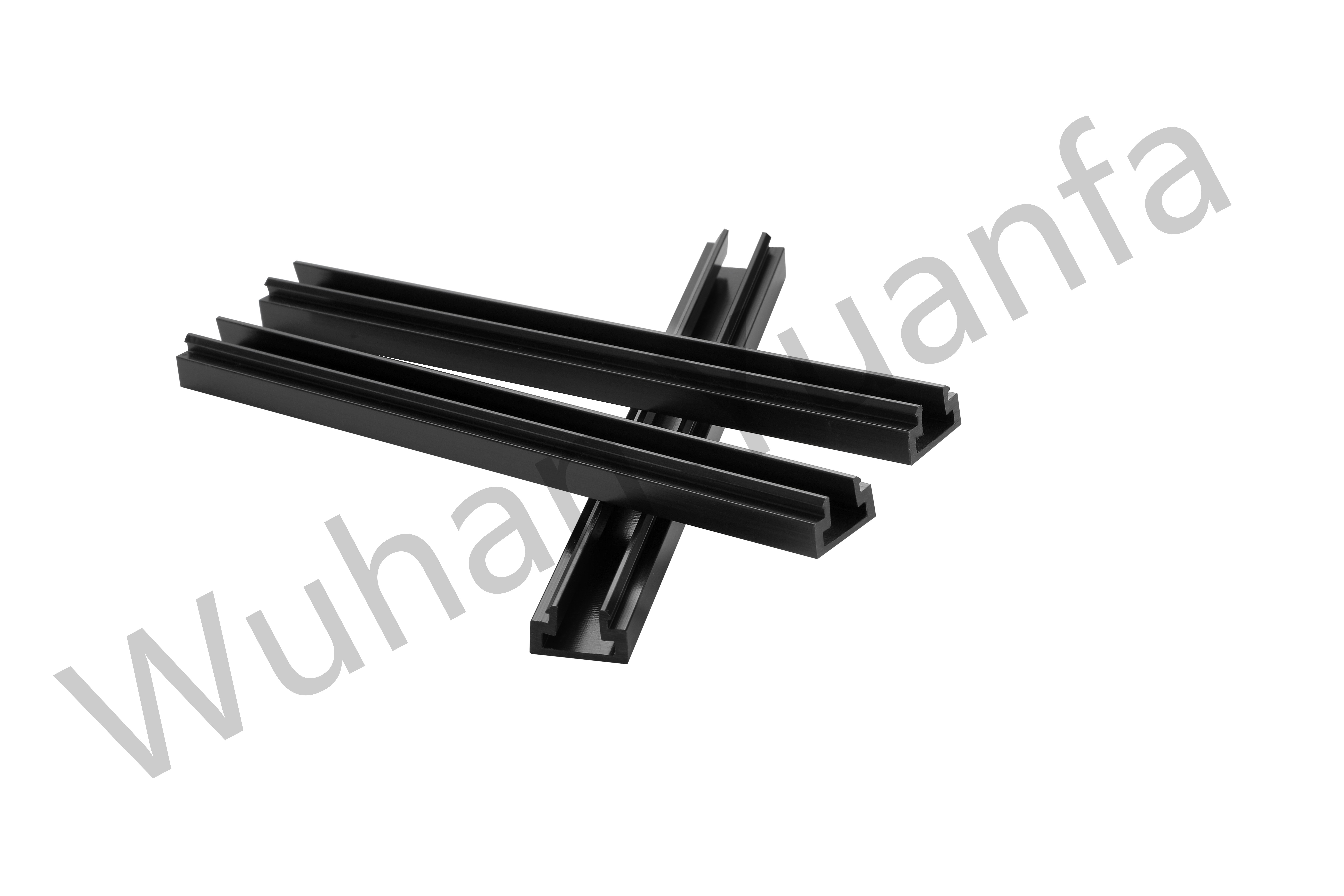
To stop heat transfer, you must physically separate the metal parts. Polyamide struts mechanically link two separate aluminum extrusions together. One extrusion faces the exterior climate. The other extrusion faces the conditioned interior space. The plastic strut bridges the gap between them. This precise mechanical design ensures absolutely no metal-to-metal contact occurs. Heat reaching the exterior metal frame suddenly hits a non-conductive roadblock. The physical separation stops thermal energy dead in its tracks. The facade still functions structurally as a single unified mullion. Thermally, however, it performs as two completely isolated components.
The numbers clearly demonstrate the massive reduction in heat flow. Standard architectural aluminum possesses a thermal conductivity of approximately 160 W/m·K. It moves heat almost instantaneously. In stark contrast, polyamide delivers a thermal conductivity of approximately 0.3 W/m·K. This material difference is staggering. Polyamide conducts heat over 500 times slower than aluminum. By inserting this specific material into the extrusion path, engineers drastically lower the overall thermal transmittance (U-value). The interior frame remains warm during winter. It remains cool during summer.
Material Type | Approx. Thermal Conductivity (W/m·K) | Relative Heat Transfer Speed | Primary Facade Function |
|---|---|---|---|
Standard Aluminum | 160.0 | Extremely Fast | Load-bearing structural support |
Polyamide (PA66 GF25) | 0.3 | Extremely Slow | Structural thermal separation |
Extrusion technology allows manufacturers to create highly complex plastic shapes. Engineers design polyamide struts featuring multi-chamber hollow profiles. These intricate internal chambers trap small pockets of still air. Trapped air acts as an exceptional secondary insulator. These hollow cavities further reduce convective heat transfer within the curtain wall cavity. Solid plastic struts conduct more heat than hollow ones. Therefore, sophisticated multi-chamber designs maximize the thermal resistance of the overall system. Engineers customize these shapes to match specific thermal goals.
Curtain walls must bear heavy dynamic wind loads. They also support massive structural dead loads from heavy IGUs. Basic plastics simply collapse under these intense forces. You must specify a High Strength Polyamide Profile to ensure absolute structural safety. Manufacturers reinforce this material with 25% fiberglass (known as PA66 GF25). The fiberglass matrix gives the plastic incredible tensile and shear strength. This reinforced composite easily outperforms the structural limits of poured polyurethane. Polyurethane acts as a soft, spongy barrier. It lacks the rigidity required for soaring skyscraper facades. Reinforced polyamide acts as a true load-bearing structural component.
Materials expand when heated and contract when cooled. If two bonded materials expand at different rates, they tear each other apart. This phenomenon causes catastrophic shear failures. Fortunately, PA66 GF25 offers a critical engineering advantage. Its coefficient of linear thermal expansion closely matches standard architectural aluminum. Aluminum expands at roughly 23 x 10^-6 /K. PA66 GF25 expands at an almost identical rate. They move together perfectly during extreme freeze/thaw cycles. This synergy eliminates structural fatigue at the joint. Standard plastics or PVC warp and crack under the same conditions.
The assembly method heavily dictates final quality. Manufacturers join polyamide struts to aluminum using a mechanical knurling and crimping process. This dry mechanical method offers incredible precision. Traditional polyurethane requires a messy chemical "pour-and-debridge" method. Workers pour liquid chemicals into an aluminum channel. Later, they cut away the bottom of the channel. The chemical method creates toxic fumes and unpredictable bonds. Furthermore, the mechanical crimping process allows for dual-color (bicolor) facade finishes. You can anodize or paint the interior and exterior extrusions different colors before assembly. The liquid pour method makes bicolor finishing highly complicated.
Extrusion facilities carefully apply mechanical knurling to the internal aluminum cavity walls.
Workers insert the rigid polyamide strut seamlessly into the prepared aluminum receiving channels.
Heavy rolling machinery crimps the exterior metal tightly around the strut ends.
Inspectors test the assembled profile to guarantee maximum shear strength and dimensional accuracy.
You must model the impact of the strut width on the overall system U-factor. Profile depths vary significantly based on project requirements. Standard widths often include 14.8mm, 24mm, or 34mm variants. A wider plastic strut creates a larger physical gap between the metal extrusions. This wider gap drastically lowers the overall U-factor. However, wider struts also change the structural dynamics of the mullion. Architects must balance maximum thermal separation against required structural stiffness. Modeling software helps engineers pinpoint the optimal width for both energy efficiency and structural stability.
The mechanical bond between the metal and the plastic must never fail. If the bond slips, the entire curtain wall loses its structural integrity. You must demand rigorous testing certifications. The industry relies on specific testing standards like EN 14024 or AAMA TIR-A8. These standards evaluate the transverse tensile strength of the completed assembly. Testing machines pull the interior and exterior extrusions in opposite directions. The connection must withstand massive shear forces before yielding. Only specify materials carrying certified documentation from independent testing laboratories.
Stopping condensation remains a primary goal of thermal breaking. Engineers calculate a Condensation Resistance Factor (CRF) for every facade design. You must use advanced thermal modeling software like THERM to verify this metric. The software simulates severe winter weather conditions outside the building. It calculates the exact interior surface temperatures along the mullions. You must verify that the chosen profile depth guarantees interior surface temperatures remain above the dew point. Failing to verify the CRF for the specific local climate zone guarantees future moisture damage.
Always demand physical shear strength testing certificates from independent testing facilities.
Verify your Condensation Resistance Factor (CRF) using robust thermal modeling software.
Specify larger strut depths for extreme cold-weather climate zones.
Require manufacturers to document the exact fiberglass reinforcement percentage.
The mechanical bond relies entirely on proper aluminum cavity knurling. Knurling machines carve tiny "teeth" into the metal receiving channel. These teeth bite deep into the plastic strut during the crimping phase. This action creates a permanent mechanical lock. If the knurling wheels become dull, they create shallow or smooth teeth. Poor knurling leads directly to a weak mechanical lock. The plastic strut will eventually slip inside the metal channel under dynamic wind loads. This slippage drastically reduces overall shear strength. Manufacturers must constantly calibrate and replace their knurling wheels.
The crimping process requires flawless mechanical calibration. Precise rolling machinery must crimp the metal over the plastic strut exactly right. If the rollers apply too little pressure, the assembly remains dangerously loose. The facade will rattle and leak air. If the rollers apply too much pressure, they crack the rigid plastic strut. A cracked strut compromises both the thermal barrier and the structural load path. Quality control teams must monitor rolling pressures continuously. They must run daily sample tests to ensure perfect calibration.
Using dull knurling wheels, resulting in poor grip strength.
Applying inconsistent roller pressure during the final crimping phase.
Failing to perform daily shear stress sample tests on the assembly line.
Ignoring dimensional tolerances before sliding the strut into the channel.
Material purity guarantees structural safety. Some unethical suppliers try to substitute virgin PA66 GF25. They use recycled plastics or unreinforced polymers to save money. This substitution creates immense implementation risks. Recycled plastics lack the tensile strength required for curtain walls. They become brittle quickly and shatter under wind loads. Furthermore, changing the chemical composition invalidates all prior thermal models. The U-factor and CRF calculations immediately become useless. You must demand strict material purity certifications. Only trust supply chains providing traceable virgin materials.
Specifying the correct thermal break requires a careful engineering balance. You must weigh advanced thermal modeling against rigorous structural load calculations. Simply dropping a plastic barrier into an extrusion is never enough. The manufacturing process demands absolute precision. Evaluating the quality of the cavity knurling and the mechanical crimping process is just as critical as selecting the material itself.
Your next steps require proactive validation. Encourage your design teams to request extensive thermal simulation data, such as detailed THERM reports. Ask your manufacturing partners for physical assembly samples. Finally, always demand certified shear testing documentation before finalizing any curtain wall specification. These simple actions guarantee a resilient, energy-efficient building envelope.
A: When you specify PA66 GF25 correctly, the lifespan is exceptionally long. You must shield it from direct UV exposure within the extrusion cavity. Under these conditions, the profile easily matches the expected lifespan of the aluminum facade itself, typically lasting 50+ years.
A: Yes. The extrusion process allows manufacturers to create highly custom profiles. Engineers can design complex angles, sweeping curves, and multi-hollow cavities. These variations perfectly match specific structural depth requirements or unique architectural facade designs.
A: Polyamide is a thermoplastic material. However, it sits embedded securely within the aluminum extrusion, which heavily limits its oxygen exposure during a fire. For strict fire-rated facade requirements, manufacturers offer specific fire-retardant polyamide blends.


