

close
Choose Your Site
Global
Social Media

Author: Site Editor Publish Time: 2026-08-01 Origin: Site
Aluminum is highly durable and visually premium. It remains a top choice for modern architecture. However, buyers face a serious dilemma. Standard aluminum acts as a highly effective thermal conductor. This property translates to a remarkably poor insulator.
Failing to select the correct window frame specifications creates significant long-term issues. Buildings suffer from higher HVAC energy usage and harsh regulatory compliance failures. You will also face severe condensation risks. These issues impact both daily comfort and overall energy efficiency.
Integrating a thermal break directly interrupts this heat transfer. It effectively lowers the window frame’s U-factor. We will objectively evaluate how varying this barrier's width impacts your window performance. You will learn the exact balance needed for energy efficiency, structural integrity, and maximum return on investment.
Direct Correlation: Increasing the width of a thermal break generally lowers the U-value, improving energy efficiency.
Diminishing Returns: Past a certain width (typically 35mm–40mm), the energy savings plateau while structural and manufacturing costs increase.
Material Matters: A genuine polyamide thermal break outperforms cheaper PVC alternatives in both structural rigidity and thermal resistance.
System-Wide Metric: Frame performance (Uf) must be evaluated alongside glazing performance (Ug) to determine the true whole-window U-value (Uw).
Aluminum features an incredibly high thermal conductivity. It transfers thermal energy rapidly across its surface. During winter months, an untreated aluminum frame pulls valuable warmth from inside your building and expels it outdoors. Conversely, summer heat radiates directly into air-conditioned spaces. This dynamic severely compromises the building envelope. It forces mechanical heating and cooling systems to work much harder to maintain stable interior climates.
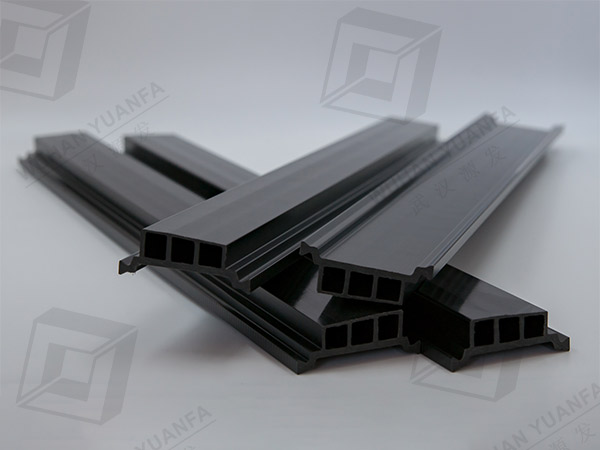
Engineers solved this conductivity problem by introducing a structural barrier mechanism. They physically split the exterior and interior aluminum profiles. These two separate metal pieces never touch one another. Instead, a specialized non-conductive barrier bridges the gap between them. This interruption breaks the continuous metal circuit. It effectively traps heat on the desired side of the window system.
Not all barrier materials deliver the same performance. The industry benchmark relies on a specific composite material. A polyamide thermal break represents the absolute gold standard for premium window systems. Manufacturers typically reinforce this polyamide with fiberglass (often labeled as PA66 GF25) to maximize its strength. We use this specific material because it shares nearly the exact same thermal expansion coefficient as aluminum. When the window heats up in the summer sun, both the metal and the polyamide expand at the same rate. This synchronized movement prevents structural warping, shearing, or premature seal failures.
The width of the barrier directly dictates the insulation capability of the window frame. A standard system typically utilizes a 14.8mm gap. When you upgrade this width to 24mm or 35mm, you enter a linear phase of dramatic improvement. The physical distance between the cold exterior metal and the warm interior metal increases. This longer path drastically reduces the overall heat transfer rate. You can instantly feel the difference on the interior surface of the frame during a freezing night.
This physical separation creates a highly measurable impact on the frame U-Value, known as the Uf metric. We rely on objective baseline estimates to guide specification decisions. A basic 15mm barrier typically yields a Uf rating around 2.5 W/m²K. However, expanding that barrier to 35mm can successfully drop the Uf rating below 1.5 W/m²K. The actual final measurement depends heavily on the specific system design and the surrounding gasket configuration.
As we increase the width of the gap, a new physics challenge emerges. Extremely wide gaps allow trapped air to circulate. This circulation creates convective heat loops. The moving air essentially ferries heat across the gap, undermining the added width. To counteract this, wider designs incorporate complex multi-chamber profiles. Engineers also deploy insulating foam inserts inside these internal cavities. These inserts physically block air currents and maximize the insulation value of the extended gap.
Barrier Width (mm) | Estimated Frame U-Value (Uf) | Internal Cavity Design Requirements | Primary Application |
|---|---|---|---|
14.8mm - 18mm | ~ 2.5 - 2.8 W/m²K | Standard hollow cavity | Basic residential, mild climates |
24mm - 28mm | ~ 1.8 - 2.2 W/m²K | Multi-chamber or basic foam | High-end residential, moderate climates |
35mm - 44mm | < 1.5 W/m²K | Complex multi-chamber + full foam inserts | Severe climates, Passive House standards |
You cannot indefinitely widen the barrier without encountering structural trade-offs. The aluminum profiles provide the core rigidity of the window. The connecting barrier must withstand immense wind loads, glass weight, and building movement. Excessively wide thermal breaks can compromise the structural stiffness of the overall window profile. If the manufacturer fails to engineer the system properly, the frame may flex under heavy wind pressure. This flexing stresses the glass units and degrades weather seals over time.
Furthermore, profile depth constraints create real-world installation challenges. A wider barrier naturally requires a much deeper overall window frame. This extra depth fundamentally alters the architectural sightlines. It can also severely impact retrofit viability. If you are replacing windows in an older building, the existing wall cavity might not accommodate a massive 120mm deep frame system. You must balance the desired insulation level with the physical realities of your wall structure.
We highly recommend conducting a strict cost versus benefit analysis before finalizing your specification. You will face diminishing returns at extreme widths. Pushing past 40mm yields minimal extra energy savings, yet it drives manufacturing and material costs exponentially higher. To navigate these constraints, follow this evaluation protocol:
Analyze Local Climate Severity: Determine your historical temperature extremes and annual heating degree days. Mild regions rarely justify the expense of an ultra-wide barrier.
Assess Structural Load Requirements: Calculate the anticipated wind pressure for your specific building height and location. Ensure the wider profile carries the necessary structural certification.
Verify Installation Depths: Measure the exact wall cavity available. Confirm the deeper frame will not interfere with existing exterior cladding or interior drywall returns.
Calculate Budget Efficiency: Map the cost premium of ultra-wide systems against realistic monthly energy savings. Standard residential climates usually favor a mid-range width, while Passive House projects mandate maximum widths.
Traditional, non-broken aluminum windows are now entirely obsolete for modern construction. They fail to meet virtually all contemporary building energy codes. They suffer from rampant condensation, frost buildup, and massive energy hemorrhaging. Today, the real debate centers on advanced broken aluminum systems versus high-end unplasticized polyvinyl chloride (uPVC).
uPVC inherently resists heat transfer because plastic acts as a natural insulator. High-end uPVC systems offer excellent baseline U-values out of the box. However, advanced aluminum setups utilizing wide polyamide barriers match or exceed these thermal metrics. When we evaluate durability and lifespan, aluminum clearly dominates the conversation. uPVC degrades under intense ultraviolet radiation over time. It can become brittle or chalky. Aluminum retains its factory finish for decades without degrading.
Aesthetics also heavily favor aluminum. Metal boasts incredible tensile strength. Manufacturers can extrude incredibly slim frame profiles that support massive panes of heavy triple glazing. uPVC requires bulky, thick frames to hold the same weight, which vastly reduces your visible glass area. Finally, thermal expansion differences dictate long-term reliability. uPVC is highly prone to warping and bowing in high-heat climates. A polyamide barrier maintains total structural integrity because it moves in perfect harmony with the surrounding metal.
Feature | Thermally Broken Aluminum | High-End uPVC | Traditional Aluminum |
|---|---|---|---|
Insulation Capability | Excellent (Depending on gap width) | Excellent | Extremely Poor |
Structural Strength | Very High | Moderate | High |
Frame Sightlines | Slim and Minimalist | Bulky and Thick | Slim |
Heat Distortion Risk | Low (Matched expansion) | High in extreme sun | Low |
Procuring the optimal window system requires strict attention to material specifications. Many buyers mistakenly focus entirely on the glass, ignoring the hidden technology inside the frame. You must actively scrutinize the technical data sheets provided by the manufacturer. Use this specialized procurement checklist to avoid common pitfalls and secure the exact performance you expect.
Insist on Polyamide: Warn your suppliers against substituting true polyamide with standard polyurethane or basic PVC. Cheap plastics degrade rapidly. They shrink over time, which compromises the airtightness and structural safety of the window. Always demand fiberglass-reinforced polyamide.
Verify "Uw" Over "Uf": Always ask for the whole-window U-value (Uw). The frame U-value (Uf) represents only one piece of the puzzle. A highly advanced, ultra-wide barrier frame is effectively neutralized if you pair it with low-performing double glazing. Ensure both the glass and frame complement each other.
Check for Condensation Resistance: Evaluate the Condensation Resistance Factor (CRF). A properly sized barrier pushes the dew point entirely outside the interior envelope. This prevents cold weather condensation from destroying your interior drywall and promoting mold growth.
Compliance and Certification: Ensure your selected width actively meets your local building energy codes. Verify specific project targets, such as NFRC ratings in the United States, or CE marking and Passive House standards in Europe. Certified test results protect your investment.
Optimizing your aluminum windows requires a strategic approach to frame engineering. You must base your width decision on a matrix of climate severity, specific project energy goals, and overall budget constraints. While it remains true that wider gaps generally provide better energy efficiency, the optimal choice always balances sheer thermal performance against structural durability.
Avoid specifying ultra-wide frames if your local climate does not mandate them, as this leads to unnecessary structural complexities and deeper profiles. Instead, align the barrier width with high-quality glazing to achieve superior whole-window performance. We strongly encourage you to request detailed technical specifications, including Uf, Uw, and material data sheets from your chosen manufacturer. Schedule a specialized technical consultation to ensure your investment delivers maximum comfort and efficiency for decades to come.
A: Standard residential minimums typically range from 14.8mm to 20mm. This baseline width satisfies standard building codes in moderate climates. However, colder regions often require codes mandating 24mm or wider to ensure adequate energy efficiency and prevent excessive heat loss.
A: It drastically reduces the condensation risk by keeping the interior frame surface warm. It pushes the dew point outdoors. However, it cannot prevent condensation completely if interior humidity levels remain excessively high or if the glass unit itself underperforms.
A: High-quality fiberglass-reinforced polyamide strips offer exceptional longevity. They withstand decades of UV exposure and thermal cycling without degrading. Conversely, inferior plastic or basic polyurethane barriers can shrink, crack, and break down over time, compromising the window's integrity.
A: The gap primarily serves to stop heat transfer. However, the physical decoupling of the inner and outer metal frames also mildly reduces vibration transmission. A wider gap with specialized internal foam can provide a slight boost to the window's overall sound transmission class (STC) rating.


