

close
Choose Your Site
Global
Social Media

Author: Site Editor Publish Time: 2026-08-29 Origin: Site
Extruded polyamide, specifically Nylon 66, serves as the undisputed standard for modern high-performance fenestration systems globally. However, this advanced material possesses a highly hygroscopic nature. It actively absorbs water from its immediate surroundings. Unpredictable dimensional changes often occur between extrusion and final assembly. These unexpected dimensional shifts routinely lead to severe profile mismatches. They cause unacceptably high scrap rates on the factory floor. They also cause sudden structural failure during the rigorous crimping process. Fortunately, proper environmental controls prevent these expensive manufacturing disasters. We will thoroughly explore the mechanics behind these dimensional shifts. We will explain how moisture safely transforms raw extrusions into resilient components. You will gain a highly objective framework. You can evaluate supplier conditioning protocols thoroughly before finalizing your next major purchase.
Moisture absorption increases a polyamide thermal break's volume, expanding dimensions by up to 0.5% – 1.5% until equilibrium is reached.
Proper moisture conditioning converts brittle, Dry-As-Molded (DAM) profiles into tough, impact-resistant components safe for high-pressure aluminum assembly.
Evaluating a supplier requires looking past theoretical specs to verify their specific environmental conditioning Standard Operating Procedures (SOPs) and tolerance controls.
Failure to account for moisture equilibrium curves leads to cracking during shear testing and warranty liabilities in installed window systems.
Polyamide 66 (PA66) inherently absorbs water from the atmosphere. Hydrogen bonding at the molecular level causes this predictable phenomenon. Raw nylon attracts ambient water molecules easily. We must understand how this fundamentally changes physical material properties. Moisture alters any polyamide thermal break significantly over time. Let us compare two distinct states of this engineering material.
First, consider the Dry-As-Molded (DAM) state. Extruded profiles emerge from the cooling die completely dry. In this DAM condition, they exhibit incredibly high tensile strength. They also maintain extreme rigidity across their entire geometry. However, this rigidity makes them highly susceptible to brittle failure. They easily suffer impact cracking under sudden mechanical stress.
Next, look at the fully conditioned state. Water molecules penetrate the internal polymer matrix deeply. They act as a natural plasticizer inside the material structure. This slightly reduces the overall tensile strength. Yet, it drastically increases impact resistance. Elongation at break improves significantly during this transformation. You end up with a much tougher component.
Engineers rely on a specific equilibrium point for stable performance. Typically, this ideal point sits around 2.5% to 3% moisture content. We measure this baseline by total weight. You achieve this baseline at 50% Relative Humidity and 23°C. The material stabilizes completely here. It stops absorbing further moisture from the air. We consider this the absolute optimal target for window assembly.
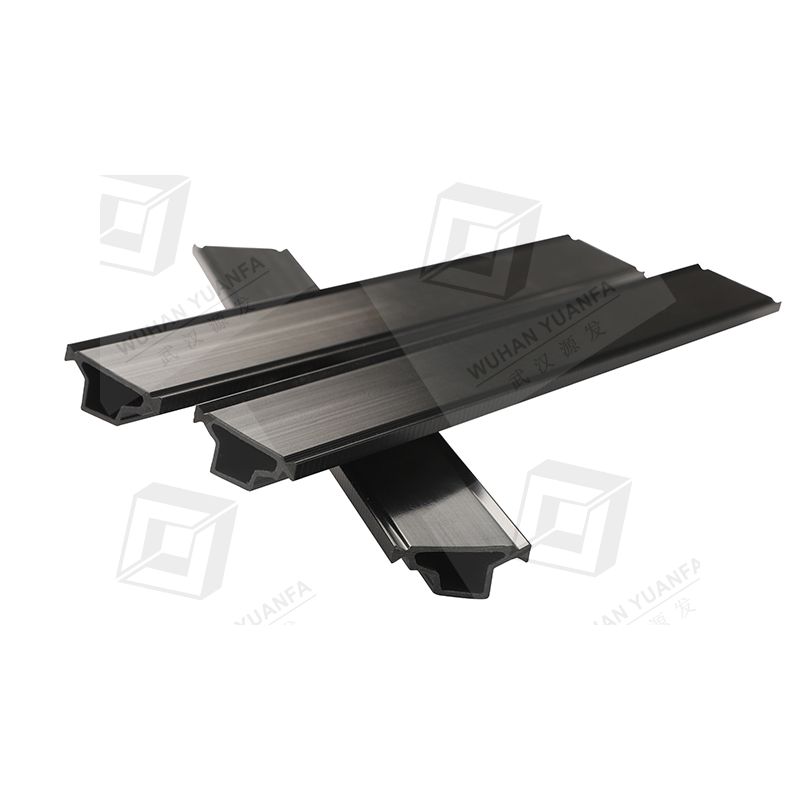
Water absorption directly translates to significant volumetric expansion. The polymer matrix swells rapidly as water molecules occupy interstitial spaces. They push long polymer chains apart slightly. You will see thermal break profiles physically grow in overall size. This swelling mechanism requires precise engineering calculations from your procurement team.
Predicting dimensional tolerance changes remains critical for your assembly line. Industry standards dictate specific variance curves for proper production planning. We often look at 25% glass-fiber reinforced PA66 for structural applications. This specific reinforcement provides essential stability for heavy commercial windows.
Here is a simplified predictive chart detailing expected dimensional growth across different moisture stages:
Moisture Content (%) | Dimensional Growth (%) | Physical Material State |
|---|---|---|
0.0% (DAM) | 0.00% | Highly Brittle / Rigid |
1.0% | 0.30% - 0.50% | Transitioning |
2.5% (Equilibrium) | 0.80% - 1.20% | Tough / Dimensionally Stable |
8.0% (Saturation) | Up to 2.50% | Overly Softened / Weakened |
You must realize expansion is rarely uniform across the profile. Wall thickness dictates the exact dimensional shift you will observe. Profile geometry also plays a massive role here. Thicker sections absorb water much slower than thin walls. However, they expand more in total volume eventually. Thin walls reach moisture saturation much faster.
Equilibrium timelines vary heavily based on your preferred conditioning approach. We generally categorize these approaches into two main methods:
Natural Conditioning: You leave profiles in an ambient warehouse environment. They absorb ambient humidity slowly over time. This process easily takes several months to finish. It remains highly unpredictable for manufacturing schedules.
Forced Conditioning: You immerse profiles in temperature-controlled water baths. Alternatively, you place them inside high-humidity climate chambers. This accelerated method forces perfect equilibrium in just a few days.
Relying on natural warehouse humidity guarantees inconsistent component dimensions. You need to mandate forced conditioning strictly from your suppliers.
Aluminum window assembly puts immense mechanical stress on internal components. We commonly call this the crimping dilemma. You must roll and crimp heavy aluminum extrusions securely. They clamp tightly around the insulating thermal strut. A thermal break must withstand this intense pressure without shattering.
Troubleshooting impact cracking happens daily on many production floors. Profiles often arrive "too dry" from a careless manufacturer. They remain structurally rigid but dimensionally brittle. They will inevitably shatter under heavy assembly machine pressure. The sharp knurling wheels simply crush the fragile polyamide material. You lose the entire extrusion assembly when this disastrous failure occurs.
We can map this out using a straightforward trade-off matrix. You must find the perfect moisture balance for your operations:
Too much moisture: The profile absorbs excessive water during conditioning. Its physical dimensions exceed acceptable aluminum cavity tolerances. You cannot slide it into the slot smoothly. Furthermore, its structural shear strength drops far below architectural requirements.
Too little moisture: The profile remains in a hazardous dry state. It slides perfectly into the aluminum cavity without friction. However, it cracks instantly during the harsh knurling process. It lacks the necessary plasticity to survive the rolling wheels.
Best Practices: Always store your conditioned profiles inside a climate-controlled area. Monitor your ambient factory humidity daily before starting the assembly line.
Common Mistakes: Do not leave conditioned profiles exposed to dry winter air. They will rapidly lose moisture and shrink out of spec. Never force dry profiles through the crimping machine hoping they survive.
You need a rigorous decision-stage evaluation framework for supplier audits. Knowing exactly what to look for when auditing a manufacturer helps immensely. Standard technical specifications often hide poor environmental manufacturing controls. You must dig deeper into their actual factory floor processes.
Compare how suppliers force moisture into the raw polymer extrusions. Many manufacturers use simple hot water immersion baths. Others utilize advanced high-humidity climate chambers. Hot water acts fast but sometimes damages the delicate polymer surface. Climate chambers provide a slower, much more controlled vapor penetration process.
Assess the risks of uneven conditioning during your facility audit. Poorly managed water baths create surface moisture while leaving the core dry. The profile feels right but cracks internally during the crimping phase. You want uniform moisture distribution throughout the entire profile cross-section.
Verify your supplier testing protocols thoroughly before signing long-term contracts. They should routinely perform moisture analyzer tests on every single batch. Ask to see their pre-conditioning and post-conditioning dimensional CMM reports. They must utilize Coordinate Measuring Machines for accuracy. They must prove they measure the dimensional shift accurately. If they lack these critical inspection reports, they likely guess entirely.
Conditioning becomes completely useless if lost during overseas shipping transit. Moisture easily evaporates out of the nylon in dry shipping containers. Evaluate the critical necessity of moisture-barrier packaging immediately. Excellent suppliers must use sealed aluminum foil bags. These specialized bags maintain optimal equilibrium during long shipping routes. They also protect the material during extended warehouse storage periods. Do not accept products loosely wrapped in standard perforated plastic.
Implementation realities often reveal the hidden costs of poor procurement strategies. Purchasing unconditioned thermal breaks creates massive downstream structural liabilities. You must understand the financial impact of ignoring these crucial steps.
High assembly scrap rates hurt your factory bottom line directly. Costly line stoppages occur constantly when profiles do not slide easily. Workers struggle to assemble mismatched parts daily. They end up discarding expensive aluminum components entirely. The plastic insert swelled completely out of acceptable tolerance. You pay heavily for both wasted material and lost labor.
Long-term structural compliance also becomes a major commercial risk factor. Poorly conditioned components face post-installation shrinkage or dangerous field expansion. Imagine a large window system installed in a luxury high-rise building. The unconditioned nylon finally reaches equilibrium in the actual field. It shrinks significantly due to very dry ambient air exposure. This movement causes severe thermal bridging failures inside the frame. It permanently compromises the window air and water tightness ratings. You eventually face devastating warranty claims from unhappy building owners.
Moisture conditioning is definitely not an optional post-processing step. It remains a strictly critical engineering requirement for high-quality window production. It fundamentally dictates both the dimensional accuracy and structural integrity. Your shortlisting logic should always prioritize operational transparency.
Select suppliers who willingly provide accurate moisture equilibrium curves. Look for strict dimensional tolerances maintained carefully post-conditioning. Demand highly verifiable transit packaging protocols for every bulk shipment.
Take clear action immediately before placing your next large order. Request a fully conditioned sample directly from your prospective supplier. Ask for a complete copy of their internal QA documentation. Run internal shear and assembly tests using these specific samples. You will quickly see the tangible benefits.
A: Natural absorption easily takes several months to complete. It depends heavily on the profile wall thickness. Your local climate conditions also play a massive role. Dry winter air drastically slows the entire process down. This extended timeline creates massive supply chain bottlenecks. This is exactly why accelerated factory conditioning remains strictly mandatory. You need it for reliable, predictable production schedules.
A: Yes, it significantly impacts the overall absorption rate. A 25% glass-fiber reinforced polyamide absorbs much less total moisture. It exhibits much greater dimensional stability compared to standard unreinforced nylon. The rigid glass fibers displace the hygroscopic polymer. This reduces the total available volume for water absorption. The reinforcement restricts volumetric swelling during the equilibrium phase.
A: Yes, profiles experience varying seasonal temperatures inside enclosed aluminum systems. However, once managed correctly at assembly, long-term stability remains secure. The completely enclosed aluminum frame creates a sealed microclimate. This severely limits rapid moisture loss over the years. It prevents unexpected shrinkage or dangerous brittleness. Proper initial conditioning ensures the material survives these minor seasonal fluctuations safely.


