

close
Choose Your Site
Global
Social Media

Author: Site Editor Publish Time: 2026-08-25 Origin: Site
Modern fenestration faces a constant core tension. Architects demand maximum thermal insulation. Engineers must maintain the structural integrity of aluminum window and door assemblies. The polyamide thermal break serves as the critical load-bearing insulator bridging this exact gap. Pure polyamide lacks the necessary rigidity to handle heavy wind loads. It also struggles against rapid thermal expansion. Adding glass fiber solves this structural deficit entirely. However, the exact percentage dictates the success or failure of the extruded profile. This article provides fenestration engineers and procurement managers an evidence-based framework. You will learn how to evaluate glass fiber ratios properly. We explore structural trade-offs impacting heavy-duty window assemblies. Finally, you will discover how to source a reliable thermal break confidently.
The Standard Ratio: 25% glass fiber reinforcement (PA66 GF25) remains the optimal baseline for balancing tensile strength and thermal resistance.
Expansion Alignment: Precise glass fiber content ensures the thermal break's Coefficient of Linear Thermal Expansion (CLTE) exactly matches that of aluminum, preventing shear stress.
Diminishing Returns: Exceeding 25-30% glass fiber content increases brittleness and thermal conductivity, negatively impacting the U-value of the window frame.
Manufacturing Quality Matters: The physical percentage of glass fiber is irrelevant if poor extrusion leads to longitudinal fiber alignment (which compromises transverse strength).
Pure PA66 offers magnificent thermal resistance. It stops heat transfer efficiently across metal frames. However, pure PA66 has a major baseline problem. It lacks sufficient tensile and shear strength for load-bearing fenestration applications. Modern commercial windows face immense physical stresses daily.
They endure three primary forces in the real world:
Severe wind loads pushing aggressively against the exterior glass.
The massive dead weight of heavy triple-glazed sealed units.
Structural settling forces shifting from the main building envelope.
Pure polyamide simply bends and deforms under these intense forces. We must examine the Coefficient of Linear Thermal Expansion (CLTE). Aluminum expands and contracts rapidly as outdoor temperature changes. Direct sun exposure heats the exterior metal quickly. Without glass fibers, a pure polyamide matrix expands at a drastically different rate compared to aluminum.
This severe mismatch creates intense internal shear stress. It leads directly to structural warping. It destroys the shear connection across the entire composite profile. Ultimately, the window frame can fail entirely under pressure. Embedding short glass fibers into the polyamide matrix provides the perfect reinforcement solution. These microscopic fibers stabilize the soft base material. They physically lock the expansion rate of the polymer. Because of this reinforcement, the profile perfectly matches the thermal movement of aluminum. You avoid sheer failure completely.
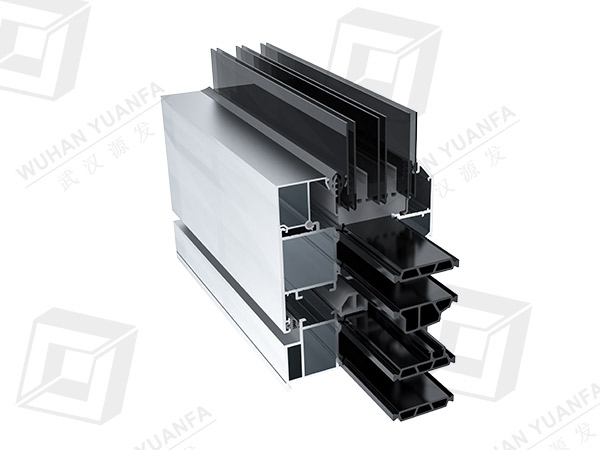
Engineers often ask how much glass fiber to use. Let us analyze the primary ratios utilized across the fenestration industry.
Low glass fiber content falls strictly below 15 percent. The outcome is severely insufficient profile rigidity. High summer surface temperatures will soften the profile dangerously. You face a high risk of deformation under typical coastal wind loads. The strip cannot maintain its precise geometric shape.
The global fenestration industry identifies 25 percent as the absolute sweet spot. We call this specific blend PA66 GF25. The outcome guarantees optimal structural stability for the window. The tensile strength easily reaches the mandatory required threshold. Laboratory testing typically shows values exceeding 80 MPa. The structural benefit is incredibly clear. The profile perfectly mirrors aluminum’s natural thermal expansion behavior. It also retains enough flexibility for the rigorous knurling and rolling assembly process.
High glass fiber content exceeds 30 percent. The outcome causes severe over-stiffening of the extruded profile. You face dramatically increased brittleness. This heightened rigidity leads directly to cracking during the insertion and crimping phases. Micro-fissures develop silently inside the polymer structure. They eventually compromise the long-term durability of the frame.
Glass Fiber Content | Structural Rigidity | Assembly Flexibility | Primary Risk Factor |
|---|---|---|---|
Low (<15%) | Insufficient | Too High | Deformation under wind loads or high heat. |
Optimal (25%) | Excellent (>80 MPa) | Perfectly Balanced | Minimal; represents the industry standard. |
High (>30%) | Excessively Stiff | Very Low | Micro-cracking during the aluminum crimping process. |
You cannot alter chemistry without facing physical consequences. Let us discuss the strict physics of thermal bridging. Glass fibers conduct heat faster than pure polyamide. We must acknowledge this engineering reality.
This dynamic carries direct U-value implications for window designers. As glass fiber content increases, the thermal conductivity rises proportionally. We measure this thermal conductivity as the lambda value. A higher lambda value reduces the overall window insulation efficiency. Buyers must use a strict decision lens here. You must balance required structural load capacities against local building energy codes. Heavy commercial units need immense physical strength. Residential passive houses prioritize maximum thermal insulation.
Top manufacturers developed innovative structural workarounds. They manage this trade-off via profile geometry instead. You do not need to alter the proven 25 percent chemical mix. Instead, engineers design complex hollow chambers. They create intricate multi-cavity designs inside the strip itself.
These intricate shapes offer three major advantages:
They trap static air efficiently inside the hollow chambers.
They disrupt the direct thermal bridge mechanically.
They maintain the immense transverse shear strength of PA66 GF25.
You retain the structural integrity of the commercial frame. You also achieve exceptional U-values required for modern green building certifications.
Seeing "25 percent" on a technical specification sheet means very little. Serious implementation risks lurk deep in the manufacturing phase. Extrusion process quality dictates your real-world success. Even a perfect raw material blend will fail miserably. Sub-standard extrusion ruins the physical properties entirely.
We must thoroughly examine internal fiber orientation. Material scientists call this specific phenomenon anisotropy. During extrusion, short glass fibers must orient randomly. They must point in multiple directions within the plastic strip.
Watch out for a major manufacturing red flag. Poor extrusion tooling causes fibers to align exclusively lengthwise. This longitudinal alignment is highly dangerous for fenestration. It leaves the strip incredibly vulnerable to transverse sheer forces. The profile will split lengthwise during the mechanical rolling process.
Beware of the dangerous recycled material trap. Low-cost suppliers often use high ratios of undocumented regrind. They mix cheap recycled polyamide into fresh polymer batches. This severely compromises the critical fiber binding process. Recycled plastics create invisible structural weak points. You cannot trust their tensile strength over decades of extreme weather exposure. Always demand pure, virgin PA66 materials for your structural assemblies.
Procurement teams need a highly reliable sourcing framework. You must evaluate potential suppliers rigorously before purchasing. Do not accept simple marketing claims at face value.
Start by demanding the mandatory required documentation. Ask for independent third-party testing reports. Look specifically for EN 14024 or AAMA standard compliance. These specific reports must verify transverse tensile strength. They must show strength data before and after extreme thermal aging.
Next, insist on microscopic validation evidence. Elite suppliers utilize advanced cross-sectional microscopy daily. They use it to prove proper glass fiber dispersion. Microscopy also verifies the crucial multi-directional fiber orientation. You can literally see the internal structure clearly.
Evaluate their manufacturing tolerance and dimensional accuracy carefully. Ensure the supplier maintains strict geometric tolerances across every batch. Standard material strength proves absolutely useless if the profile fails to fit. It must lock seamlessly into the extruded aluminum cavity. Poor tolerances cause loose mechanical fits. Loose fits destroy the shear strength of the entire window.
Finally, move forward to sample testing next steps. We strongly advise procurement teams to request physical samples. Conduct rigorous in-house shear testing on your own equipment. Validate the crimping process on your own factory floor. This proactive testing prevents massive assembly failures later.
Modifying glass fiber percentages is never a shortcut to superior performance. Adherence to the optimized 25 percent standard guarantees long-term structural durability. Flawless extrusion executes this chemical standard perfectly.
Consider these action-oriented next steps for your operations:
Audit your current supply chain for valid EN 14024 test reports.
Inspect cross-sections of your profiles under a microscope for fiber alignment.
Prioritize multi-cavity geometric designs over high-fiber chemical blends to improve frame U-values.
Eliminate suppliers utilizing high volumes of undocumented regrind plastics.
Do not compromise your next window system design. Request a technical consultation today. Access detailed technical data sheets from a reputable manufacturer. Order a physical sample of high-grade PA66 GF25 strips. Protect your fenestration assemblies through rigorous material science.
A: We generally advise against it. While tensile strength initially increases, the profile becomes overly brittle. This heightened brittleness causes internal cracking during the knurling and rolling assembly processes. Standard thermal breaks cannot survive this concentrated stress. Instead of altering the chemical mix to 35 percent, we prefer altering the geometry. Upgrading to wider, multi-cavity designs provides the necessary structural support without risking material failure.
A: Glass conducts heat more efficiently than pure polyamide polymer. Consequently, as you increase the glass fiber content, the thermal conductivity slightly increases. A higher lambda value reduces the insulation capacity of the window frame. This thermal penalty is exactly why the industry standardized the 25 percent ratio. It represents the perfect engineering compromise between mechanical rigidity and optimal thermal resistance.
A: You should request standardized material certifications directly from the manufacturer. Reliable suppliers gladly provide these precise documents. If you need independent verification, you can commission thermogravimetric analysis (TGA) testing. A TGA test burns away the polyamide matrix entirely in a laboratory setting. It precisely measures the remaining glass fiber weight. This accurately confirms the true percentage embedded in the profile.


