

close
Choose Your Site
Global
Social Media

Author: Site Editor Publish Time: 2026-07-29 Origin: Site
Metal fenestration systems offer unmatched durability and sleek architectural sightlines for modern buildings. However, their high thermal conductivity creates a significant building envelope vulnerability known as thermal bridging. For architects, builders, and facility managers, cold interior window and door frames represent much more than a simple occupant comfort issue. They act as a direct catalyst for localized condensation, severe mold liability, and inevitable failure to meet stringent regional energy codes.
Integrating a high-quality thermal break serves as the fundamental structural prerequisite for isolating interior frame surface temperatures from harsh exterior climate extremes. In the following sections, you will discover the underlying physics of energy transfer through metal envelopes. We will explore how modern extrusion technologies ensure long-term structural integrity while satisfying rigorous energy compliance metrics.
Thermal breaks mechanically separate exterior and interior metal profiles, stopping the direct conductive path of heat or cold.
Elevating the interior surface temperature above the room's dew point is the primary defense against localized condensation and moisture damage.
Modern solutions, particularly the polyamide thermal break, offer the exact coefficient of expansion as aluminum, solving historical structural warping issues.
Evaluating thermal break efficacy requires analyzing verified U-factors and Condensation Resistance Factors (CRF) aligned with specific building envelope standards (e.g., Passive House).
Aluminum and steel possess incredibly high thermal conductivity. They transfer environmental temperatures rapidly across their mass. Without proper structural intervention, an unbroken metal frame acts directly as an energy conduit. It radiates freezing winter air or scorching summer heat straight onto the interior surface of a building. We refer to this structural vulnerability as thermal bridging. It compromises the entire thermal envelope, forcing mechanical heating and cooling systems to run continuously.
The true danger of thermal bridging manifests through the dew point dilemma. Warm, humid indoor air naturally holds suspended water vapor. When this conditioned air meets a cold, thermally bridged metal frame, the air temperature drops rapidly at the boundary layer. Cold air loses its capacity to hold moisture. This exact condition forces water vapor to transition into liquid form, resulting in immediate condensation. You will see water beads forming along the aluminum mullions and sashes. This localized moisture accumulation occurs even in rooms displaying normal relative humidity levels.
Ignoring these thermal bridges triggers cascading risks across commercial and residential projects. First, you face severe HVAC inefficiency. Systems work constantly to overcome the perimeter energy loss. Second, chronic condensation causes accelerated degradation of adjacent interior finishes. Drywall softens, paint peels, and expensive wood sills rot. Finally, building owners face critical compliance failures during commercial audits. Inspectors routinely flag dripping window assemblies. These persistent moisture issues inevitably invite mold growth, exposing developers to significant legal and financial liability.
How do we stop this continuous energy hemorrhage? The solution relies on precise interruption logic. Manufacturers physically split the metal extrusion into separate interior and exterior profiles. They insert a low-thermal-conductivity material into this resulting gap. This physical barrier severs the energy transfer path completely. It effectively traps the warm indoor temperature on the interior frame side. The exterior frame endures the harsh elements outside, but the extreme temperatures cannot cross the insulating gap.
Fenestration technology has undergone significant material evolution over the past few decades. Historically, manufacturers relied heavily on legacy "pour-and-debridge" methods. Factory workers would pour liquid polyurethane into a dedicated metal channel. Once the chemical cured, they mechanically cut away the metal bottom to sever the conductive path. While this method worked, it presented long-term shrinkage and shear strength challenges. Modern engineering has largely abandoned this process in favor of sophisticated extruded structural struts.
Today, the polyamide thermal break stands universally as the current industry standard. Glass-reinforced polyamide provides massive architectural advantages over older polyurethane systems. It performs a vital dual function within the assembly. First, it offers exceptionally high thermal resistance to block heat flow. Second, it delivers an immense structural load-bearing capacity. The glass fibers embedded in the plastic mimic the shear strength of the surrounding metal. You do not sacrifice structural integrity or wind-load resistance to achieve superior energy efficiency.
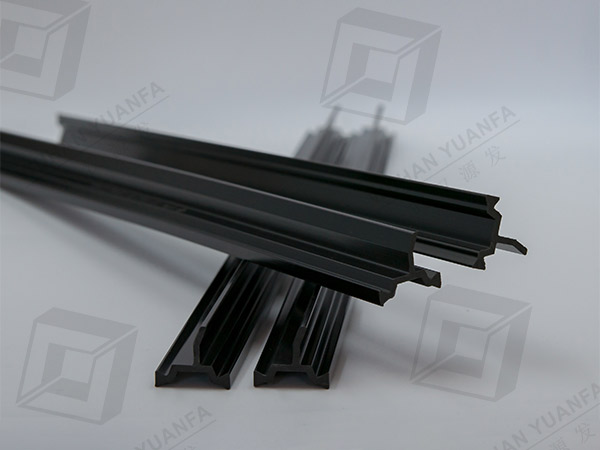
Navigating manufacturer testing data requires careful scrutiny and technical knowledge. You must understand how to interpret U-factor reductions accurately. Deceptive marketing claims often blur the lines between performance metrics. Many suppliers highlight Center-of-Glass (COG) U-factors while obscuring the overall frame U-factor. High-performance insulated glass units usually test exceptionally well. However, the aluminum framing often represents the weakest thermal link in the assembly. You must demand the overall assembly U-factor to gauge true fenestration performance.
To accurately assess interior surface temperature stability, engineers look at the Condensation Resistance Factor (CRF). We frame the CRF as the ultimate metric for measuring how well an extrusion resists moisture formation. Higher CRF numbers indicate superior performance and warmer interior surfaces. Different climate zones dictate specific CRF thresholds. A commercial building in a mild coastal zone requires a vastly different CRF than a high-altitude ski resort. Specifying the wrong rating guarantees winter moisture problems.
Modern energy codes make strict demands on building envelopes worldwide. Advanced envelope standards treat internal insulating struts as absolute non-negotiables. Projects targeting Passive House certification or ASHRAE 90.1 compliance require meticulously engineered profiles. Heavy steel structures pose unique physical challenges compared to standard aluminum frames. Steel conducts heat slightly less than aluminum, but its massive profile weight requires highly specialized interruption strategies to pass modern compliance audits.
The chart below outlines expected metric improvements across varying fenestration technologies.
Frame Type | Assembly U-Factor Estimation | Condensation Resistance (CRF) | Code Compliance Readiness |
|---|---|---|---|
Standard Solid Aluminum | High (Poor insulation) | Low (Prone to sweating) | Fails modern energy codes |
Standard Pour-and-Debridge | Medium | Moderate | Meets basic baseline codes |
Polyamide Strut Assembly | Low (Excellent insulation) | High (Resists winter condensation) | Exceeds ASHRAE 90.1 |
Multi-Cavity Polyamide + Foam | Ultra-Low | Superior | Passive House capable |
Many structural engineers initially express skepticism about splitting a load-bearing metal frame. They worry extensively about thermal shear and differential expansion. Different materials naturally expand and contract at completely different rates under temperature fluctuations. If an internal strut expands significantly faster than the exterior aluminum, it causes severe structural fatigue. This uneven movement leads to warping profiles, compromised weather seals, and eventual glass failure over decades of sun exposure.
Modern materials science actively solves this engineering dilemma. Advanced polyamide internal struts share the exact coefficient of linear thermal expansion as aluminum framing. Both materials expand and contract together perfectly as one unified assembly. This synchronized microscopic movement eliminates internal shear stress. It prevents the long-term fatigue commonly associated with mixed-material construction.
Load-bearing considerations remain equally critical during the architectural design phase. Contemporary designs heavily favor oversized commercial doors and heavy triple-glazed windows. These massive units exert enormous dead loads on the framing system. Modern glass-fiber reinforced struts handle these immense weights easily. They maintain absolute rigidity under high dynamic wind loads and shifting building pressures. They hold the heavy glass securely without bowing.
However, planners must carefully navigate the principle of diminishing returns. You should evaluate project climates realistically before specifying ultra-complex extrusions.
Extreme Climates: Freezing environments demand ultra-wide multi-cavity interruptions to meet strict energy standards and prevent ice formation.
Temperate Climates: Specifying excessively wide, complex struts in mild regions offers limited performance benefits.
Design Balance: Over-engineering a frame in a moderate zone may complicate the extrusion profile without delivering a proportionate return on environmental comfort.
Choosing the optimal framing system requires a methodical, evidence-based approach. You must establish strict climate-to-spec alignment early in the planning phase. Frameworks exist for matching the exact width and material of the insulating strut to your specific geographical location. Analyze historical temperature extremes and average indoor humidity levels. Harsher environments dictate wider polyamide strips to ensure the interior aluminum surface stays safely above the dew point all winter.
Next, you must perform thorough vendor due diligence. Never assume all fenestration extrusions perform equally. Ask your suppliers direct, critical questions regarding their manufacturing tolerances.
Do they provide verified third-party NFRC testing data for the full window assembly?
Are the internal struts mechanically locked into the metal profile using specialized machinery?
Does the factory utilize deep knurling processes on the aluminum to prevent shear slippage?
Can they provide local case studies demonstrating long-term structural stability?
For window installers and regional dealers, this technology offers immense B2B value. You should frame these advanced extrusions not as a mandatory building code hurdle, but as a critical risk-mitigation tool. Superior framing drastically reduces post-installation callbacks. No professional installer wants to field angry calls from facility managers complaining about leaky or sweating windows. Supplying properly insulated thermal breaks protects your professional reputation and ensures client satisfaction.
Controlling interior frame surface temperature represents a precise, verifiable building science. It is no longer just an aesthetic architectural luxury. Warm, dry window perimeters define a healthy, durable building envelope.
Specifying systems featuring a properly engineered polyamide internal strut guarantees long-term energy performance and stops condensation.
These advanced framing solutions ensure permanent structural stability and strict code compliance across severe climate zones.
Urge decision-makers to always demand complete assembly test data from verified bodies like NFRC or AAMA.
Never rely on assumed performance metrics or center-of-glass ratings alone when evaluating total envelope integrity.
A: Yes, under extreme indoor conditions. While internal struts drastically elevate the frame's surface temperature, they cannot defy physics. If a room maintains exceptionally high relative humidity (e.g., indoor pools, unvented kitchens), the dew point rises significantly. Even a highly insulated frame might drop below this elevated dew point during severe winter storms. Proper ventilation must accompany good insulation.
A: A thermal bridge represents the problem. It is the highly conductive pathway (like solid aluminum) that allows heat or cold to bypass insulation. A thermal break represents the engineered solution. It is the low-conductivity material inserted into the frame to physically interrupt and stop that energy transfer.
A: No. While historical polyurethane methods sometimes faced shear issues, modern solutions do not. Today's polyamide struts are heavily reinforced with glass fibers. They offer incredible structural load-bearing capacity. They easily support the dead loads of heavy triple-glazed glass and withstand high dynamic wind pressures in commercial skyscrapers.
A: A window's total U-factor combines the performance of the glass and the frame. Even the best insulated glass performs poorly if surrounded by solid metal. By halting energy transfer through the extrusion, the internal strut prevents the frame from dragging down the overall assembly rating. It ensures the whole system performs efficiently.


