

close
Choose Your Site
Global
Social Media

Author: Site Editor Publish Time: 2026-08-10 Origin: Site
The performance of any fenestration system relies heavily on the mechanical bond between the aluminum extrusion and the insulating material. Engineers know you cannot ignore the exact geometry where these materials meet. Without precise machining, even premium insulating materials will fail to perform their core function.
Minor deviations in groove geometry compromise both structural integrity and thermal insulation. These tiny errors quickly lead to assembly line bottlenecks and costly field failures. Manufacturers often face sheared profiles, water leaks, or failed compliance testing simply due to poorly dimensioned aluminum receiving channels.
This article provides a technical evaluation framework for understanding how precision groove dimensions dictate overall thermal breaking success. We will explore the physics of the mechanical lock, crucial dimensional tolerances, and necessary material synergy. You will also learn how to audit supplier quality effectively to guarantee zero-defect composite profiles and simplify your procurement strategy.
Tolerance is paramount: Even micro-millimeter deviations in groove width can drastically reduce the composite profile's shear strength or cause material stress during assembly.
Geometry dictates stability: Proper knurling and groove depth are required to ensure the polyamide thermal break remains locked under wind loads and thermal cycling.
Die maintenance equals quality control: Consistent thermal breaking requires extrusion suppliers with rigorous die maintenance protocols to prevent groove dimension drift.
System evaluation: Evaluating a supplier must go beyond the insulating strip itself to include their capability in machining and quality-checking the receiving aluminum groove.
Manufacturers need zero-defect composite profiles to pass stringent building codes. Organizations like AAMA and NFRC demand exact compliance for fenestration performance. Producing a window or door frame involves merging two distinct materials into a single, unified load-bearing structure. If the connection fails, the entire window system fails to meet structural and energy standards.
Thermal bridging requires a highly specific mechanical lock. You must treat this assembly as a structural composite process rather than a simple insertion task. The aluminum groove must physically grip the insulating material to transfer loads effectively. Wind pressure, building sway, and dead loads distribute across the frame. The grip between the aluminum and the insulator dictates how well the frame handles these forces without shearing.
Improperly sized grooves create severe thermal bridging risks. When grooves lack precision, micro-gaps form between the aluminum wall and the insulating strip. These tiny voids allow moisture infiltration, which leads to condensation and internal corrosion. Furthermore, micro-gaps disrupt the continuous thermal barrier. Cold air bypasses the insulation layer, ruining the frame's overall energy efficiency and lowering its U-value.
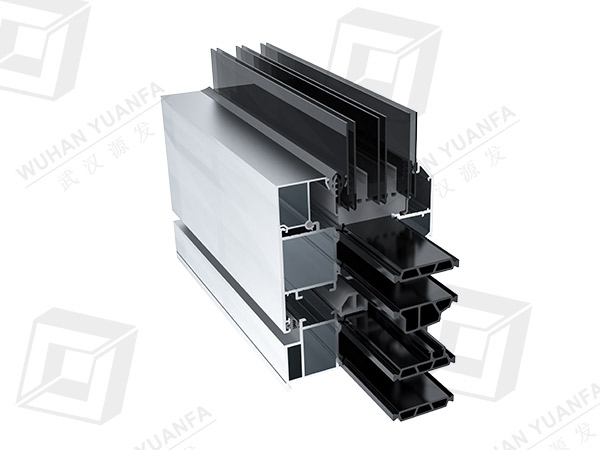
Understanding how specific geometric parameters impact assembly and field performance is critical. Engineers must evaluate several key dimensions to ensure long-term stability.
The width of the receiving groove directly determines assembly success. If the groove is too wide, the strip will slip. This slippage results in low shear strength, making the window frame unsafe under high wind loads. Conversely, if the groove is too narrow, insertion friction increases drastically. Forcing a polyamide thermal break into a tight channel risks causing micro-fractures during the rolling and crimping process. These invisible fractures weaken the structure and often lead to complete failure months later.
Groove depth plays an equally vital role in structural integrity. Inadequate depth prevents the knurled aluminum teeth from fully biting into the thermal break. The aluminum relies on deep engagement to lock the materials together. Without enough depth, the frame suffers from longitudinal displacement over time. The insulating strip will slowly slide out of alignment, degrading both aesthetics and airtightness.
The angle and sharpness of the knurled teeth within the groove matter just as much as the overall dimensions. Sharp, correctly angled teeth penetrate the insulator surface to create a permanent mechanical bond. Different insulation methods require different geometries. Specific knurling angles optimize the grip on standard solid strips. However, polyurethane pour-and-debridge systems require alternative cavity shapes to handle liquid resins before they cure.
Groove Evaluation Dimensions Table
Dimension Parameter | Deviation Type | Primary Risk | Performance Outcome |
|---|---|---|---|
Groove Width | Too Wide | Slippage during crimping | Low shear strength, structural failure |
Groove Width | Too Narrow | High insertion friction | Micro-fractures in the insulator |
Groove Depth | Too Shallow | Poor tooth engagement | Longitudinal displacement |
Knurling Angle | Blunt or Incorrect Angle | Lack of material penetration | Weak mechanical lock, poor load transfer |
Fenestration systems face extreme temperature fluctuations throughout their lifespan. These temperature changes expose a major engineering challenge: handling disparate materials. Aluminum and polyamide expand and contract at completely different rates. Aluminum has a much higher coefficient of thermal expansion. When the sun heats a window frame, the metal grows faster than the insulating core.
Groove design must strictly account for these differing expansion coefficients. Engineers provide dimensional allowances to handle expansion without compromising the airtight and watertight seal. If the groove is too rigid or improperly shaped, the expanding aluminum will crush the insulator. If the groove is too loose, contraction during winter nights will create gaps.
Correctly dimensioned grooves prevent a phenomenon known as the "ratcheting" effect. Ratcheting occurs when daily thermal cycling gradually loosens the mechanical bond. The materials expand, slip slightly, and fail to return to their original locked position upon cooling. Over years of exposure, this effect destroys the composite action of the frame. Precision groove machining locks the materials under enough constant pressure to absorb dimensional changes. This synergy guarantees long-term structural integrity and preserves the continuous thermal barrier.
Poorly dimensioned grooves cause cascading problems on the factory floor and out in the field. Ignoring these geometric tolerances introduces severe implementation risks.
Assembly line bottlenecks: Inconsistent extrusion grooves lead to high scrap rates. Machine operators will experience frequent jams during the knurling and rolling phases. When the strip does not fit the groove smoothly, automated insertion equipment stops, killing production efficiency.
Testing failures: Quality control teams routinely pull samples from the line. Frames with poor groove geometry routinely fail mandatory shear testing. They also fail transverse tensile strength tests. Failing these tests forces production halts and triggers massive material waste.
Field liabilities: The most expensive risks occur after installation. Compromised composite action causes window and door frames to warp or bow under normal wind loads. Warped frames cannot close properly, resulting in severe water leaks and expensive warranty claims.
Manufacturing Defect Profile Chart
Defect Category | Root Cause in Groove Geometry | Impact on Production / Field |
|---|---|---|
Line Jamming | Inconsistent groove width | Machine downtime, high scrap rates |
Failed Shear Test | Shallow knurling depth | Batch rejection, mandatory rework |
Frame Bowing | Loss of mechanical lock (ratcheting) | Warranty claims, building code violation |
Water Infiltration | Micro-gaps due to loose fit | Mold growth, field liability lawsuits |
Selecting the right supplier determines your success. Evaluating a supplier must go beyond looking at the insulating strip itself. You must scrutinize their capability to machine and quality-check the receiving aluminum groove.
Use clear shortlisting logic and success criteria to audit potential suppliers. Do not rely solely on basic material data sheets. You need evidence of their ongoing precision machining capabilities.
Audit die wear management: Extrusion dies wear down over time. Ask suppliers detailed questions about their extrusion die life cycles. How often do they replace dies? More importantly, ask how they monitor groove dimension drift. A worn die produces a wider, looser groove, ruining your mechanical lock.
Verify in-house QA protocols: Look for suppliers utilizing advanced measurement technology. High-quality vendors use optical comparators and coordinate measuring machines (CMM) to inspect groove profiles continuously. They should also perform regular in-house shear testing to verify crimp quality on every production run.
Review their inspection frequency: A reliable thermal break supplier checks dimensional tolerances hourly, not just once per shift. Ask to see their standard statistical process control (SPC) charts.
Establish clear next steps: Never begin mass production without a firm agreement on tolerances. Recommend establishing acceptable dimensional tolerance ranges in the initial Service Level Agreement (SLA). Demand that they attach minimum shear strength requirements directly to the purchase order.
Common mistakes during procurement include focusing entirely on aluminum alloy grades while ignoring groove machining tolerances. Always request actual sample shear-test data from the prospective supplier before signing a contract. You need physical proof they can hold the required tolerances consistently.
Investing in high-quality insulating strips proves completely meaningless if the aluminum groove dimensions lack strict control. The mechanical lock dictates the survival of the entire fenestration system. Precision geometries ensure the aluminum securely grips the insulator through harsh thermal cycles and high wind loads.
Maintaining tight dimensional tolerances delivers a significant return on investment. You will eliminate assembly bottlenecks, prevent costly material scrap, and guarantee structural compliance. Reliable thermal performance only happens when every component fits perfectly.
Procurement teams and engineers must align their quality standards. Make it standard practice to request tolerance capability reports from all prospective suppliers. Demand physical shear-test data to verify their extrusion consistency, and integrate strict geometric requirements into your next supplier agreement.
A: The standard industry tolerance for a receiving groove is incredibly tight, typically ranging from +/- 0.05 mm to +/- 0.1 mm. Stricter tolerances ensure a reliable mechanical lock during the rolling and crimping process, preventing the strip from slipping under shear stress.
A: Polyamide strips require a defined channel with sharp knurled teeth to create a physical mechanical lock. Fill-and-debridge systems require a U-shaped pocket designed to hold liquid polyurethane resin, relying heavily on chemical adhesion and specific interlocking pocket shapes once the resin cures.
A: Yes. Improper groove dimensions prevent the insulating strip from seating correctly. This poor fit creates micro-gaps and thermal bypass routes. Cold air penetrates these voids, disrupting the continuous thermal barrier and significantly reducing the overall insulation efficiency and U-value of the window.
A: Cracking typically occurs when the aluminum grooves are undersized or extruded with poor geometry. Forcing the strip into a tight groove creates extreme insertion friction. Furthermore, over-crimping to compensate for poor fit introduces excessive compressive stress, leading to immediate or delayed material fracturing.


