

close
Choose Your Site
Global
Social Media

Author: Site Editor Publish Time: 2026-07-28 Origin: Site
High-performance fenestration relies heavily on interrupting heat transfer. Specifiers frequently face a difficult technical bottleneck during the design phase. They must choose the correct internal geometry for their framing components. While material selection remains critical, geometric profiles fundamentally dictate performance outcomes. The choice between hollow and solid designs determines your ultimate success. It balances U-value performance against structural integrity and manufacturing realities. Industry professionals often struggle to separate marketing hype from actual thermal physics. This guide strips away misleading claims to provide objective clarity. We evaluate hollow and solid shapes using applied thermal physics. We examine structural realities and current energy compliance requirements. You will learn how to specify the exact right solution for your next facade project.
Hollow profiles generally deliver superior insulation by utilizing trapped still air (or foam) to minimize conductive heat transfer.
Solid profiles offer high shear strength and structural predictability, making them suitable for standard commercial applications where extreme U-value reduction is not the primary driver.
Material matters: A hollow polyamide thermal break consistently outperforms standard solid polyurethane poured-and-debridged systems in high-end energy modeling.
The optimal choice depends on a strict evaluation of localized building codes, climate zones, and manufacturing capabilities.
Aluminum frames conduct heat rapidly. A solid aluminum window frame acts as an energy highway between the indoors and outdoors. A properly placed thermal break successfully interrupts this conductive pathway. It creates a highly resistive barrier bridging the interior and exterior extrusions. This barrier drastically slows down the rate of thermal exchange.
The principle of thermal conductivity dictates how different materials handle heat. Solid mass conducts heat far more efficiently than trapped gas. When you use a solid material, heat energy vibrates through the dense molecular structure. It travels steadily from the warmer side to the colder side. Reducing the physical mass of the insulator inherently reduces the available pathways for this energy transfer.
You must balance conduction and convection carefully. Internal cavities provide excellent insulation because they rely on trapped air. However, you must size these cavities precisely. If an internal chamber becomes too large, it allows internal micro-convection loops to form. Warm air rises inside the cavity while cold air sinks. This movement actively transfers heat across the gap. Correctly engineered internal web geometries trap the air entirely. They stop solid conduction without allowing convection loops to initiate.
Select cavity dimensions specifically tested to inhibit internal airflow.
Prioritize geometries separating the warm and cold faces using multiple thin walls.
Avoid overly wide, single-chamber designs in extreme temperature zones.
Solid profiles consist of a continuous block of insulating material. Manufacturers commonly produce them as solid I-struts or utilize poured-and-debridged polyurethane systems. These components form a dense, unbroken barrier between the aluminum frame halves. They represent a traditional approach to managing window frame energy loss.
These solid shapes offer measurable insulation improvements over unbroken aluminum. They successfully meet many baseline energy requirements. However, they quickly reach a distinct performance ceiling. The continuous mass of the material allows a baseline level of conductive heat transfer to persist. Energy will always find a path through a solid object, even if it moves slowly.
Despite thermal limitations, solid profiles provide several key advantages. They deliver maximum shear strength and excellent structural rigidity. The continuous mass resists twisting and bending forces effectively. Fabricators also benefit from simpler manufacturing and insertion processes. You can roll or pour these materials with less specialized equipment. This makes them highly cost-effective for moderate climate zones.
Solid designs struggle to meet ultra-low U-factor requirements. Passive House standards demand aggressive thermal management. You cannot easily achieve these targets using solid struts. Upgrading a solid profile usually requires making it excessively wide. This bulky approach forces undesirable changes to the overall window frame sightlines.
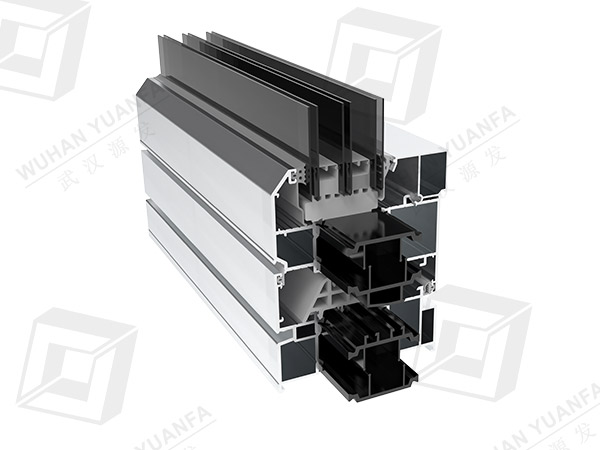
Hollow geometries define the cutting edge of fenestration engineering. These designs feature multi-chambered internal structures rather than solid blocks. High-performance systems predominantly utilize a hollow polyamide thermal break to achieve this complex geometry.
Separating the material into distinct webs creates dedicated air cavities. These internal chambers trap still air. Still air possesses a remarkably low thermal conductivity. By replacing dense mass with trapped air, you significantly lower the overall K-value of the assembly. The heat simply cannot travel efficiently across the empty space.
Advanced configurations push thermal boundaries even further. Engineers employ multi-cavity designs to create a labyrinth of air spaces. Many manufacturers insert optional insulating foam inside these hollow chambers. The foam physically blocks any potential micro-convection and enhances the overall thermal resistance. This strategy minimizes thermal bridging to an absolute minimum.
These advanced geometries handle demanding environments effortlessly. They remain essential for severe climate zones facing extreme winters or scorching summers. High-efficiency green building certifications practically mandate their use. Large-scale commercial facades prioritizing energy conservation rely on them to meet strict environmental targets.
Assuming all hollow shapes perform equally without reviewing actual NFRC data.
Failing to specify foam inserts for projects in arctic or alpine climates.
Ignoring the minimum wall thickness required for the hollow chambers.
You must evaluate both options using objective data. Relying on assumptions leads to poor project outcomes. We can compare these profiles across several distinct engineering criteria.
Thermal modeling provides the most transparent comparison method. When reviewing typical NFRC or ISO thermal simulation data, hollow geometries consistently win. If you compare hollow and solid variants of the exact same width, the hollow shape yields a lower U-factor. We summarize this dynamic in the comparison chart below.
Profile Type | Thermal Efficiency | Structural Shear Strength | Manufacturing Complexity | Ideal Climate Use |
|---|---|---|---|---|
Solid Poured/I-Strut | Moderate | Very High | Low to Moderate | Mild to Moderate |
Hollow Polyamide | Excellent | High (Requires precise extrusion) | High | Severe / Extreme |
Hollow with Foam Insert | Maximum | High | Very High | Passive House Standard |
Balancing insulation with structural load capacity requires engineering expertise. You must consider three key structural factors:
Wind Load Resistance: The profile must prevent the exterior aluminum from deflecting excessively under high winds.
Dead Load Support: The insulating struts carry the weight of heavy, triple-glazed glass units.
Shear Stress Management: Hollow webs handle shear stress differently than solid blocks. Engineers use specific triangular or multi-web shapes to maintain stiffness.
Manufacturing and assembly constraints also influence your choice. Rolling, crimping, and powder-coating hollow shapes demands precise machinery. A hollow polyamide thermal break requires tight tolerances during the crimping process. Solid profiles generally forgive minor extrusion variations and rougher handling.
Finally, consider energy code compliance and ROI. Stringent energy codes like ASHRAE 90.1 or California's Title 24 dictate aggressive U-factors. Hollow profiles ensure compliance easily. They generate a long-term energy payback for the building owner. This payback eventually offsets the slightly higher initial extrusion costs.
Practical implementation introduces complex variables. Thermal expansion mismatch acts as a primary specification risk. Aluminum and plastic insulating materials expand at different rates when heated. You must manage this differing expansion coefficient carefully. Hollow designs face particular stress under extreme temperature gradients. The exterior aluminum expands in the hot sun while the interior remains air-conditioned.
Condensation resistance serves as another critical performance metric. Cold climates expose poorly specified profiles to severe interior condensation. Solid shapes often fail to keep interior frame temperatures above the dew point. When interior humidity meets a cold aluminum frame, water droplets form. A multi-chambered hollow profile effectively mitigates this risk by keeping the interior face closer to room temperature.
Extrusion tolerances pose hidden dangers. Aggressive cost-cutting creates severe structural vulnerabilities. If manufacturers extrude hollow web walls too thin, the entire part risks failure. Under heavy wind loads, weakened chambers can crush or buckle. You must verify the physical wall thickness of any hollow geometry you specify.
Never rely on assumed R-values or marketing brochures. You need definitive proof of performance. You must demand physical test data from your suppliers. Ask for comprehensive finite element analysis (FEA) reports. These reports simulate how the profile behaves under both thermal and structural stress.
Different building projects demand different approaches. Standard commercial buildings in moderate climates often suit solid shapes. These locations do not demand extreme thermal performance. The cost-efficiency and straightforward strength of a solid barrier make perfect business sense here.
High-performance structures operate under stricter rules. Extreme climates demand maximum insulation to maintain occupant comfort. Energy codes in these regions will quickly disqualify solid alternatives. A hollow thermal breaks strategy becomes the mandatory baseline. You cannot achieve required U-factors without utilizing air cavities.
Before finalizing your specifications, take these exact next steps. First, request thermal simulation reports directly from your fabricators. Second, verify your local code compliance parameters with a mechanical engineer. Third, conduct a project-specific cost-benefit analysis based on actual localized climate data.
Hollow profiles objectively insulate better due to the applied physics of trapped air. They interrupt heat transfer more effectively than solid masses. However, solid profiles remain a highly viable, structurally sound choice for budget-conscious projects in moderate environments. Your final decision must balance U-value targets against structural demands.
Do not guess at these metrics. Consult your facade engineer early in the design phase. Run comprehensive thermal modeling on both profile types within your specific fenestration system. Base your final specification on proven simulation data rather than generic assumptions.
A: Yes, inserting foam improves insulation. It physically blocks internal micro-convection and adds thermal resistance. However, the U-value gains are marginal compared to the initial jump from solid to hollow. You must weigh this small performance boost against the added manufacturing complexity and cost.
A: Solid profiles generally possess higher baseline shear strength due to continuous mass. However, modern hollow geometries compensate effectively. Engineers design complex internal webs and utilize rigid polyamide materials to ensure hollow profiles meet all necessary wind load and structural requirements.
A: Energy codes dictate choices through prescriptive or performance paths. Prescriptive paths often mandate specific maximum U-factors for window assemblies. These strict limits frequently force designers to use hollow geometries, as solid shapes simply cannot meet the lowest U-factor requirements.
A: Yes. High-quality polyamide profiles withstand typical powder-coating baking temperatures up to 200°C (392°F). The material remains structurally stable during the baking process. However, you must verify the specific temperature ratings with your manufacturer before processing.


