

close
Choose Your Site
Global
Social Media

Author: Site Editor Publish Time: 2026-07-30 Origin: Site
Modern architectural design constantly balances two critical demands. Builders must meet stringent energy efficiency codes while mitigating relentless urban noise pollution. Standard continuous aluminum frames pose a massive hurdle here. They remain highly conductive for both heat and sound. Buyers often understand the insulation benefits of an upgrade but heavily question the acoustic return on investment. The truth lies in how specific materials handle vibration. A thermal break significantly reduces sound transmission through the frame via structural decoupling. However, you must evaluate this technology as part of a holistic acoustic window system. The frame works alongside specialized glazing rather than acting as a standalone cure-all. You will learn exactly how structural decoupling disrupts incoming sound waves. We will also explore what testing criteria dictate real-world acoustic success.
Decoupling is Key: By splitting the aluminum profile, thermal breaks disrupt the direct pathway for sound wave transmission (vibration).
Material Matters: A continuous polyamide thermal break offers superior dampening characteristics compared to standard metal, absorbing specific frequency vibrations.
System Synergy: Upgrading the frame is futile without appropriately specified acoustic glazing (and vice versa); a high-STC window requires both.
Measurable Impact: Thermally broken frames contribute to higher overall STC (Sound Transmission Class) and OITC (Outdoor-Indoor Transmission Class) ratings when specifying commercial or residential windows.
To understand modern acoustic window design, we must first address flanking transmission. This business problem occurs when noise completely bypasses highly rated acoustic glass. The sound simply travels directly through the solid aluminum frame instead. Solid aluminum features high density and extreme structural rigidity. These physical traits make the metal an exceptional conductor of mechanical vibration. They also promote intense noise resonance.
When a sound wave hits a continuous metal extrusion, the material vibrates instantly. It then seamlessly transfers kinetic energy directly into the interior building space. This physical phenomenon creates a severe compliance gap in modern commercial construction. Builders frequently install premium acoustic glass in high-noise zones. We see this often near busy airports, train stations, or urban highways. Yet, continuous aluminum frames can cause an otherwise high-spec window to fail basic building acoustic requirements.
The solid metal acts as a highly efficient acoustic bridge. It effectively neutralizes the expensive financial investment made in the glazing. Architects face failed sound tests because they ignored the framing material. Standard aluminum acts like a tuning fork. It picks up exterior vibrations and broadcasts them indoors. You cannot solve this problem by simply adding thicker glass. The structural pathway remains unbroken. We must change how the frame itself is engineered.
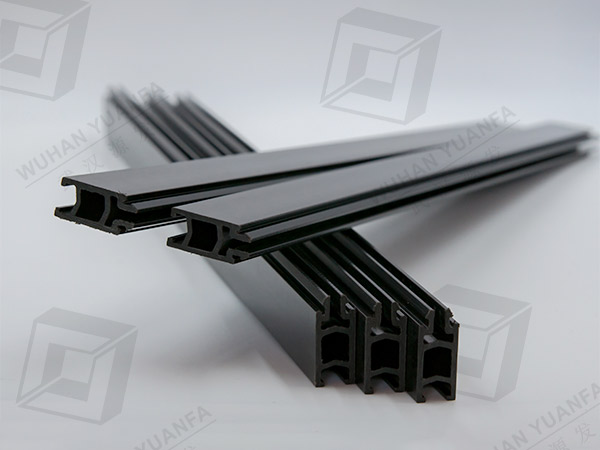
Structural decoupling forms the absolute foundation of modern acoustic framing. Creating a physical gap in the aluminum extrusion literally breaks the sound bridge. A continuous extrusion carries vibration effortlessly across its surface. Splitting it into two separate interior and exterior halves stops the wave entirely.
This mechanism relies heavily on proper material selection. A polyamide thermal break delivers exceptional acoustic dampening properties for architectural windows. Instead of transferring mechanical vibrations, this specific polymer absorbs them. Polyamide remains rigid enough for structural integrity but flexible enough to dissipate acoustic energy. The molecular structure of the polymer chain naturally resists resonance. It converts kinetic sound energy into minute amounts of heat.
Advanced profiles often feature intricate multi-cavity designs. Manufacturers extrude internal hollow chambers directly into the insulating strips. These geometric cavities trap air and sound waves simultaneously. They force the noise to bounce internally. The sound waves lose energy rapidly before reaching the inner frame. This compounding effect drastically improves overall noise reduction.
Engineers also utilize specialized foam inserts within these cavities. This adds another layer of acoustic absorption. The sound must pass through metal, polymer, trapped air, and foam. Each transition between different material densities forces the wave to lose power. This multi-layered approach guarantees a quieter interior environment.
We must maintain transparent assumptions when evaluating window acoustics. Glass makes up roughly 80 to 85 percent of a standard window’s total surface area. Therefore, upgrading the frame alone will never solve severe environmental noise issues. You must view the entire window assembly through the weakest link principle.
Acoustic performance relies on a direct correlation between the frame and the glass. A high-performance laminated glass unit will severely bottleneck if paired alongside a non-thermally broken frame. Flanking transmission guarantees this system failure. The noise simply routes around the heavy glass. Conversely, standard clear glass cannot block highway noise, even inside a premium decoupled frame. The massive surface area of thin glass allows sound to enter freely.
We offer a balanced claim for building professionals. Structural decoupling optimizes the frame's acoustic potential perfectly. It elevates the frame to match the performance level of high-grade glazing. By combining heavy laminated glass and high-quality thermal breaks, you maximize the total unit's STC rating.
You must treat the window as a unified acoustic system. The glass blocks the primary airborne sound waves. The decoupled frame stops the structural vibrations. They cannot operate independently in high-noise environments. Failing to upgrade both components wastes the project budget.
Specifying windows for high-noise environments requires analyzing several distinct factors. You must look beyond simple marketing claims to find actual performance data. First, consider the physical width and material quality of the insulating struts. Wider polyamide sections generally offer superior structural decoupling. The thicker the gap between the internal and external aluminum, the better the acoustic dampening.
Next, buyers must rigorously evaluate STC and OITC ratings. The Sound Transmission Class (STC) measures interior noise sources. This includes voices, office machinery, or standard television audio. The Outdoor-Indoor Transmission Class (OITC) measures low-frequency environmental noise. This covers heavy traffic, airplanes, and construction equipment. Always look for certified laboratory test results.
Finally, monitor air infiltration rates very closely. The building envelope follows a simple scientific rule. If air can get in, sound can get in. Airborne noise travels effortlessly through tiny gaps. Thermally broken systems often integrate advanced multi-point seals. These seals achieve exceptional airtightness. This tight seal directly correlates to reduced sound leakage.
Evaluation Criterion | Impact on Acoustic Performance | Buyer Action Item |
|---|---|---|
Polyamide Width | Wider profiles increase the decoupling distance, reducing vibration transfer. | Specify minimum strut widths based on target decibel reduction. |
STC / OITC Ratings | Quantifies exact sound reduction capabilities across various frequencies. | Request independent lab reports for the exact frame and glass combo. |
Air Infiltration | Poorly sealed windows allow airborne noise to bypass solid materials. | Check the tested air leakage rates of the specific window system. |
Glass Asymmetry | Using different glass pane thicknesses breaks varying sound wave frequencies. | Ensure the frame can physically support asymmetric double glazing. |
When reviewing specifications, watch out for the following critical elements:
Ensure the manufacturer tested the frame and glass together as a single unit.
Verify the test size matches your actual project dimensions, as size impacts resonance.
Check the acoustic performance of the specific operating style (casement vs. sliding).
Confirm the presence of multi-chambered polyamide strips rather than single solid pours.
Real-world installation realities often dictate final acoustic performance. Even the best thermally broken aluminum windows fail acoustically if improperly installed. Perimeter sealing must remain absolutely flawless. If contractors poorly execute the flashing around the rough opening gap, sound will bypass the high-tech frame.
Experience shows us we must insulate the surrounding wall cavity meticulously. Installers should use dedicated acoustic caulking rather than standard expanding foam. Standard foam provides excellent thermal insulation but offers very little mass to block sound. Proper shim spacing also prevents the frame from vibrating against the raw building structure.
When analyzing costs versus outcomes, look far beyond the initial purchase price. These upgraded frames deliver incredible long-term returns. They provide massive energy savings and improved tenant comfort. They also ensure strict acoustic compliance for urban developments. We avoid major building code violations and prevent costly post-construction retrofits. High tenant turnover often results directly from poor acoustic planning.
Follow this strict shortlisting logic when specifying your next window project:
Identify the exact STC or OITC target required by local building codes or site conditions.
Specify asymmetric double glazing or acoustic laminated glass to target specific noise frequencies.
Ensure the manufacturer utilizes a structurally robust polyamide strut. It must support the heavy acoustic glass while meeting dampening goals.
Verify the proposed installation method includes dedicated acoustic sealants for the perimeter gaps.
Following this checklist eliminates guesswork and guarantees measurable sound reduction.
To summarize, specialized aluminum frames are highly effective for acoustic dampening. They function perfectly as the structural backbone of a comprehensive acoustic glass system. They stop flanking noise and prevent vibrations from traveling indoors. Structural decoupling remains a non-negotiable requirement for modern urban construction projects.
Your next step involves verifying these capabilities directly. We encourage buyers to request lab-tested STC reports for specific window configurations. Ask your manufacturer to provide data matching your exact build requirements. Never rely on rough estimates when dealing with sound mitigation.
Take action today to protect your building from exterior noise pollution. Consult your project engineering team to develop a customized window schedule. They can help you specify the right materials and secure an accurate quote for your upcoming development.
A: No. They significantly reduce noise transmission through the metal frame by stopping direct vibrations. However, total acoustic performance relies heavily on the glass type and installation quality. A window is only as good as its weakest component. You must combine an upgraded frame with acoustic laminated glass for optimal results.
A: Both technologies achieve structural decoupling to stop noise. Polyamide thermal struts are typically preferred for heavy-duty acoustic applications. They offer superior structural integrity, easily holding the extra weight of heavy laminated glass panels. Simultaneously, the polyamide material provides excellent vibration dampening compared to standard poured polyurethane breaks.
A: No. These insulating strips are engineered directly into the aluminum extrusion during the original manufacturing process. They structurally bind the two metal halves together. You cannot retrofit them into standard solid frames. You must replace the window unit entirely to gain these acoustic and energy efficiency benefits.


