

close
Choose Your Site
Global
Social Media

Author: Site Editor Publish Time: 2025-09-03 Origin: Site
In the evolving landscape of building design, energy efficiency has become more than just a trend—it is a necessity. Architects, builders, and engineers are continually searching for innovative materials that not only reduce energy consumption but also enhance structural performance and comfort. Among these materials, Polyamide Insulation Strips have emerged as a versatile solution, offering exceptional thermal performance, durability, and design flexibility.
Traditionally used to improve thermal insulation in aluminum window and curtain wall systems, Polyamide Insulation Strips are now gaining attention for their creative applications beyond energy savings. In 2025, this material is proving to be a game-changer in urban construction, industrial applications, and even interior design, making it one of the most sought-after solutions in the building industry.
Polyamide Insulation Strips are high-performance materials primarily composed of polyamide (commonly PA66 or PA6) reinforced with fiberglass (GF). They are specifically engineered to act as thermal barriers in aluminum and metal profiles, preventing heat transfer between exterior and interior environments.
These strips are lightweight yet robust, offering a combination of mechanical strength and thermal resistance. Their ability to withstand high temperatures, resist deformation, and maintain dimensional stability makes them ideal for a wide range of construction and industrial applications.
Thermal Insulation – Reduces heat transfer in aluminum frames, improving energy efficiency.
High Temperature Resistance – Can withstand up to 220°C without deformation, suitable for powder coating and extrusion processes.
Durability and Longevity – Resistant to corrosion, UV rays, and wear, ensuring long-lasting performance.
Dimensional Stability – Maintains consistent performance across varying temperature ranges.
Design Flexibility – Can be customized in size, shape, and color to fit different profiles and architectural requirements.
Unlike conventional materials such as foam, rubber, or simple plastic spacers, Polyamide Insulation Strips offer superior thermal efficiency combined with structural strength. They not only reduce energy costs but also enhance the overall durability and lifespan of aluminum door and window systems, making them a preferred choice for high-end architectural projects.
The primary function of Polyamide Insulation Strips has long been in thermal break applications for aluminum windows, doors, and curtain walls. Aluminum, while durable and aesthetically appealing, is an excellent conductor of heat. Without thermal breaks, buildings experience significant heat loss in winter and heat gain in summer.
Polyamide Insulation Strips act as an effective barrier, separating interior and exterior aluminum sections, significantly reducing heat transfer. This results in:
Lower energy consumption for heating and cooling.
Improved indoor comfort levels.
Compliance with energy-efficient building standards such as LEED or BREEAM.
Studies have shown that aluminum systems equipped with Polyamide Insulation Strips can reduce energy losses by up to 50% compared to non-thermally broken frames. This translates into significant cost savings over the building's lifecycle, while simultaneously contributing to reduced carbon emissions—a critical consideration for sustainable construction practices.
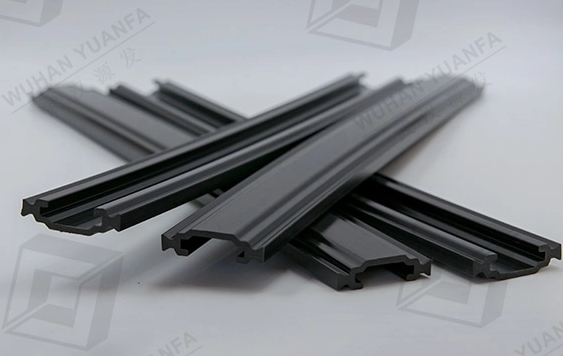
While energy savings remain the primary advantage of Polyamide Insulation Strips, their versatility has opened up a range of innovative applications that go far beyond traditional thermal insulation. In 2025, architects, engineers, and designers are discovering new ways to leverage these strips to enhance building performance, comfort, and aesthetics.
Urban areas are increasingly affected by noise pollution caused by traffic, construction activity, and dense living conditions. Excessive noise not only disrupts daily life but can also negatively impact productivity and well-being. When integrated into window and curtain wall systems, Polyamide Insulation Strips play a crucial role in enhancing sound insulation. Their structural density, combined with their thermal separation properties, effectively blocks and dampens airborne noise and vibrations.
By incorporating these strips into residential buildings, hotels, or office complexes in noisy city centers, designers can create quieter, more comfortable interior environments. The improved acoustic performance allows occupants to enjoy greater concentration, relaxation, and overall satisfaction, making polyamide strips an essential component for urban construction projects where noise control is a priority.
In industrial environments, machinery and heavy equipment generate vibrations that can affect both operational efficiency and structural integrity. Over time, these vibrations can lead to accelerated wear, misalignment, and even equipment failure. Polyamide Insulation Strips can be used as effective vibration isolators, absorbing and dissipating mechanical energy before it reaches critical aluminum profiles, machine frames, or structural connections.
This innovative application not only protects the equipment but also enhances worker safety and comfort by reducing vibration-related disturbances. Companies that incorporate polyamide strips in industrial installations often experience longer machinery lifespan, lower maintenance costs, and improved operational reliability.
Beyond functional benefits, Polyamide Insulation Strips offer architects and designers opportunities for creative expression. These strips can be manufactured in a variety of colors, textures, and shapes, allowing them to be seamlessly integrated into visible window frames or curtain wall elements. This flexibility enables designers to combine performance with aesthetic appeal, from minimalist, modern exteriors to intricate, decorative facades.
By leveraging polyamide strips as part of the overall design, buildings can achieve both high energy efficiency and a visually compelling architectural presence, making them ideal for luxury residential, commercial, and institutional projects.
The push toward smart, sensor-driven buildings in 2025 emphasizes materials that can support energy monitoring and automated climate control systems. Polyamide Insulation Strips can be strategically installed to optimize thermal zoning, ensuring that heating and cooling systems operate efficiently in different areas of a building. When combined with IoT-enabled systems, these strips help maintain consistent indoor temperatures, reduce energy consumption, and create responsive, comfortable environments for occupants.
Their integration into smart building designs highlights the adaptability of polyamide strips, demonstrating that they are not only effective thermal barriers but also key enablers of modern, intelligent, and sustainable construction practices.
Recent advances in polyamide technology have introduced materials with enhanced performance. High-strength PA66 reinforced with 25% fiberglass (PA66GF25) or new PA6-based blends offer improved thermal conductivity, mechanical strength, and UV resistance.
These material innovations expand the potential applications of Polyamide Insulation Strips, making them suitable for high-rise buildings, industrial complexes, and even outdoor architectural features exposed to extreme weather.
Sustainability is a central focus in 2025 building standards. Modern Polyamide Insulation Strips are increasingly produced using environmentally friendly processes, with recyclable and low-emission formulations. This ensures that buildings achieve high energy performance without compromising ecological responsibility.
Material Type – PA66GF25 for high-strength applications, PA6 blends for flexibility.
Thermal Performance – Select strips with thermal conductivity that meets local building codes.
Dimensions and Compatibility – Ensure correct thickness and width for specific aluminum profiles.
Environmental Conditions – UV exposure, humidity, and chemical resistance requirements.
Polyamide Insulation Strips require minimal maintenance. Regular inspections for wear, particularly in exposed exterior applications, ensure continued performance. Proper installation and adherence to manufacturer guidelines can guarantee a lifespan exceeding 20 years in most climates.
With the rise of IoT and sensor-enabled environments, Polyamide Insulation Strips can support dynamic thermal zoning and predictive climate control. Integration with building energy management systems ensures optimal performance while reducing operational costs.
Polyamide Insulation Strips have long been valued for their exceptional thermal insulation, but in 2025, their applications extend far beyond energy savings. From reducing urban noise and isolating industrial vibrations to enabling aesthetic customization and integration with smart building systems, these strips are becoming a vital component in modern construction.
To fully leverage the benefits of Polyamide Insulation Strips, selecting the right material, customizing designs, and exploring innovative applications are essential. Architects, engineers, and builders can enhance building performance, durability, and visual appeal while contributing to sustainable, energy-efficient construction practices.
For high-quality, reliable polyamide solutions, Wuhan Yuanfa New Material Co., Ltd. is a leading provider specializing in advanced polyamide insulation strips. Their expertise in research, manufacturing, and customization ensures that your building projects achieve optimal thermal performance, structural integrity, and innovative design possibilities.
Interested readers are encouraged to reach out directly to Wuhan Yuanfa’s professional team to discuss project-specific requirements and discover how their products can elevate your construction projects, whether residential, commercial, or industrial.


