

close
Choose Your Site
Global
Social Media

As the International Code Council (ICC) rigorously tightens energy standards, building envelope performance faces unprecedented scrutiny. Architects and engineers often encounter a persistent gap between a building’s designed R-value and its effective R-value in the real world. Highly conductive structural penetrations create thermal bridging. These structural bridges effectively undermine your most advanced insulation strategies.
To fix this problem, you must look beyond basic cavity insulation. You need a properly integrated thermal break. This engineered intervention is no longer optional. It serves as a mandatory requirement for modern commercial and high-performance structures. We must shift our focus from simple definitions to practical execution. Specifiers need to know how to evaluate, select, and integrate these critical systems to guarantee long-term envelope integrity.
Minor structural penetrations (e.g., balconies at 3% of surface area) can cause up to 30% of envelope heat loss; thermal breaks are the primary mitigation tool.
Simple area-weighted math cannot calculate complex thermal flows; thermodynamic modeling is required for accurate specification.
The industry is shifting from legacy pour-and-debridge methods to polyamide thermal break systems for superior load-bearing capacity and lower thermal conductivity.
Proper integration impacts compliance, LEED scoring, and eligibility for significant financial incentives like the Section 179D tax deduction.
You cannot understand thermal mitigation without first understanding the physics of failure. A thermal bridge acts as a highly conductive pathway bypassing your insulation layer. Materials like steel and aluminum excel at structural support. However, they also excel at transferring energy. These metal components pull expensive heating out of the building during winter. Conversely, they push unwanted heat inside during the summer.
Many professionals underestimate the disproportionate impact of minor structural elements. Real-world engineering data reveals alarming performance drops caused by seemingly small components. Consider these critical examples:
Steel Z-girts might occupy only 10% of a wall's exterior surface area. Yet, they can reduce the clear-field R-value of that wall by a staggering 50%.
Concrete balconies often represent merely 3% of the total building envelope. Despite this small footprint, they can account for up to 30% of the overall envelope heat loss.
Unbroken roof penetrations act as continuous energy drains, drastically lowering the roof assembly's effective thermal resistance.
The solution mechanism relies on strategic physical separation. We define a thermal break as a continuous, low-thermal-conductivity barrier inserted directly into the structural assembly. It aggressively disrupts the energy transfer path. This barrier performs a crucial dual role. First, it keeps conditioned heat inside the interior space. Second, it pushes the structural dew point entirely outside the wall cavity. By moving the dew point outward, you protect the interior frame from dangerous condensation cycles.
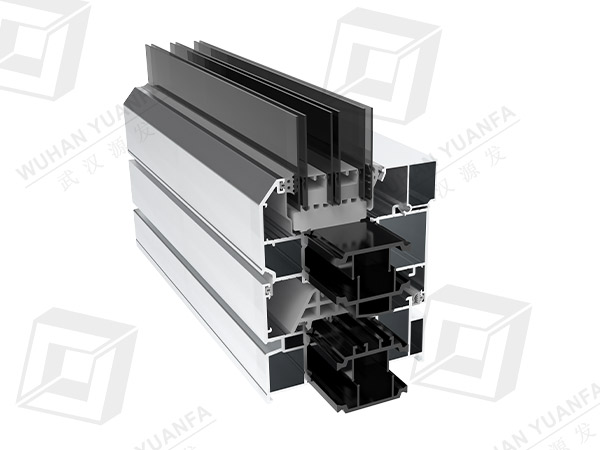
Architects and builders evaluate different manufacturing methods to meet strict energy codes. We typically compare the two dominant methods used in fenestration and structural framing today. You must understand their respective performance ceilings and structural limitations before specifying a system.
The legacy pour-and-debridge method served the industry for decades. The process relies on liquid polymer. Manufacturers pour this liquid polyurethane into a dedicated channel within the aluminum extrusion. Once the polymer cures and hardens, they mechanically remove the metal bridge from the bottom of the channel.
However, this older technique presents distinct limitations. It remains restricted by the physical pocket size of the extrusion. This limits the total insulation depth you can achieve. Furthermore, the cured polymer offers lower structural shear strength compared to modern alternatives. The assembly process is also highly labor-intensive. Today, pour-and-debridge systems work best for cost-sensitive, standard-performance residential applications.
The commercial sector now embraces the modern standard. Manufacturers prefer inserting a highly durable polyamide thermal break to achieve superior results. This process utilizes glass-fiber-reinforced polyamide strips. Heavy machinery mechanically stitches or rolls these strips tightly between the inner and outer metal extrusions.
This modern technology delivers exceptional advantages. It provides tremendous structural strength capable of handling immense commercial wind loads. It features ultra-low thermal conductivity. Additionally, it offers unmatched depth flexibility. Manufacturers can easily widen the polyamide strips to accommodate high-performance triple IGU glazing systems.
Feature | Legacy Pour and Debridge | Polyamide Thermal Break |
|---|---|---|
Manufacturing Process | Liquid polymer poured, cured, and metal cut away. | Reinforced strips mechanically stitched between extrusions. |
Structural Shear Strength | Moderate; limited by polymer adhesion and pocket size. | Exceptional; designed for high-load commercial facades. |
Design Flexibility | Rigid; restricted by the initial channel dimensions. | Highly flexible; easily widened for thicker glass units. |
Ideal Application | Standard residential and low-rise commercial projects. | High-performance commercial, curtain walls, and Net Zero designs. |
Proper evaluation requires rigorous scientific methods. We strongly warn against using standard area-weighted averaging to calculate envelope performance. Heat simply does not flow in parallel paths through complex metal assemblies. Energy takes the path of least resistance in unpredictable ways. Therefore, you must require 2D or 3D thermodynamic modeling. This software analysis proves the accurate k-value and validates the effective R-value for your specific assembly design.
Load-bearing capability represents another non-negotiable evaluation metric. You must ensure the specified break can handle precise project loads. It must do this without compromising the structural envelope. Engineers must calculate a triad of distinct forces when evaluating structural integrity:
Shear Forces: The material must resist the sliding forces generated by wind pressure and dead loads across the joint axis.
Tension Forces: The barrier must withstand pulling forces, especially critical in balcony connections or overhangs pulling away from the facade.
Torque (Rotational Bending): The joint must endure twisting forces applied by heavy external cladding or extreme weather conditions over time.
Fire rating and compliance standards round out the evaluation triad. Building codes demand strict fire safety in commercial structures. Your chosen materials must be non-combustible or rigorously tested to meet local building codes. We instruct all specifiers to verify compliance documentation early. Ensure the assembly passes standards like ASTM E119 or NFPA 285, especially in fire-rated high-rise assemblies.
Theoretical engineering often clashes against on-site realities. Connection complexities frequently derail high-performance designs. The industry handles some integrations easily. Steel-to-steel connections are relatively straightforward and widely practiced. However, steel-to-concrete joints present major industry pain points. Continuous foundation connections and embedded plates require highly specialized engineering to prevent energy leaks while maintaining structural integrity.
Alignment and installation tolerances dictate the final performance outcome. A premium barrier is only as good as its surrounding continuous insulation layer. Field crews often face difficult alignment challenges. Slight misalignments during installation can easily create micro-bridges. These microscopic metal-to-metal contacts completely defeat the expensive mitigation system. Site supervisors must enforce strict alignment tolerances to protect the investment.
Furthermore, climate dictates physical material thresholds. Thermodynamic modeling typically dictates a minimum thickness to effectively alter the heat flow path. In most commercial applications, this minimum threshold hovers around 1 inch. Specifying thinner materials risks catastrophic failure in extreme climates. You cannot cheat physics by trimming material depth to save upfront costs.
Advanced structural components require financial justification. We frame these integrations as strictly ROI-positive decisions. Building owners unlock significant financial and tax incentives by upgrading their envelope efficiency. For instance, achieving high energy targets impacts the Section 179D commercial buildings energy-efficiency tax deduction. This federal program can yield up to $5.00 per square foot in deductions. Additionally, eliminating thermal bridges heavily contributes to valuable points toward LEED certification.
The technology also aligns perfectly with modern corporate ESG goals. The AIA 2030 Commitment and Net Zero initiatives demand drastic reductions in operational carbon. You cannot achieve zero-emission building targets without addressing structural heat loss. Advanced barriers provide the foundational math required to hit these ambitious sustainability milestones.
Beyond energy savings, these systems offer critical liability mitigation. We must shift the conversation from mere energy savings to rigorous risk management. When interior metal surfaces drop below the room's dew point, condensation forms instantly. By keeping interior surface temperatures elevated, you prevent this condensation entirely. This proactive step eliminates costly mold remediation, prevents drywall water damage, and protects developers from associated legal liabilities.
A thermal break is never just a commodity add-on. It serves as a foundational requirement for modern structural integrity and strict energy compliance. As codes evolve, ignoring these structural energy drains will guarantee project failures. Specifiers and architects must proactively address these critical junctions during the schematic design phase.
To ensure project success, take the following action steps:
Move beyond baseline specifications and demand performance-based structural materials.
Engage directly with manufacturers early in the design phase to secure custom thermodynamic modeling.
Demand comprehensive constructability reviews prior to finalizing your envelope design to eliminate field errors.
Verify that all specified structural barriers carry independent fire-rating and load-bearing certifications.
A: No. We must dispel the myth that windows "create" condensation. Thermal breaks keep the interior frame surface above the dew point, significantly reducing condensation risks. However, you still need proper indoor humidity management. Maintaining indoor humidity between 15% and 40%, depending on exterior temperatures, remains required to prevent moisture buildup.
A: The difference largely comes down to industry terminology. "Thermal barrier" is often used in residential and consumer window markets to describe basic insulation upgrades. Conversely, "thermal break" is the standard, precise terminology used in structural engineering and commercial applications where load-bearing capacity matters.
A: While historically optional, rapidly updating ICC codes now heavily rely on them. Passive House standards and localized energy mandates essentially require these components today. Without them, it is nearly impossible to pass overall envelope performance testing in modern commercial structures.


