

close
Choose Your Site
Global
Social Media

Author: Site Editor Publish Time: 2026-06-02 Origin: Site
Steel and aluminum doors offer premium aesthetics and unbeatable security for modern homes and businesses. However, solid metal is a highly efficient conductor of heat. You might love the sleek look, but physics demands a compromise if you ignore thermal management.
Without proper insulation, exterior metal doors act as massive thermal bridges. They leak valuable HVAC energy outside. They create severe indoor drafts. They also cause structural water damage over time. You literally pay to heat the outdoors while shivering inside your own living room.
Enter the thermal break technology. This guide unpacks the engineering behind thermally broken doors. We show you how to evaluate manufacturing quality effectively. You will learn the strict criteria helping you determine when this structural upgrade is absolutely mandatory versus when you can safely skip it.
A thermal break is a physical, low-conductivity barrier integrated into a metal door frame to stop energy transfer between the exterior and interior.
Upgrading to insulated/double-pane glass is insufficient if the solid metal frame remains unbroken; the frame will still act as a heat sink.
The industry standard relies on a polyamide thermal break or a "pour and debridge" polyurethane method to achieve optimal energy efficiency and condensation resistance.
Thermally broken profiles are non-negotiable for exterior doors in extreme climates, areas with strict building codes, or Passive House builds.
To understand the solution, you must first understand the anatomy of a modern high-performance door. The core definition of this technology is straightforward. It is a continuous layer of low-thermal-conductivity material strategically placed between the interior and exterior halves of a metal door frame or window sash. This barrier physically splits the metal components apart.
Metals like aluminum transfer heat rapidly because their atomic structure allows free electrons to move kinetic energy efficiently. By inserting a non-metallic polymer into the frame extrusion, manufacturers break this kinetic chain.
The barrier tackles energy loss across two distinct thermodynamic fronts:
Conduction: It interrupts the physical metal-to-metal pathway. Heat cannot travel through the barrier easily. The interior frame stops absorbing the exterior temperature.
Convection: It prevents the interior frame surface from becoming freezing cold. A cold frame cools adjacent indoor air rapidly. This cold air drops to the floor, pulling warm ceiling air down across the cold frame. This creates a continuous, energy-draining draft cycle. The barrier stops this convective loop dead in its tracks.
By isolating the exterior and interior panels, the interior door handle and frame remain at room temperature. You prevent icy surfaces during freezing winter nights. You avoid scalding burn risks during peak summer sunlight. This transforms a basic architectural element into a premium, comfortable touchpoint. We integrate a thermal break specifically to ensure this optimal indoor experience.
Best Practice: Always request a cross-section drawing of the door profile from your manufacturer. This allows you to visually verify the width and placement of the barrier. A wider barrier generally yields better insulation values.
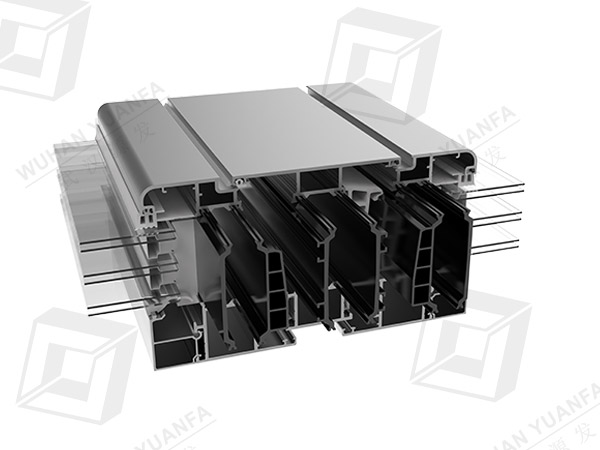
Many buyers fall victim to a common misconception. They believe specifying dual-pane or triple-pane insulated glass units (IGUs) solves the thermal issue entirely on a solid steel door. You put advanced, argon-filled glass on a standard metal frame and expect peak efficiency. You are wrong.
Architects and energy auditors frequently use FLIR infrared cameras during blower door tests. Look through an infrared lens in sub-zero climates, and the truth becomes obvious. The highly insulated glass appears warm and neutral. However, the non-thermally broken frames glow dark blue or deep purple.
They become the absolute coldest object in the room. They act as massive heat sinks pulling warmth out of your building. This single structural flaw can degrade a wall's overall insulation value by more than 50%. You lose the benefit of the expensive insulated glass because the surrounding frame undermines it.
This thermal bridging leads to immediate physical damage. The process follows a predictable, destructive sequence:
The highly conductive metal frame absorbs the freezing outdoor temperature.
The cold metal meets warm, humid indoor air.
The frame temperature rapidly drops below the indoor room's dew point.
Moisture from the indoor air instantly condenses on the cold metal surface.
Water droplets freeze into frost or drip downward continuously.
Pooling water ruins expensive hardwood floor finishes and rusts hardware.
Aggressive black mold grows along the frame and baseboards within a single winter season.
Common Mistake: Relying on dehumidifiers to stop frame condensation. While lowering indoor humidity helps, a solid metal frame in zero-degree weather will almost always reach the dew point. Fixing the frame is the only permanent solution.
The industry standard relies on two primary manufacturing methods. Both effectively halt energy transfer, but they differ significantly in structural application and aesthetic flexibility.
This premium method utilizes extruded glass-fiber-reinforced nylon strips. Manufacturers mechanically crimp these rigid struts between the interior and exterior aluminum or steel profiles. The glass-fiber reinforcement is a critical engineering detail. It ensures the nylon expands and contracts at the exact same rate as the surrounding metal. This prevents shear stress, warping, or cracking during extreme temperature swings.
Evaluation Criteria: This system offers superior structural integrity. It handles high wind loads effortlessly. It accommodates thicker, heavier triple-pane glass setups without failing or sagging over time.
Aesthetic Bonus: It allows for true "dual-finish" customization. You can choose a matte black exterior frame and a bright white interior frame. Manufacturers paint or anodize the two metal halves separately before the final crimping assembly. A polyamide thermal break delivers both uncompromised performance and maximum design flexibility.
The second mainstream method uses liquid polyurethane resin. Workers pour this resin into a U-shaped structural channel extruded directly into the frame. Once the resin cures and hardens into a dense polymer block, a machine mills away the bottom metal bridge. This milling process leaves only the rigid resin connecting the two halves.
Evaluation Criteria: This method is highly cost-effective for large-scale commercial applications. It offers excellent thermal resistance due to the dense polyurethane core. However, because the metal frame is extruded and painted as a single piece before the milling phase, it generally limits the door to a single continuous color finish inside and out.
Feature | Polyamide Strips | Pour & Debridge (P&D) |
|---|---|---|
Material | Glass-fiber-reinforced nylon | Liquid polyurethane resin |
Structural Strength | Exceptional (handles heavy triple pane) | High (ideal for standard commercial) |
Dual-Color Capability | Yes (painted before assembly) | No (typically single color only) |
Thermal Resistance | Excellent (customizable strut widths) | Excellent (dense continuous core) |
Primary Application | High-end residential & extreme climates | Commercial buildings & storefronts |
Not every door requires this advanced engineering. However, specific environmental and regulatory triggers make this upgrade absolutely mandatory. Use this framework to evaluate your project needs.
This technology proves essential for installations facing extreme winter freezes. If your project sits in the Northern US or Canada, you cannot risk solid metal frames. Vendors frequently market these specifically as "Cold Weather Doors." Similarly, homes in desert climates experiencing intense, sustained summer heat rely on these frames to block the scorching outdoor temperatures from overwhelming the air conditioning.
Building codes evolve rapidly. The International Code Council (ICC) updates energy requirements every three years. These updates continually push for lower operational carbon emissions and tighter building envelopes.
You need thermally broken profiles to meet these stringent operational carbon goals. Furthermore, achieving rigorous certifications like Passive House requires absolute airtightness and continuous insulation. A solid metal frame will instantly fail a Passive House thermal model.
Upgrading unlocks eligibility for various energy-efficiency tax incentives. Local utility companies often provide rebates for high-performance fenestration upgrades. These programs usually demand strict, verified U-factor ratings. A lower U-factor indicates superior insulation. Specifying this technology ensures you hit these metrics, allowing the incentives to offset the initial upgrade costs.
Many buyers successfully upgrade their door frames but ignore the bottom threshold. A thermally broken door is entirely useless without a thermally broken threshold (sill).
A solid aluminum sill acts like a radiator pulling heat out from beneath your feet. Buyers must verify the bottom threshold utilizes the exact same separation technology. You must pair this sill with multi-point locks and dual-gasket weatherstripping. The multi-point lock pulls the door slab tightly against the gaskets. This eliminates air infiltration and ensures a fully sealed, complete thermal envelope.
Objective evaluation means acknowledging when you can safely save money. You do not always need maximum thermal resistance. Certain spaces allow you to skip this upgrade without risking structural damage or massive energy bills.
Standard metal frames remain perfectly acceptable for interior spaces. You can confidently use non-broken frames for wine cellars enclosed within conditioned dining rooms. Office glass partitions and interior room dividers do not face massive temperature differentials. The risk of condensation or severe heat transfer drops to zero.
Do you live in a temperate, stable zone? Coastal areas experiencing minimal year-round fluctuation often do not require advanced insulation. If your local temperature rarely dips below freezing or rarely exceeds 85°F, standard frames offer a highly cost-effective solution. The minor energy savings in these climates would not justify the upgrade cost.
Think about detached garages, outdoor sheds, or rugged utility structures. HVAC energy retention is simply not a design requirement for these buildings. You do not heat or cool them continuously. Standard metal frames perform exceptionally well in these environments, delivering the required security and industrial aesthetic without unnecessary engineering costs.
The Final Verdict: Investing in a thermally broken door is not merely an "eco-friendly" upgrade. It serves as a critical structural safeguard against moisture damage, black mold liability, and permanent HVAC inefficiency. It transforms a beautiful architectural feature into a high-performance building asset.
Next-Step Action: When shortlisting vendors, take direct control of the specifications. Explicitly request the frame's U-factor ratings. Verify the inclusion of a thermally broken threshold to close the envelope gap. Finally, confirm the specific manufacturing method matches your aesthetic vision and climate demands flawlessly.
A: No. Modern reinforced polyamide thermal breaks are engineered to maintain high structural loads and extreme rigidity. The glass-fiber nylon handles shear stress efficiently, performing seamlessly even in commercial high-traffic settings or hurricane-rated weather scenarios.
A: The thermal break itself requires zero maintenance. It sits protected inside the metal extrusion. Standard upkeep simply involves routine surface cleaning and periodic inspection of the perimeter weatherstripping and gaskets to ensure an airtight seal remains intact.
A: Yes. The dense insulating materials fundamentally provide excellent vibration dampening. This interruption of the solid metal pathway noticeably reduces exterior noise transmission, offering far superior acoustic performance compared to a solid metal frame.


