

close
Choose Your Site
Global
Social Media

Author: Site Editor Publish Time: 2026-06-06 Origin: Site
Procurement teams often face a confusing choice when selecting building materials. They must distinguish between systems requiring a mechanical barrier and those acting as inherent insulators. Getting this wrong can lead to serious compliance failures. Thermal bridging accounts for up to 30% of energy loss in commercial and residential buildings today. This massive energy bleed makes material selection a critical environmental decision. Failing to block heat transfer guarantees higher utility bills and degraded indoor comfort.
While traditional metal frames require inserted barriers, unplasticized PVC (uPVC) acts as an inherent insulator. However, choosing between solid PVC profiles and thermally broken aluminum demands careful thought. You must evaluate structural loads, extreme climates, and green building certifications. Read on to discover how these materials compare. You will learn how to choose the right envelope solution for your next project.
Inherent Insulation: PVC naturally resists heat transfer, meaning it does not require an additive thermal break component to achieve baseline energy efficiency.
Material Comparison: For large-span or high-load applications, aluminum frames with a polyamide thermal break often outperform PVC in structural rigidity, despite PVC's superior native insulation.
Condensation Eradication: Both high-grade PVC and thermally broken metals resolve the "cold-cut" condensation issues of legacy windows, protecting indoor environmental quality (IEQ) from mold.
Implementation Constraints: PVC is susceptible to thermal expansion and sagging under extreme heat or structural stress, requiring steel reinforcements that can alter its overall U-value.
We must first clarify how heat transfer mechanisms work. This establishes a baseline for evaluating different framing materials. Building envelopes leak heat through highly conductive pathways. We call this process thermal bridging. Eliminating these bridges is essential for meeting modern energy codes.
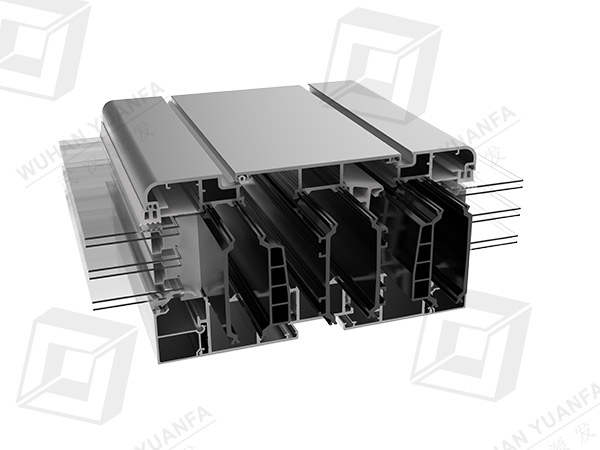
Metals and plastics behave very differently under temperature stress. Aluminum is highly conductive. It rapidly moves heat from a warm interior to a freezing exterior. To stop this, manufacturers must insert an external plastic or polyamide strip. This component physically separates the interior and exterior metal shells. We refer to this engineered barrier as a thermal break.
PVC operates on a completely different physical principle. It features extremely low thermal conductivity by default. The material itself resists energy transfer naturally. You do not need an external separation strip to stop the cold. The frame material inherently blocks the heat flow.
Modern PVC profiles do not rely on a solid block of plastic. Instead, engineers design them using advanced internal geometry. They extrude the material into complex shapes. This process creates distinct internal cavities.
Here is how the multi-chamber design exponentially increases the thermal barrier:
Air Trapping: The internal cavities capture static air inside the frame.
Convection Disruption: Multiple chamber walls prevent air from circulating freely.
Temperature Stepping: Each successive chamber creates an incremental temperature drop from outside to inside.
Barrier Amplification: Still air acts as one of the best natural insulators available in construction.
This design functions seamlessly. It replaces the need for a single physical separation strip. The entire width of the profile acts as a continuous insulating barrier.
Engineers measure heat loss using U-values. A lower U-value indicates superior insulation performance. Standard multi-chamber PVC easily achieves lower U-values right out of the box. You do not need to add expensive engineered inserts to hit baseline energy codes.
Standard aluminum frames struggle to compete here. They require heavy modification to match uPVC metrics. Lower U-values directly translate to reduced HVAC loads. Building owners enjoy significant long-term utility savings. They also experience fewer drafts during winter months.
Chart: Baseline U-Value Comparison (Lower is Better)
Frame Material Type | Mechanical Barrier Required? | Average U-Value (W/m²K) |
|---|---|---|
Legacy Aluminum (Cold-Cut) | No | 5.0 - 6.0+ |
Standard Aluminum (Thermally Broken) | Yes | 2.0 - 3.0 |
Standard uPVC (Multi-Chamber) | No | 1.2 - 2.0 |
Specifiers and facility managers often face a tough decision. They must choose between native insulators and structurally enhanced metals. We must evaluate these materials head-to-head. Understanding their specific strengths helps streamline the procurement process.
PVC generally offers a much better price-to-insulation ratio. You get excellent baseline thermal performance without complex manufacturing processes. The inherent properties of the plastic do the heavy lifting.
Aluminum requires significant engineering to achieve matching U-values. Manufacturers must split the aluminum extrusions. They then roll a thick polyamide thermal break into the gap. Achieving passive-house-level insulation in aluminum demands exceptionally wide polyamide insertions. This drives up material complexity.
Aluminum shines brightly when structural integrity matters most. The metal is incredibly strong relative to its weight. This high strength-to-weight ratio allows architects to design narrower sightlines. They can specify massive floor-to-ceiling curtain walls safely.
PVC struggles to support massive spans natively. The material lacks the inherent rigidity of metal. To support heavy double or triple glazing, PVC profiles require more mass. They often appear bulky compared to sleek aluminum frames. Furthermore, wide PVC frames usually require internal steel stiffeners. These stiffeners add necessary strength but complicate the internal chamber design.
Comparison Table: Structural Integrity & Application
Feature | Solid uPVC Profiles | Thermally Broken Aluminum |
|---|---|---|
Sightlines | Thicker, often appearing bulky. | Slim and highly architectural. |
Span Capability | Limited to standard residential or light commercial sizes. | Massive floor-to-ceiling and curtain wall applications. |
Load Bearing | Requires internal steel stiffeners for heavy glass. | Naturally supports triple-pane commercial glazing. |
Building materials must do more than hold glass in place. They directly impact operational risk mitigation. We must connect material properties to tangible outcomes. Condensation control remains a top priority for protecting building health.
Legacy aluminum frames lack separation barriers. The industry calls these "cold-cut" frames. They pull freezing outside temperatures directly to the interior face. This creates a severe temperature differential on the inner surface.
Think of taking a glass bottle out of a refrigerator. Warm, moist indoor air hits the freezing surface. The air instantly drops below its dew point. Water droplets rapidly form on the material. This same physics concept causes cold-cut windows to sweat heavily during winter months.
You must stop condensation to protect indoor environmental quality (IEQ). PVC profiles excel at keeping the internal surface temperature warm. They maintain temperatures very close to the ambient room condition. This eliminates the dangerous dew point interaction.
Thermally broken metal performs a similar function. Both materials prevent water from pooling on window sills. Keeping drywall and wood trim dry stops structural mold before it starts. Mitigating mold growth protects occupants from severe respiratory issues. It also saves facility managers from costly remediation projects.
Unchecked thermal bridges act like massive holes in your building envelope. They cause an estimated 30% energy bleed. Your HVAC system must work continuously to replace the lost heat. Upgrading your framing materials stops this hemorrhage.
You should frame this investment around risk prevention. Halting energy bleed dramatically lowers monthly utility bills. The reduction in heating and cooling demand extends the lifespan of your mechanical equipment. Superior insulation transforms a building from a liability into an efficient asset.
No building material is perfect. Transparently addressing where PVC falls short builds trust. Experienced professionals understand how to mitigate these inherent material risks. You must evaluate thermal limits before finalizing any specification.
PVC withstands general weather patterns exceptionally well. However, extreme surface temperatures expose its physical limitations. Dark-colored PVC absorbs intense, direct summer sun rapidly. This heat absorption pushes the plastic toward its heat deflection limits.
When PVC gets too hot, it expands significantly. This thermal expansion can lead to frame warping. Operational sashes may start binding inside their tracks. Doors might become difficult to lock or close properly. Designers must specify lighter finishes in extreme hot-weather climates to reflect solar radiation.
Many assume all PVC is perfectly insulating. This assumption overlooks a critical engineering compromise. To span larger openings safely, manufacturers must insert galvanized steel stiffeners into the PVC chambers. Steel is highly conductive.
Adding steel inside the frame alters the thermal dynamics. It creates a mild internal heat bridge. This slightly degrades the profile's overall thermal performance. An unreinforced PVC section will always insulate better than a steel-reinforced one. You must account for this drop in U-value when running energy simulations.
Common Mistake: Relying purely on the U-value of an unreinforced PVC frame for energy calculations, only to discover later that the mandated steel reinforcements lowered the actual field performance.
PVC can theoretically last for several decades. It resists moisture, salt, and rot perfectly. Yet, the sun acts as a relentless enemy to unshielded plastics. Prolonged UV exposure causes surface degradation over time.
Without proper UV stabilizers, PVC can suffer from chalking. The surface loses its gloss and becomes powdery. In severe cases, extreme temperature cycling causes micro-cracking. Anodized or powder-coated aluminum completely bypasses this specific degradation issue. You must specify high-grade, heavily stabilized uPVC formulas for commercial projects.
Modern building codes strictly regulate envelope performance. Aligning your material choices with these standards ensures project compliance. Advanced framing materials help developers achieve prestigious green building certifications.
Passive House represents the gold standard for energy efficiency. The framework demands a rigorously sealed, highly insulated building envelope. One core requirement is "thermal bridge-free" design.
The standard strictly defines this requirement. A junction must achieve a thermal bridge coefficient (Ψ) of 0.01 W/mK or lower. High-end multi-chamber PVC frames can meet this exacting standard. Heavy-duty aluminum frames also meet it when fitted with exceptionally wide internal polyamide strips. Reaching this certification drastically slashes a building's carbon footprint.
Advanced PVC profiles reach far beyond standard residential windows. Industries utilize them in demanding commercial environments. They expand into cold storage facilities and warehouse climate control zones. These structures require absolute temperature isolation.
You will also find them in secondary curtain wall systems. Maintaining strict internal temperatures serves as a business-critical function here. Variations in temperature can spoil inventory or disrupt sensitive manufacturing processes. Reliable insulation directly protects the company's bottom line.
Best Practice: Always request verified test data from the manufacturer demonstrating performance under specific commercial load conditions, rather than relying on residential testing metrics.
Environmental, Social, and Governance (ESG) goals influence modern procurement. Some critics argue plastics remain inherently unsustainable. However, the construction industry has developed robust closed-loop systems for uPVC.
At the end of its lifecycle, contractors can remove the framing. Facilities regrind the rigid plastic into raw pellets. They recycle these pellets into next-generation construction materials. This compliance aspect proves that PVC can participate effectively in a circular economy.
Selecting the correct building envelope material defines your project's energy success. You should specify PVC for projects prioritizing maximum thermal efficiency on a strict budget. It works perfectly for standard structural spans where extreme wind loads are absent. Conversely, you must pivot to aluminum with a polyamide separator when architectural design dictates minimal sightlines. Aluminum remains unmatched for oversized structural glass elements.
Take immediate action to secure your envelope performance. Audit your building's exact load and climate requirements first. Request specific U-value data sheets from your shortlisted suppliers. Finally, consult an envelope engineer to run comprehensive energy simulations based on local weather data. Precision in the planning stage prevents costly thermal failures in the field.
A: No. Because PVC is naturally non-conductive, the profile itself acts as the thermal barrier. Mechanical separators are exclusively required for highly conductive materials like aluminum or steel.
A: Polyamide is used inside aluminum windows to create the break. While a high-end aluminum window with a wide polyamide strip achieves excellent insulation, solid PVC typically provides superior thermal resistance naturally, albeit with thicker frames.
A: Yes. PVC effectively blocks winter cold drafts and summer heat penetration. However, for extremely hot climates, white or lighter finishes are recommended. This minimizes thermal expansion and prevents frame warping.
A: Rarely. Because PVC does not transfer the exterior cold to the interior surface, it neutralizes the temperature differential causing condensation. This protects adjacent drywall and wood from serious moisture damage.


