

close
Choose Your Site
Global
Social Media

Author: Site Editor Publish Time: 2026-07-10 Origin: Site
Aluminum windows look modern, strong, and easy to maintain. Yet their frames can transfer heat surprisingly fast. Standard models do not always contain thermal barriers. This article explains thermal break aluminum windows, identification methods, and the role of a thermal break strip.
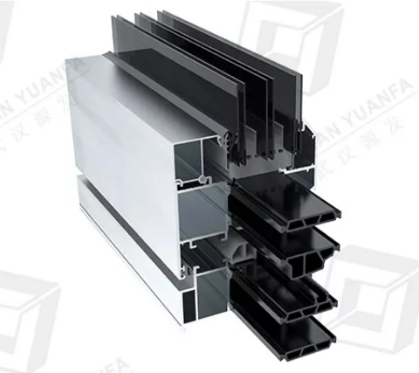
No, standard aluminum windows do not always have a thermal break. Some basic window systems use aluminum profiles running continuously from the outdoor side to the indoor side.
This continuous structure creates a direct path for heat. Outdoor heat can enter during summer, while indoor heat can escape during winter. The effect depends on climate, frame design, glazing, installation, and building use.
Other standard product lines may include a thermal barrier. Therefore, the word “standard” cannot confirm the actual frame construction.
“Standard” is often a commercial term rather than a technical classification. It may describe a common frame size, a basic opening style, or a widely available product range.
Different manufacturers may use the term for very different systems. One standard window may have a continuous frame. Another may use separate aluminum sections joined by an insulating profile.
The specification sheet provides a more reliable answer than the product name.
Thermal break aluminum windows have separate interior and exterior aluminum sections. A low-conductivity material connects these sections while limiting direct heat flow.
This design interrupts the metal-to-metal path. The inside portion of the frame becomes less affected by outdoor temperatures. It can remain closer to the indoor air temperature under normal operating conditions.
The thermal break is integrated into the frame rather than added as a surface coating. It becomes part of the assembled aluminum profile.
The thermal break strip sits between the inner and outer aluminum profiles. Its edges lock into specially designed grooves inside each aluminum section.
Once the frame is assembled, the strip may be difficult to see. It can also be covered by seals, glazing components, or finishing materials.
A frame cross-section offers the clearest view. It should show a non-metallic section interrupting the aluminum profile.
Double glazing improves the insulated glass unit. It does not automatically improve the aluminum frame.
A window can contain two or three glass panes while retaining a continuous metal profile. In this case, the glass may perform well, but the frame can still act as a thermal bridge.
Buyers should review both parts separately. They need glazing data and frame construction details to understand complete window performance.
Climate is one important factor. Buildings in very hot, cold, or mixed climates often need stronger control over heat transfer.
Project standards also affect the decision. Apartments, hospitals, offices, schools, and high-rise buildings may require better frame insulation than unconditioned spaces.
Cost and system design matter as well. Thermal break aluminum windows need additional materials, profile grooves, assembly processes, and quality control. They may cost more initially, but they can offer better long-term building performance.
Do not rely on phrases such as “energy-saving glass” or “insulated aluminum.” Ask whether the interior and exterior aluminum sections are physically separated.
Request a profile drawing or corner sample. Confirm the thermal break strip material, profile shape, width, groove interface, and assembly method.
Test reports are also valuable. Look for whole-window thermal data instead of relying only on general material claims.
A thermally broken profile normally contains two aluminum sections separated by a visible non-metallic component. The strip may appear black or another specified color.
A continuous aluminum cross-section usually indicates no true thermal break. Decorative coatings or internal chambers alone do not create thermal separation.
Ask the supplier for a cut sample when possible. It provides more useful evidence than an exterior product photograph.
Review the profile drawing, window schedule, material list, and test report. Useful terms may include:
● Thermally broken aluminum
● Polyamide thermal barrier
● Insulated aluminum profile
● PA66 GF25 thermal break strip
● Separated interior and exterior profiles
Make sure these descriptions refer to the frame. Some documents discuss insulated glazing without explaining the profile structure.
Ask whether metal directly connects the indoor and outdoor frame surfaces. Then confirm what material creates the separation.
You should also ask how the strip locks into the aluminum groove. A secure mechanical connection is important for alignment and long-term frame stability.
For custom systems, request dimensional tolerances and assembly guidance. Small profile differences can affect insertion, rolling, sealing, and final performance.
A thermal break strip improves the frame design, but it does not work alone. Final performance also depends on strip width, aluminum geometry, glazing, seals, hardware, and installation.
Review whole-window U-value data when available. Frame U-values and condensation-resistance information can provide further context.
Tip:Request a physical cross-section sample before approving a large window order.
Aluminum conducts heat efficiently. In a continuous frame, heat can travel through the metal between the indoor and outdoor surfaces.
A thermal break strip interrupts this route. Its lower thermal conductivity slows heat movement through the frame.
This separation helps the frame support a more stable indoor environment. It can also reduce temperature differences near the window.
The strip is not only an insulating filler. It also helps connect the inner and outer parts of the frame.
Its shape must match the aluminum grooves. Precise dimensions support proper insertion, alignment, and mechanical locking.
A window frame faces heat, cold, moisture, pressure, and repeated temperature changes. The insulating component must maintain its shape under these conditions.
PA66 GF25 combines low heat transfer with mechanical reinforcement. Its glass-fiber content increases rigidity and helps the profile resist deformation.
The material is suitable for precise extrusion. This allows manufacturers to produce complex strip shapes for different frame grooves and structural needs.
Thermal break strips are available in compact, hollow, reinforced, wide, and customized structures. Each design serves a different frame system.
A hollow profile may create a longer heat-transfer path. A reinforced structure may support systems facing greater mechanical demands. Wider profiles are often considered for large window sections or façade applications.
The main difference lies inside the frame. One system has a continuous aluminum path, while the other uses an insulating barrier.
Comparison point | Standard continuous aluminum window | Thermal break aluminum window |
Frame structure | Continuous aluminum profile | Separated inner and outer profiles |
Thermal break strip | Usually absent | Integrated into the frame |
Heat transfer | Faster through the frame | Reduced through the separated profile |
Interior frame temperature | More affected by outdoor conditions | Often closer to indoor temperature |
Condensation risk | May be higher in cold conditions | Can be reduced through warmer interior surfaces |
Initial cost | Usually lower | Usually higher |
Common use | Mild climates or basic applications | Conditioned and energy-focused buildings |
A continuous frame transfers heat more easily because aluminum connects both sides. A thermally broken frame interrupts this direct route.
However, the strip alone does not determine the full U-value. Glazing, seals, frame depth, chambers, edge spacers, and installation remain important.
A very cold indoor frame surface can make the area near a window feel uncomfortable. It can also create conditions where indoor moisture forms droplets.
A thermal barrier helps keep the inner aluminum surface warmer during cold weather. This may lower condensation risk, but it cannot eliminate every moisture problem.
Indoor humidity, ventilation, glass temperature, air leakage, and installation quality must also be controlled.
Thermally broken systems generally require more complex profiles and production steps. Their purchase price may therefore be higher.
The value depends on climate, energy prices, building type, expected service life, and performance targets. Buyers should compare total system performance rather than choosing only by unit price.
These windows are useful where outdoor temperatures fall well below indoor temperatures. The barrier reduces heat movement through the frame and limits cold interior surfaces.
They are also valuable in climates with large seasonal changes. The strip must remain stable through repeated expansion and contraction.
Thermal barriers are not only for winter conditions. They can also reduce heat entering an air-conditioned building through aluminum frames.
This benefit becomes more important on façades receiving strong sunlight. Window orientation, shading, glazing coatings, and frame color should still be considered.
Homes, apartments, schools, offices, hospitals, and hotels often maintain controlled indoor temperatures. Thermal break aluminum windows can support these operating requirements.
Large glazed façades may receive even greater value. They contain extensive aluminum framing, creating more potential paths for heat transfer.
Large windows need careful structural and thermal design. Wider or reinforced thermal break strip structures may be required for deeper aluminum sections.
The selected strip must match the profile groove and mechanical load. A wider strip is not automatically better unless the entire system is designed for it.
A true thermal barrier separates two aluminum profiles. Manufacturers normally create this structure during profile production and window fabrication.
The strip enters matching grooves before the sections are mechanically joined. This process creates an integrated frame assembly.
It is difficult to reproduce after the window is installed. Surface products cannot break the metal path inside a continuous frame.
New weather seals can reduce air leakage. Insulated glass can improve glazing performance. Curtains and films may improve comfort.
These measures can be useful, but they do not turn the existing frame into a thermally broken profile. The aluminum remains continuous between the indoor and outdoor sides.
Painting the frame or filling visible gaps also does not create a structural thermal barrier.
Replacement may deserve consideration when frames show serious condensation, air leakage, corrosion, deformation, or poor overall performance.
It may also be practical during major façade renovation. The project team can then coordinate glazing, frame insulation, flashing, seals, and installation.
A professional assessment should compare repair costs, replacement costs, expected energy performance, and remaining frame life.
Standard aluminum windows do not always include thermal barriers. Thermal break aluminum windows need a suitable strip inside the frame. Wuhan Yuanfa supplies PA66 GF25 thermal break strip profiles in varied structures. Its precision extrusion, stable materials, customization, and engineering support help window manufacturers improve insulation, assembly, and long-term frame performance.
A: No. Many standard frames use continuous aluminum without an insulating barrier.
A: Thermal break aluminum windows separate inner and outer profiles using an insulating strip.
A: No. It improves glass insulation but does not separate the aluminum frame.
A: Usually. They require extra materials, profile processing, and controlled assembly.
A: Check the frame cross-section for a non-metallic section between aluminum profiles.
A: Usually not. True thermal breaks are integrated during frame production.


