

close
Choose Your Site
Global
Social Media

Author: Site Editor Publish Time: 2026-04-29 Origin: Site
High-temperature resistance is not merely a luxury. It acts as a non-negotiable requirement for modern fenestration systems. Architects and builders demand flawless performance from every facade component. Aluminum window and curtain wall manufacturers face a critical manufacturing hurdle today. Thermal barriers must survive the extreme heat of powder coating ovens. They cannot lose structural integrity during this intense process. They must never alter their precise profile geometry. Standard polyamide thermal breaks (specifically PA66-GF25) are engineered to withstand temporary manufacturing spikes up to 200°C–220°C. They also endure decades of operational thermal cycling perfectly. You will discover how this material provides an optimal balance of cost, shear strength, and thermal resistance compared to alternative polymers.
Manufacturing Threshold: PA66-GF25 safely tolerates 200°C to 220°C, making it fully compatible with standard aluminum powder-coating and baking processes.
Structural Stability: The addition of 25% glass fiber (GF25) matches the material's thermal expansion coefficient to aluminum, preventing warping during thermal shocks.
Implementation Risk: PA66 is hygroscopic; extreme oven heat can cause moisture loss, leading to shrinkage or paint blistering if not properly managed with thermoadhesive lines or pre-coatings.
Commercial Viability: Polyamide 66 eliminates the need for excessively expensive extreme-temperature thermoplastics (like PPS or PA46) while outperforming standard nylon and PVC.
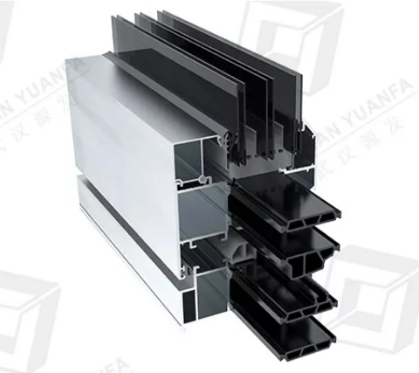
Fenestration manufacturers need a highly robust thermal barrier. You must roll this insulating material into raw aluminum profiles early in the production line. This step happens before the entire assembly enters a high-heat finishing oven. Inserting barriers after the painting process complicates manufacturing unnecessarily. It increases labor times and introduces alignment errors. Therefore, the polymer itself must survive the exact same baking environment as the raw metal.
Premium PA66-GF25 maintains its form safely at 200°C to 220°C. It retains its core mechanical properties throughout a standard powder-coating curing cycle. These industrial baking sessions typically last 15 to 30 minutes. The internal temperature of the oven spikes rapidly. The polymer absorbs this extreme heat energy. However, PA66-GF25 does not reach its melting point during this timeframe. It stays rigid enough to hold the two aluminum extrusions firmly together. The geometry of the profile remains completely unchanged.
We must compare this performance to inferior materials on the market. Standard, unreinforced nylon begins to deform at around 180°C. It softens quickly under industrial heat. PVC degrades much earlier than nylon. PVC melts, warps, and loses all structural cohesion before the oven cycle even finishes. You cannot use these cheaper materials for pre-assembled powder coating. They force fabricators to paint the aluminum halves separately. This separated painting method ruins production efficiency.
Always calibrate oven sensors weekly to prevent accidental heat spikes above 230°C.
Ensure the powder coating formulation matches the recommended 15-minute cure time.
Monitor the internal cavity temperature of the aluminum profile, not just the ambient oven air.
Pure polyamide falls short when handling load-bearing structural duties. It softens too much under extreme stress. Adding 25% glass fiber (GF25) solves this fundamental physical problem. This specific formulation serves as the undisputed industry standard. Glass fibers create an internal skeleton within the plastic matrix. This skeleton reinforces the polymer chains. It prevents them from sliding past one another when subjected to intense heat. You get a material combining the thermal resistance of plastic and the rigidity of glass.
We must look at the Coefficient of Thermal Expansion (CTE). GF25 reinforcement reduces the thermal expansion coefficient of polyamide drastically. It drops by up to 40% compared to pure nylon. This precise reduction is not a random occurrence. Engineers formulated this mixture to achieve a very specific target.
This exact formulation matches aluminum’s natural expansion rate perfectly. Materials expand when heated and contract when cooled. If the aluminum and the barrier expand at different rates, disaster strikes. Sudden temperature drops or extreme heat waves would otherwise destroy the frame. The Thermal break polyamide strip does not create internal shear stress against the aluminum frame. It moves in perfect harmony alongside the metal.
This harmonic movement prevents structural failure in high-load curtain walls. Modern skyscrapers face immense wind loads and drastic temperature shifts daily. The GF25 reinforced struts easily withstand greater than 35 MPa in sheer stress. They keep the heavy glass panels securely locked in place.
Mechanical Properties Under Heat (Table)
Material Type | Max Baking Temp (°C) | Coefficient of Thermal Expansion (10⁻⁵/K) | Structural Integrity Post-Bake |
|---|---|---|---|
Pure PA66 | 180°C | 8.0 - 10.0 | High risk of deformation |
PA66-GF25 | 220°C | 2.5 - 3.0 | Maintains rigid geometry |
Aluminum Frame | >500°C | 2.3 - 2.4 | Unaffected |
Standard PVC | 80°C | 6.0 - 8.0 | Total structural failure |
We must acknowledge a known technical vulnerability realistically. PA66 operates as a hygroscopic polymer. This means it absorbs water molecules from the surrounding air naturally. It holds this ambient moisture deep within its chemical structure. This moisture actually improves the impact resistance of the plastic at room temperature. However, this same water content creates severe headaches inside a baking oven.
Consider the oven defect phenomenon carefully. Put a piece of moisture-rich PA66 into a 200°C oven. Rapid dehydration occurs immediately. The trapped water boils and tries to escape the polymer matrix. This rapid water loss causes volumetric shrinkage. The plastic strip physically contracts. This shrinkage compromises the tight mechanical seal between the plastic and the metal. Furthermore, moisture outgassing causes surface blistering on the aluminum. Escaping steam pushes through the uncurled powder coating. It leaves ugly bubbles behind. This completely ruins the expensive paint finish.
Smart manufacturers employ several risk mitigation strategies to prevent these defects.
Thermoadhesive lines (Hot melt glue): Factories insert a specialized glue line during the extrusion process. This adhesive sits between the polyamide and the raw aluminum. It melts intentionally during the high-heat baking phase. As the polyamide dehydrates and shrinks slightly, the liquid glue expands to fill any micro-gaps. The oven cools down eventually. The glue hardens rapidly. It physically locks the shrunken polyamide permanently to the aluminum. You restore the lost shear strength instantly.
Pre-coating and Moisture Management: Some suppliers utilize specific surface treatments on their strips. These proprietary coatings allow complete drying of the profile prior to powder application. You can bake the moisture out first. The coating maintains high electrical conductivity across the surface. Powder coat paint requires electrical conductivity to stick properly. You get flawless powder adhesion without any trapped moisture ruining the finish.
Climate-Controlled Storage: Keep raw polyamide profiles wrapped in moisture-barrier packaging until the exact moment of assembly. Do not leave them exposed to humid factory air for weeks.
Manufacturing heat represents only the first major thermal test. We must shift our focus to long-term environmental exposure. Commercial buildings stand for decades. They endure direct, relentless sunlight. They face extreme climate fluctuations shifting from freezing winters to scorching summers. The internal thermal barriers face continuous stress.
We rely on standardized accelerated aging metrics to prove durability. High-quality PA66 formulations perform exceptionally well under these harsh testing conditions. They retain up to 92% of their original tensile strength over time. This impressive retention holds true even after 5,000 hours of continuous UV exposure. Testing protocols like ASTM G154 confirm these numbers repeatedly. The glass fibers shield the internal polymer bonds from rapid ultraviolet degradation. You do not see the crumbling or chalking associated with cheaper plastics.
Chemical and corrosion resistance matters just as much as heat resistance. Modern formulation chemistry evolved significantly over the last decade. Material scientists now use metal-free, organic stabilization additives inside the polyamide. Older plastics often contained metallic salts. These salts reacted badly when placed against raw aluminum. They caused microscopic "contact corrosion" inside the window frame.
Organic stabilization prevents this dangerous contact corrosion entirely. The plastic remains chemically inert. It does not react with the surrounding aluminum extrusions. You need this specific chemical protection to ensure decades of structural integrity. High-rise commercial building envelopes depend on this invisible stability to keep occupants safe.
Engineers often ask a very logical question. Why not simply use plastics rated for 300°C or more? If 220°C pushes PA66 near its limit, upgrading seems like a smart safety precaution. You must understand the underlying chemistry and market economics to answer this.
Standard organic polymers hit a hard physical ceiling. All standard organic polymers decompose between 350°C and 700°C. They turn into ash and gas. Materials like PTFE (Teflon) or Vespel handle temperatures around 300°C safely. However, they lack the necessary mechanical rigidity. PTFE suffers from "cold flow," meaning it deforms constantly under sustained pressure. They also lack the required density profiles needed for heavy fenestration loads.
You must conduct a strict commercial evaluation for project viability. Competing high-heat thermoplastics exist. PPS (Polyphenylene Sulfide) or PA46 sound highly impressive on technical data sheets. Yet, they offer completely unnecessary thermal overhead. A window frame will never see 300°C unless the building is actively on fire. At that point, the glass shatters anyway. Furthermore, these extreme polymers come at a prohibitively high cost. They destroy upfront project budgets instantly.
PA66-GF25 remains the most economically viable material. It scales perfectly for mass production. It complies fully with global commercial window assembly standards. It balances adequate thermal headroom with exceptional mechanical rigidity. You get exactly what you need without overpaying for useless extreme-heat ratings.
High-Heat Polymer Comparison Chart
Polymer Type | Max Safe Temp (°C) | Relative Material Cost | Fenestration Suitability |
|---|---|---|---|
Standard PVC | 80°C | Very Low | Poor (Melts in ovens) |
PA66-GF25 | 220°C | Moderate | Excellent (Industry Standard) |
PA46 (High Heat Nylon) | 290°C | Very High | Over-engineered / Too expensive |
PPS (Polyphenylene Sulfide) | 240°C | Extremely High | Too brittle / Cost prohibitive |
PTFE (Teflon) | 300°C+ | High | Poor (Lacks rigid shear strength) |
Avoid specifying PPS or PA46 for standard commercial facades. The minor increase in thermal threshold provides zero practical benefit during the powder coating process. PA66-GF25 handles the required 220°C limit easily while keeping upfront material budgets intact.
Polyamide 66 reinforced with 25% glass fiber hits the precise thermal sweet spot for the fenestration industry. It survives 220°C manufacturing ovens easily. It provides superior long-term insulation against extreme weather. It delivers the heavy-duty structural strength required for modern commercial skyscrapers. Upgrading to aerospace-grade plastics wastes project budgets. Downgrading to PVC guarantees structural failure during the painting process.
Procurement and engineering teams should take the following actions before finalizing any vendor agreements:
Request specific technical data sheets verifying the polymer's exact shear strength post-baking.
Demand documented proof of precise dimensional tolerances across different profile geometries.
Evaluate the supplier's specific moisture management solutions.
Always require integrated thermoadhesive lines for any profile meant for pre-assembled powder coating.
A: No. Unreinforced plastics can soften past their glass transition temperature. However, high-quality GF25 reinforced polyamide remains structurally sound up to 220°C. This threshold far exceeds any natural climate conditions found on Earth. Direct desert sunlight will never cause these rigid struts to melt or deform.
A: Blistering is typically caused by moisture trapped inside the hygroscopic PA66 material. This trapped water evaporates rapidly in the curing oven. The escaping steam pushes through the paint layer. Proper factory drying protocols or using pre-coated conductive polyamides prevent this frustrating surface defect entirely.
A: Yes. Advanced closed-cell polyamide foam used inside hollow thermal break cavities is specifically designed for extreme heat. It tolerates the exact same 200°C to 220°C baking temperatures as the rigid PA66 struts. The foam maintains its internal cell structure without degrading or shrinking during the cure cycle.


