

close
Choose Your Site
Global
Social Media

Author: Site Editor Publish Time: 2026-04-27 Origin: Site
In commercial and residential fenestration, the choice of thermal barrier material dictates not just the U-factor, but the structural integrity of the entire window or door system. Manufacturers face a constant, rigorous challenge. They must stop heat transfer effectively while maintaining the strict load-bearing capacity of aluminum frames. While polyester and polyamide are both widely used engineering polymers, their behavior under thermal stress, mechanical load, and manufacturing conditions diverges significantly.
For example, industrial processes like powder coating expose these materials to extreme heat, testing their physical limits. To determine which material is superior for structural thermal barriers, we must move beyond basic chemical definitions and evaluate them against rigorous extrusion, assembly, and long-term weathering standards. By examining structural compatibility, heat deflection, and moisture dynamics, you will uncover exactly why one material dominates modern architectural systems.
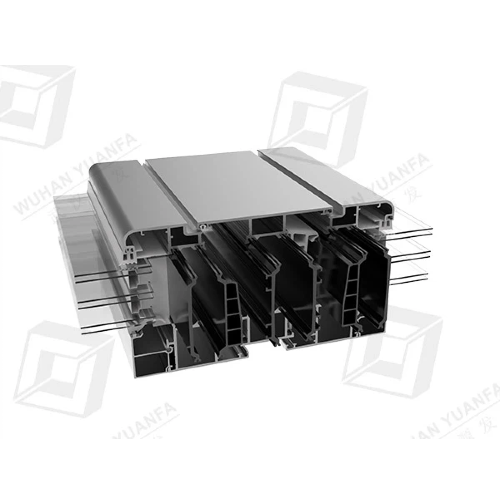
Industry Standard: Polyamide 66 reinforced with 25% glass fiber (PA66 GF25) is the dominant choice for structural thermal barriers due to its precise thermal expansion match with aluminum.
Thermal vs. Structural: While polyester offers high initial stiffness and excellent moisture resistance, it lacks the high-temperature resilience required for standard aluminum finishing processes.
Manufacturing Reality: Polyamide thermal breaks can withstand the 200°C+ baking cycles of powder coating without melting or losing structural integrity, a critical failure point for standard polyester.
Moisture Dynamics: Polyamide absorbs trace moisture, which engineers actively utilize to increase the profile's toughness and impact resistance after extrusion.
Window manufacturers need a specific type of material. It must stop heat transfer seamlessly to ensure low thermal conductivity. Yet, it cannot compromise the load-bearing capacity of the aluminum frame. Engineers rely on advanced synthetic polymers to solve this dual challenge. These materials bridge the gap between exterior weather conditions and interior climate control.
Polyamide, commonly known as nylon, features amide groups (-NH-CO-) along its polymer chain. When extruders reinforce it using glass fibers, it becomes highly capable. It offers an exceptional balance of toughness, a high melting point, and supreme mechanical strength. The long, linear molecular structure allows for smooth extrusion and excellent bonding capability during the manufacturing process.
Polyester, often formulated as PET or PBT, features ester groups (-O-CO-). Engineers value polyester for its extremely high initial modulus. This stiffness often reaches 14 to 17 GPa in glass-filled variants. It maintains strict dimensional stability, especially in wet environments where other materials might swell. The dense molecular packing gives it an edge in raw, unyielding rigidity.
The baseline verdict is straightforward. Both materials act as effective thermal insulators. However, their core molecular structures dictate entirely different responses to heat, stress, and assembly shear forces. You must understand these structural differences to avoid catastrophic frame failures. A successful fenestration system relies on three fundamental engineering criteria:
Shear Strength Retention: The polymer must resist sliding or shearing under heavy wind loads.
Transverse Tensile Strength: The material must hold the inner and outer aluminum extrusions together tightly.
Elasticity Under Stress: The barrier must absorb micro-movements without cracking or snapping.
The fenestration requirement is absolute. A thermal barrier must expand and contract at the exact same rate as the surrounding aluminum frame. If the expansion rates differ, the composite profile suffers. Shear failure occurs, and the window loses its structural integrity. Building facades endure brutal temperature swings. A dark-painted aluminum frame facing direct summer sunlight can easily reach 80°C. In winter, that same frame might drop to -20°C.
Polyamide holds a distinct advantage here. Polyamide 66 reinforced using 25% glass fiber (PA66 GF25) features a Coefficient of Linear Thermal Expansion (CLTE) practically identical to aluminum. As the window heats up in direct sunlight, the aluminum and the Thermal break polyamide strip move together as a unified system. They expand seamlessly side-by-side. The mechanical lock created by the knurling process remains intact. No internal stress fractures develop along the joint.
Polyester formulations face a major limitation. They generally do not align closely enough with aluminum's expansion rate. A window system will undergo thousands of freeze-thaw cycles over its expected lifespan. This fundamental mismatch causes severe issues over time. As the aluminum expands faster than the polyester, it pulls against the rigid plastic. This constant tug-of-war can lead to internal shear stress, micro-cracking, or dangerous slipping at the knurling joint. When the knurled teeth lose their bite into the plastic, the entire window frame compromises its structural span.
Common mistakes during profile design often trace back to ignoring CLTE values. Engineers sometimes specify a stiffer plastic purely for static load testing. They forget thermal cycling represents the true test of a building facade. Polyamide eliminates this bimetallic warping effect entirely.
The assembly reality for aluminum window profiles is intense. Manufacturers usually assemble the thermal break before the entire profile undergoes powder coating. This sequence means the plastic must survive industrial baking ovens. It is a harsh, unforgiving environment. To achieve a durable finish, factories subject the assembled frames to extreme temperatures.
Let us examine High-Heat Tolerance, commonly measured as Heat Deflection Temperature (HDT). Glass-fiber reinforced polyamide maintains structural stability at temperatures exceeding 250°C. It will not warp. It will not melt. It firmly retains its knurling grip during standard powder coating baking cycles. You can assemble the raw aluminum, insert the polyamide strip, crimp it tightly, and send the entire unit through the paint line. The composite profile emerges completely unscathed.
The standard powder coating process involves several punishing stages:
Chemical Pre-treatment: Acidic or alkaline baths clean the aluminum surfaces.
Electrostatic Application: Spray guns apply dry powder paint to the conductive metal.
Oven Curing: The profile enters a baking oven at 200°C to 220°C for roughly 20 minutes to cross-link the paint.
Polyester exhibits much lower heat deflection temperatures under load. Exposing standard polyester to these same baking cycles is highly risky. It risks dimensional warping and compromises the shear strength of the composite profile. As the polyester softens in the oven, the pre-rolled mechanical joints loosen. The required structural grip fades away.
The implementation risk is severe. If you choose a material lacking sufficient heat resistance, you must change your production workflow. You have to separate the painting and assembly processes. Factories must paint the inner and outer aluminum shells separately. Then, they insert the thermal barrier afterward. This separation drastically increases manufacturing complexity, introduces color alignment errors, and extends lead times.
Engineers often debate the moisture handling of these two polymers. Critics point out a supposed moisture "flaw" in polyamide. It is inherently hygroscopic. It naturally absorbs a small percentage of moisture from the surrounding air. In unreinforced plastics, excess water absorption causes unpredictable swelling.
However, the engineering reality is quite different in fenestration. Moisture does slightly lower the initial rigidity of a polyamide strip. Yet, it actually increases the material's toughness and impact resistance. Engineers intentionally condition polyamide strips to reach this optimal structural state. Water molecules act as a natural plasticizer inside the polymer matrix. They sit between the polymer chains, allowing them to slide slightly under sudden impact. This mechanism prevents the plastic from shattering during heavy door slams or sudden wind gusts.
Polyester possesses a hydrophobic edge. It absorbs less than 1% moisture from its environment. It maintains absolute dimensional stability and stiffness regardless of ambient humidity. It stays rigidly exact whether installed in a dry desert or a humid coastal city. You will not see significant weight or volume changes in polyester components.
The outcome favors a broader perspective. Polyester wins on strict dimensional immutability in wet conditions. But polyamide's dynamic moisture response is a calculated, well-understood variable. This moisture equilibrium actually benefits the long-term impact tolerance of the window frame. Once the polyamide reaches its standard moisture equilibrium (usually around 2% to 3%), the dimensional changes stop. The resulting profile provides an ideal mix of strength and flexibility.
When should you evaluate polyester? It deserves consideration in niche, non-load-bearing applications. You might also use it in environments prioritizing extreme chemical resistance over standard architectural requirements. For example, facilities emitting highly acidic industrial fumes might prefer polyester profiles. Its dense, hydrophobic nature repels corrosive agents effectively. However, you should rarely specify it for primary structural spans carrying heavy glass loads.
Why does polyamide win the market? For 99% of architectural aluminum systems, polyamide thermal breaks represent the superior, lower-risk choice.
Scalability: It is universally accepted by global building codes, testing laboratories, and major extrusion partners.
Reliability: It boasts a decades-long track record. It consistently maintains shear strength under extreme wind loads and relentless thermal cycling.
Process Efficiency: It supports "assemble-then-paint" workflows, saving factories massive amounts of time and labor.
To summarize the technical differences, we can compare their performance across key fenestration metrics.
Performance Metric | Polyamide 66 GF25 | Polyester (PET/PBT) |
|---|---|---|
Thermal Expansion Match (CLTE) | Excellent (Matches Aluminum) | Poor (Prone to mismatch) |
Heat Deflection Temperature | High (>250°C) | Moderate to Low |
Powder Coating Compatibility | Yes (Assemble then Paint) | No (Paint then Assemble) |
Impact Toughness | High (Moisture acts as plasticizer) | Low (Can become brittle) |
Moisture Absorption | Hygroscopic (~2-3% equilibrium) | Hydrophobic (<1%) |
Next steps for manufacturers are clear. Audit your current thermal barriers immediately. Verify the exact glass-fiber content; 25% is the golden industry standard. If your supplier uses lower percentages, the material will shrink and warp. Always request comprehensive shear-strength testing data from your supplier before committing to a new profile system. Ensure they conduct these tests both before and after simulated thermal baking cycles.
When balancing the "impossible triangle" of thermal insulation, structural shear strength, and manufacturing compatibility, polyamide decisively outperforms polyester for aluminum fenestration. Polyester certainly offers impressive initial stiffness and resists moisture absorption beautifully. However, its inability to mirror aluminum's thermal expansion creates hidden long-term dangers. Furthermore, its lower heat deflection temperature completely disrupts modern powder-coating workflows.
Do not compromise on the thermal barrier. Specify PA66 GF25 strips to ensure U-value compliance without risking composite frame failure during powder coating or long-term weathering. Audit your extrusion partners to verify material certificates. Require strict pull-test documentation from your assembly floor. By prioritizing a well-engineered polyamide system, you guarantee both factory efficiency and decades of flawless field performance.
A: Yes. "Nylon" is the common commercial name for the polyamide polymer family. In fenestration, it specifically refers to Polyamide 66 (PA66). Engineers and manufacturers use the terms interchangeably when discussing window extrusion barriers.
A: Polyurethane is utilized in the "pour and debridge" method. While it offers a slightly lower thermal conductivity (better U-factor), polyamide strips offer 4 to 5 times higher shear, tensile, and torsional strength. This strength allows for dual-color profile designs and superior structural spans.
A: No. While polyamide absorbs ambient moisture, it reaches an equilibrium that enhances its impact resistance. It acts as a toughening agent. It does not dissolve or degrade; standard PA66 GF25 strips are designed to outlast the lifespan of the building itself.


